Consciouscarma
  • Home
  • About Us
  • Products
  • Community
    • Campaigns
    • Inspiration
    • Initiatives
    • CSR
  • Features
    • Sustainable Startup Stories
    • Travel
    • Lifestyle
    • Partners
  • Economy
    • Industry
    • Innovations
    • National
    • Global
  • Environment
  • Expert Corner
    • Authored Articles
    • Reports
  • Magazine
  • Contact
Category:

Environment

Is there a way to survive without air and water?  Ofcourse not.  Knowing it fully well, we are polluting our air and depleting our water resources every second.   It’s just like cutting the branch of the tree on which we are sitting.   Environment needs to be protected at any cost, if we humans, want to live on Planet Earth.  Its NOW or NEVER to save the Earth and in turn, save ourselves

EnvironmentIndustry

Largest Sustainable Packaging platform in India and South Asia

by Team Conscious Carma June 6, 2023
written by Team Conscious Carma

Constantia Flexibles and SB Packagings kick off joint venture

Constantia Flexibles, Premji Invest and SB Packagings, have finalized the joint venture to create one of the largest sustainable packaging platforms in India and South Asia, following the regulatory approval from Competition Commission of India. The joint venture (SB-Constantia Flexibles), between two flexible packaging industry leaders and Premji Invest as shareholders, will leverage each company’s unique strengths and resources to achieve greater success in the Indian market.

 “I have full confidence in the partnership’s ability to be an effective solution provider to its customers in India through innovation and excellence. We will drive growth and profitability for all stakeholders,” said Pim Vervaat, Global CEO, Constantia Flexibles.

“The joint venture positions us as a clear leader to drive the sustainable packaging agenda in India and beyond with a unique product offering,” noted Amit Banga, Managing Director, SB Packagings.

Strong synergy potential with a focus on sustainability

SB-Constantia Flexibles will operate in the food and hygiene markets, offering medium to high-barrier packaging solutions. It will have close to 2,700 employees across nine plants spread across the country.

The JV will pursue organic and inorganic growth opportunities in higher value-added market segments, continuing its strong growth trajectory in the hygiene, food and HPC segment even as it further develops the sustainable mono-material EcoLam product range. It will bring together the mono-material capabilities of both Constantia Flexibles India and SB Packagings and offer medium to high-barrier packaging solutions to food and hygiene markets.

About the joint venture partners:

Constantia Flexibles is the world’s third largest producer of flexible packaging. Based on the guiding principle of ‘People, Passion, Packaging’, 8,700 employees manufacture tailor-made packaging solutions at 37 sites in 17 countries. Many international companies and local market leaders from the consumer and pharma industries choose Constantia Flexibles’ more sustainable and innovative products. Sustainability is a top priority at Constantia Flexibles: the company was rated Level A by Climate Change Leadership (CDP) in 2021 and Gold by EcoVadis in 2022.

SB Packagings, founded in 1989 by Mr. O.P Banga & Mr. Amit Banga, is one of the leading flexible packaging companies based out of India. SBP group over the past 4 decades, has been at the forefront of manufacturing mono-polymer sustainable packaging much ahead of its peers. It has won various awards and global accolades for its innovation & printing excellence. In 2022, it was chosen as the ‘Packaging Company of the Year’ by PrintWeek and won the “WorldStar” award in Milan for sustainable packaging and also the ‘Gold’ at the Asian Packaging Excellence Awards. SBP with over 50% market share, is by far the largest company manufacturing hygiene packaging for leading global and Indian brands. SBP also has a strong footprint in the Food and Beverages space.

Premji Invest’s (PI) investments primarily support the philanthropic initiatives of the Azim Premji Foundation, a not-for-profit organisation that seeks to help improve the lives of the underserved and underprivileged in society. PI invests in India and overseas with the objective of building long-term sustainable capital to fund philanthropic initiatives and nurture the spirit of entrepreneurship in the country.  PI invests in sectors including healthcare, technology and financial services, with the overwhelming aim to make sure that global companies with scale are created using the access and capital that PI is able to provide.

June 6, 2023 0 comment
0 FacebookTwitterPinterestEmail
EnvironmentSustainability

#BeatPlasticPollution this World Environment Day

by Team Conscious Carma June 5, 2023
written by Team Conscious Carma

#BeatPlasticPollution, the theme for World Environment Day 2023, focuses on solution to plastic pollution.

Team Conscious Carma lists down a few environment friendly initiatives by companies and NGOs worth an applause.

NGO Buddh Jyoti Foundation is beating plastic pollution with cloth bags

#BeatPlasticPollution – Going with the theme of this year’s World Environment Day, #BeatPlasticPollution,  Buddh Jyoti Foundation (BJF), a Delhi based NGO, is running a one month campaign to distribute cloth bags in major markets in Delhi NCR.

“More than 400 million tonnes of plastic is produced every year, half of which is designed to be used only once. If we could stop the use of single use plastic, half of the battle is won. Keeping this in mind, BJF is starting a one month campaign to generate awareness among the consumers about the hazards of single use plastics”, Says Kapeel Barsaiyan, President, BJF

“The awareness drive will include visits to the main markets of Delhi NCR and initiating a dialogue with the consumers and presenting them with a Cloth Bag to replace their single use plastic. Awareness is the key to reduce the meance of single use plastic. Plastic clogs our landfills, leaches into the ocean and is combusted into toxic smoke, making it one of the gravest threats to the planet”, adds Kshipra Simon, Secretary General, BJF.

These Cloth bags have been made by the marginalised section of the society. We are glad that this drive has also become a source of income for these women.

Website : https://buddhjyoti.org/

IZZHAAR’s sustainable gifting solutions

World Environment Day is all about celebrating Earth and the lives on it, let us come together as saviours of our planet and appreciate the beauty and wonder of nature that surrounds us. Izzhaar, the creator of natural and sustainable products, encourages you to take part in the conservation of the mother Earth and reduces your share of carbon footprints on the planet.

In the modern era of ever-changing trends, having an ardour for antique and sustainable products is a boom for the environment. Izzhaar as a sustainable gifting solution has a wide range of natural products that not only gives value to your money, but also empowers you to protect and preserve the environment for future generations.

Organic products at Izzhaar are bespoke that are rarely to be found in the general platform of the gifting solutions. The practice of collecting grounded products helps in preserving the natural resources by promoting biodiversity and strengthening ecological resilience.

In addition to the environmental benefits, supporting organic products also contributes to the livelihoods of artisans and communities who rely on sustainable production. By buying organic goods, you help create demand for these products, supporting artisans committed to protecting the environment and promoting sustainable practices.

Website- https://izzhaar.co.in/

Akshayakalpa Organic’s sustainable agriculture and waste management initiatives

Bangalore based Akshayakalpa Organic, India’s first certified organic dairy enterprise is promoting sustainability and environmental responsibility in the food industry through their unique approaches to waste management, responsible packaging, and employee-driven cleanliness drives that create a positive impact on the environment.

Akshayakalpa Organic has pioneered the use of reverse logistics to collect plastic waste directly from their customers’ doorsteps. This game-changing initiative ‘Give Back Milk Pack’ has already resulted in an impressive 8% of the app customer base actively participating in recycling efforts. By utilizing this innovative strategy, the aim is to create a circular economy where plastic waste is responsibly managed and given a new life. So far, they have a record of collecting and recycling 7 tonnes of plastic.

In addition to their plastic waste management efforts, they also have paperboard packaging, which compared to traditional plastic milk packaging, consume significantly less water. Moreover, their commitment to sustainability extends beyond packaging – they actively collect used paperboards, separate the layers, and repurpose them into journals used by their employees, promoting a culture of recycling and upcycling. Furthermore, their dedicated employees actively organize cleanliness drives on a monthly basis, demonstrating the commitment to maintaining a clean and sustainable environment both within the organization and the communities they serve.

Website : https://akshayakalpa.org/

Window Magic manufacturing Eco-friendly uPVC window and Door System

Window Magic is committed to making eco-friendly homes with their uPVC Doors and Windows.

Window Magic has also launched their first-ever sustainability manager, Mr. HOS – High on sustainability. Additionally, they accept full accountability for the waste material produced throughout the manufacturing process and have tied up with GGEPIL, a waste management company. Mr. HOS is helping Window Magic to become a company that genuinely cares about the earth and is responsible.

Website: https://www.windowmagicindia.com/


June 5, 2023 0 comment
0 FacebookTwitterPinterestEmail
Environment

Ocean plastics: How much do rich countries contribute by shipping their waste overseas?

by Team Conscious Carma May 31, 2023
written by Team Conscious Carma

Many countries ship plastic waste overseas. How much of the world’s waste is traded, and how big is its role in the pollution of our oceans?

by Hannah Ritchie – Most of the plastic that enters the oceans from land comes from rivers in Asia. More than 80% of it.

Only a small amount comes from rivers across Europe and North America. Together, rivers in these regions contribute just 5% of the global total. This would suggest that the world’s richest countries don’t contribute much to the problem of plastic pollution.

But, these numbers only look at the plastic that is emitted domestically. They don’t consider the fact that many countries export plastic waste overseas. If it was the case that the UK exported a lot of its plastic waste to countries where waste management systems are poor, and lots of plastic leaks into the environment, the UK would have a large indirect impact on ocean pollution.

Here is the global data to understand the scale of plastic waste trade. It looks at who the biggest exporters and importers are, and where this waste ends up.

It is estimated that a few percent – possibly up to 5% – of the world’s ocean plastics could come from rich countries exporting their waste overseas. That could bring the total up to 10%: 5% directly from rivers in these regions, plus a further 5% from trade.

How much of the world’s plastic waste is traded? Importing plastics can often bring economic benefits. Recycled plastics can be repurposed into other goods, and fed into manufacturing industries. This is often cheaper than buying or making virgin plastics from scratch.

In 2020, around 5 million tonnes of plastic waste was traded globally.3 We might imagine that the pandemic forced a large reduction in plastic trade, but this doesn’t seem to be the case. In 2019, rates were only slightly higher, at around 6 million tonnes. Let’s put those 5 million tonnes into context. The world generates around 350 million tonnes of plastic waste per year. That means that around 2% of waste is traded.

The remaining 98% is handled domestically. It’s sent to a landfill, recycled, or incinerated in the country where the waste was generated. The idea that most of the world’s plastic waste is shipped overseas is incorrect. One reason why this figure is so low is that it’s mostly recycled waste that’s traded, and only 20% of the world’s plastic is recycled. Over the last decade, we’ve seen a large decline in the amount of plastic waste traded. Rates have fallen by two-thirds since 2010.

Plastic waste exports, 2007 to 2021

What was the impact of the Chinese ban on plastic trade?

Policies in China toward plastic trade have had a large impact on the global change shown in the previous chart. In 2016, China was importing more than half of the world’s traded plastic waste. By 2018, this had plummeted to less than 1%. We see this in the chart.

The reason for this dramatic decline was the Chinese government banning the import of most types of plastic waste in 2017. This was part of a broader policy decision to stop the import of 24 different types of solid waste including paper, textiles, and plastics. These bans were implemented as a result of environmental and health concerns from contaminated waste streams.

This ban had two major impacts.6 The first was that the total volume of plastic trade globally dropped significantly – we saw earlier that global trade has halved since 2017. The second was that other countries emerged to take China’s place as major importers. Most of them are also countries in Asia – Malaysia, Vietnam, Indonesia, the Philippines, and Turkey, started to import much more plastic than in previous years.

Most plastic waste is traded within world regions, rather than between them
Where does plastic waste flow across the world?

Europe is the region that exports the most plastic, but it’s also the region that imports the most.
This is true more generally. Most plastic is traded within a given region. European countries
export most plastic to other European countries. Asian countries export most to other Asian
countries.

In the visualization, we see the flow of plastic across the world.7 On the left we have the exporters of plastic waste; on the right, we see where that plastic ends up. The height of each bar is proportional to the amount of plastic that is traded.

Europe is the biggest exporter of plastic. But, it’s also the biggest importer. Many countries across Europe trade with one another. At the national level, Germany is the biggest exporter and importer – it trades different plastics with its neighbors including the Netherlands, Poland, Austria, and Switzerland.

This is also true of Asia, where Japan is the biggest exporter to other countries in Asia.

Do rich countries export most of their plastic waste overseas?

Many people think that rich countries ship most of their plastic waste overseas. But is this really true?
The short answer is no: many countries export some of their waste, but they still handle most of it domestically.

Let’s take the example of the UK. In 2010, it generated an estimated 4.93 million tonnes of plastic waste.9 It exported 838,000 tonnes overseas.  That means it exported about 17% of its plastic waste. That’s a substantial fraction – nearly one-fifth of it.

This data is for 2010, a year with good high-quality estimates of plastic waste generation. It’s still likely to be a reasonable estimate today. If anything, this share might have declined slightly, because waste exports have not increased, and waste generation probably has.

When it comes to the fraction of plastic waste that is exported, the UK is one of the largest exporters. For context, the US exported about 5% of its plastic waste in 2010. France exported 11%, and the Netherlands exported 14%.

Most rich countries are net exporters of plastic waste. And this can be a significant fraction of their waste. But it’s not the case that they handle most of it by offshoring it to other countries.

How much do rich countries contribute to plastic pollution through their exported waste?
This is the crucial question. While we don’t have an exact answer, we can give a plausible range.

To give an exact answer we would need to trace each piece of plastic pollution back to its original source. But we can do some calculations to estimate how much plastic is at higher risk of entering the ocean because of this trade. 

In 2020, low-to-middle-income countries – where plastic waste was at a ‘higher risk’ of entering the ocean (because of poorer waste management systems) – imported around 1.6 million tonnes of plastic waste from rich countries. Here ‘rich countries’ include all countries in Europe and North America, plus Japan, Hong Kong, and OECD countries from other regions.

How much of this plastic ends up in the ocean?
Again, we don’t know for sure. But we can run through a worst and best-case scenario.

Here we will assume that all of this traded waste was ‘mismanaged’, meaning it was not formally managed and was either littered or dumped in open landfills. In reality, not all of it will be mismanaged, but let’s be conservative here.

The probability that mismanaged waste ends up in the ocean varies a lot by country. The country where the probability is highest is the Phillippines – an estimated 7% ends up in the ocean.11 We could imagine this being our ‘worst-case’ scenario: if rich countries exported all of their plastic trade to the Philippines, 7% of it might end up in the ocean. That would be 112,000 tonnes.

In a ‘best-case’ scenario, only around 1% of mismanaged waste would end up in the ocean. Most countries across the world have a risk of just under 1%. In Asia, this would be typical of countries such as Thailand and Cambodia. In this ‘best-case’ scenario, around 16,000 tonnes of ocean plastics each year would enter the ocean from trade.

This gives us an upper and lower bound for the contribution of trade from rich countries. Since around one million tonnes of plastic enters the ocean each year, rich countries would contribute between 1.6% (in the best case) and 11% (in the worst case) of ocean plastics through shipping waste overseas.

The true figure probably falls somewhere in between. A reasonable estimate might be around 5% of ocean plastics. In reality, it might be a bit lower because a tonne of waste that is bought and traded is more likely to be managed well than the average tonne of waste in a country.

I estimate that a few percent of ocean plastics could result from trade from rich countries. A figure as high as 5% would not be unreasonable.

Ending plastic trade would only do a bit to reduce plastic pollution – what is needed are better waste-management systems. Stopping exports of plastic waste to countries with poor waste management would help to tackle ocean pollution. 

If rich countries banned the export of plastic waste to these countries, we might reduce plastic pollution a bit: perhaps up to 5%. But, an end to trade won’t stop plastic pollution. Only a small fraction of the world’s plastic waste is traded – under 2%. And most – two-thirds of it – ends up in richer countries, where it’s very unlikely to end up in the ocean.

There are obvious reasons to reduce these exports beyond the plastic pollution problem. Countries have been guilty of exporting contaminated recycling plastic packages – one of the drivers for countries to ban plastic imports. This is unacceptable: poorer countries are not a dumping ground for the rich.

Most of the world’s waste is handled domestically and most of the waste that enters the oceans stems from these countries. To really tackle the problem we need to do two things: scale waste management systems in rich countries; the fact that they are exporting waste overseas suggests they have under-invested in practices at home; and, importantly, improve waste management infrastructure and practices in low-to-middle-income countries, as this is where most plastic pollution originates.

May 31, 2023 0 comment
0 FacebookTwitterPinterestEmail
EnvironmentGlobal News

UN roadmap outlines solutions to cut global plastic pollution  

by Team Conscious Carma May 17, 2023
written by Team Conscious Carma

Nairobi, 16 May 2023 – Plastic pollution could reduce by 80 per cent by 2040 if countries and companies make deep policy and market shifts using existing technologies, according to a new report by UN Environment Programme (UNEP). The report is released ahead of a second round of negotiations in Paris on a global agreement to beat plastic pollution, and outlines the magnitude and nature of the changes required to end plastic pollution and create a circular economy.  

Turning off the Tap: How the world can end plastic pollution and create a circular economy is a solutions-focused analysis of concrete practices, market shifts, and policies that can inform government thinking and business action.  

“The way we produce, use and dispose of plastics is polluting ecosystems, creating risks for human health and destabilizing the climate,” said Inger Andersen, UNEP Executive Director. “This UNEP report lays out a roadmap to dramatically reduces these risks through adopting a circular approach that keeps plastics out of ecosystems, out of our bodies and in the economy. If we follow this roadmap, including in negotiations on the plastic pollution deal, we can deliver major economic, social and environmental wins.” 

Market shifts needed for the market transformation toward circularity  

To slash plastic pollution by 80 per cent globally by 2040, the report suggests first eliminating problematic and unnecessary plastics to reduce the size of the problem. Subsequently, the report calls for three market shifts – reuse, recycle and reorient and diversify products:  

1.     Reuse: Promoting reuse options, including refillable bottles, bulk dispensers, deposit-return-schemes, packaging take-back schemes etc., can reduce 30 per cent of plastic pollution by 2040. To realize its potential, governments must help build a stronger business case for reusables. 

2.     Recycle: Reducing plastic pollution by an additional 20 per cent by 2040 can be achieved if recycling becomes a more stable and profitable venture. Removing fossil fuels subsidies, enforcing design guidelines to enhance recyclability, and other measures would increase the share of economically recyclable plastics from 21 to 50 per cent. 

3.     Reorient and diversify: Careful replacement of products such as plastic wrappers, sachets and takeaway items with products made from alternative materials (such as paper or compostable materials) can deliver an additional 17 per cent decrease in plastic pollution.  

Even with the measures above, 100 million metric tons of plastics from single-use and short-lived products will still need to be safely dealt with annually by 2040 – together with a significant legacy of existing plastic pollution. This can be addressed by setting and implementing design and safety standards for disposing of non-recyclable plastic waste, and by making manufacturers responsible for products shedding microplastics, among others.  

Overall, theshift to a circular economy would result in USD 1.27 trillion in savings, considering costs and recycling revenues. A further USD 3.25 trillion would be saved from avoided externalities such as health, climate, air pollution, marine ecosystem degradation, and litigation-related costs. This shift could also result in a net increase of 700,000 jobs by 2040, mostly in low-income countries, significantly improving the livelihoods of millions of workers in informal settings. 

Investment costs for the recommended systemic change are significant, but below the spending without this systemic change: USD 65 billion per year as opposed to USD 113 billion per year. Much of this can be mobilized by shifting planned investments for new production facilities ­– no longer needed through reduction in material needs – or a levy on virgin plastic production into the necessary circular infrastructure. Yet time is of the essence: a five-year delay may lead to an increase of 80 million metric tons of plastic pollution by 2040.  

The highest costs in both a throwaway and circular economy are operational. With regulation to ensure plastics are designed to be circular, Extended Producer Responsibility (EPR) schemes can cover these operational costs of ensuring the system’s circularity through requiring producers to finance the collection, recycling and responsible end-of-life disposal of plastic products.  

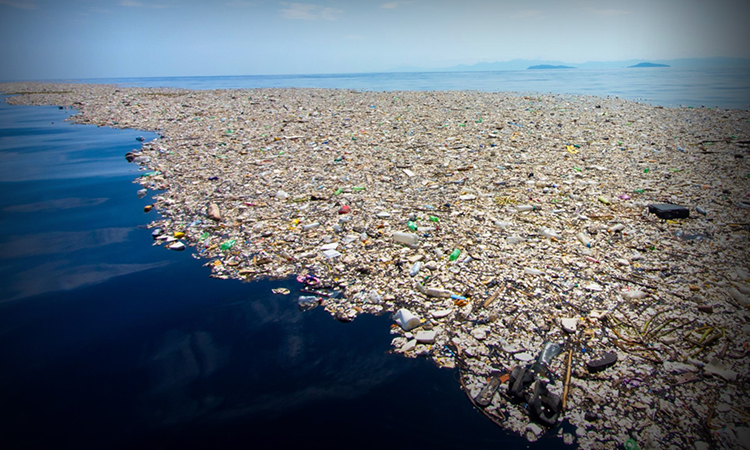
single use plastic dump

Internationally agreed policies can help overcome the limits of national planning and business action, sustain a flourishing circular global plastics economy, unlock business opportunities and create jobs. These may include agreed criteria for plastic products that could be banned, a cross-border knowledge baseline, rules on necessary minimum operating standards of EPR schemes and other standards.  

The report recommends that a global fiscal framework could be part of international policies to enable recycled materials to compete on a level playing field with virgin materials, create an economy of scale for solutions, and establish monitoring systems and financing mechanisms.  

Crucially, policymakers are encouraged to embrace an approach that integrates regulatory instruments and policies tackling actions across the life cycle, as these are mutually reinforcing towards the goal of transforming the economy. For example, design rules to make products economically recyclable can be combined with targets to incorporate recycled content and fiscal incentives for recycling plants. 

The report also addresses specific policies, including standards for design, safety, and compostable and biodegradable plastics; targets for minimum recycling; EPR schemes; taxes; bans; communication strategies; public procurement, and labeling.   

About the UN Environment Programme (UNEP) 

UNEP is the leading global voice on the environment. It provides leadership and encourages partnership in caring for the environment by inspiring, informing and enabling nations and peoples to improve their quality of life without compromising that of future generations. 

May 17, 2023 0 comment
0 FacebookTwitterPinterestEmail
EnvironmentMedia Coverage

Joshimath Crisis– Natural or Man made, Is it Landslide or land subsidence?

by Team Conscious Carma March 28, 2023
written by Team Conscious Carma

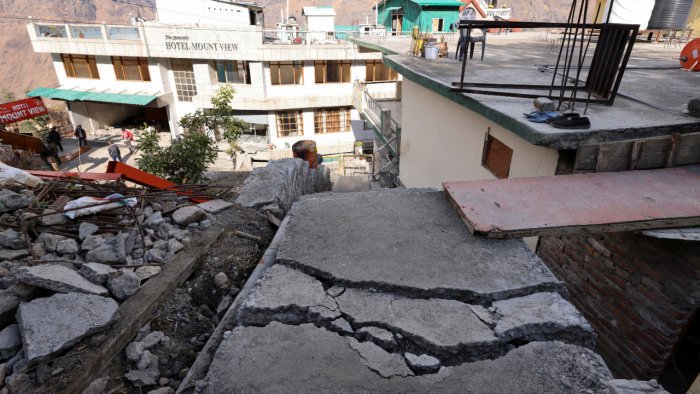
The reason behind the recent damage to buildings and other structures in Uttarakhand’s Joshimath is yet to be ascertained, whether it is land subsidence or land slide.  It has  led to dangerous cracks in over 863 houses of the around 4500 buildings the houses in the Himalayan town of India, since October 2021. At least 181 of the buildings have been placed in the unsafe zone, and 275 families have been moved out to safer areas.

The vulnerable nature of the natural habitat combined with over development have played havoc.

The town which was built on an ancient landslide debris, being landslide prone and vulnerable, combined with the pressure of development, have triggered the havoc.  It is yet another example of over exploitation of the natural and vulnerable resources. Thousands of pilgrims stay in Joshimath – known as the gateway to Badrinath and Hemkund Sahib pilgrimage sites – as they halt in the town on their way to Badrinath

Also, there was  February 2021 floods in Uttarakhand that resulted in over 200 dead and missing due to  an avalanche that dropped about 27 million cubic metres of rock and glacier ice from the nearby Ronti mountain.

National Disaster Management Authority (NDMA) in their concluding report on Uttarakhand floods stated, “In India, this is a unique, unprecedented and first reported incident of glacier ice and rock having a cascading impact on debris flow. But, similar types of rock falls and glaciered ice avalanche events took place in European Alps, the Russian Caucasus, Canada, and Nepal in the past. The effect of climate change and global warming are evident in Himalayan glaciers and mountains. Therefore, it is urgently needed to share and learn from the best practices available nationally and internationally to minimize the impact of future hazards and risks in the Indian Himalayan regions. It is also recommended that existing and future HEPs (Hydro-Electric Power Project) must follow recommendations/ suggestions and implement all necessary safety measures during all phases of activities including planning, feasibility studies, construction, and operation.”.

Source: https://ndma.gov.in/sites/default/files/PDF/Reports/Detalied_report_UK_Disaster.pdf

Infact, there are several other regions in the Himalayas facing a similar situation. Take for example, Rudraprayag’s Marora village, about 100 kms from Joshimath, also developed cracks in the houses in the year 2021. And as a result, out of 43 families of the village, 13 have shifted and the locals blame these cracks on the 125km long Rishikesh-Karnprayag rail project. While there are cracks reported from Karnprayag and Mussoorie as well.

“Unlike many mountain chains in the world, the Himalayas are the youngest and most unstable and are prone to natural disasters. Moreover they have a much lower carrying capacity than plains and thus cannot sustain more human pressure.  Himalayas should stop copying the plains – wider roads, high-rise buildings and big infrastructure projects”, says Chandra Bhushan, CEO, International Forum for Environment, Sustainability and Technology (iFOREST).

Joshimath: Landslide in the Joshimath of Chamoli district of Uttarakhand. Cracks started appearing in the houses due to landslides causing panic spread in the whole city. (PTI Photo) (PTI01_06_2023_000012B)

“Switch to sustainable tourism, follow the example of Bhutan, which has capped the number of travellers by imposing a sustainable development fee of $200 per day. A part of this fee goes into environmental protection and enhancing livelihood for local residents.  Create jobs in the environment sector- biodiversity conservation, high-value organic farming, sustainable forestry, glacier and water body protection, etc. And they can be incentivised by the rest of the country to do this. This is because they are major water sources that sustain the plains and their glaciers, forests and biodiversity are essential for country’s ecological security. While some progress has been made on payments for ecosystem services, a lot more needs to be done so that these states can develop and prosper without destroying themselves”, adds Bhushan.

Conclusion

There is no doubt that ecology and environment need to be protected for future generations, at the same time, development projects cannot be stalled, which are necessary not only for development, but at times for safety of citizens as well.

Half the Himalayan population at risk of multiple natural disasters

A study published in January 2022 by researchers in India, Canada and the US found that human settlements in the Himalayas are disproportionately concentrated in areas where the risk of hazards like landslides, floods and wildfires is high. Low-risk regions, in contrast are disproportionately unpopulated. Nearly half the population in the Himalayas lives in areas that face the risk of more than one type of hazard. The study found that areas that are susceptible to multiple hazards are also major corridors for migration and urban development, which are contributing to the rising risk of living in these regions.

Source: “Multi-hazard susceptibility and exposure assessment of the Hindu Kush Himalaya” by Jack Rusk et al, published in Science of The Total Environment

March 28, 2023 0 comment
0 FacebookTwitterPinterestEmail
Environment

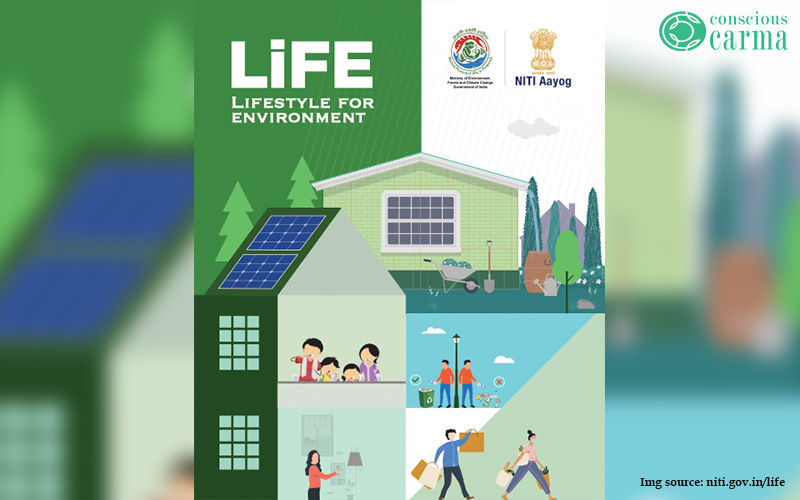
From COP26 to the G20: How the LiFE Project is Driving India’s Net-Zero Emissions Efforts

by Team Conscious Carma March 3, 2023
written by Team Conscious Carma

Anup Garg, Founder, and Director, World of Circular Economy (WOCE), a Delhi-based climate solutions start-up

India is a rapidly growing economy and one of the largest emitters of greenhouse gases (GHGs) in the world. With its rapidly increasing population, urbanization, and industrialization, India’s carbon footprint is only expected to grow, making it all the more imperative to take action toward reducing emissions and achieving its Net Zero Mission 2070.

The Indian government, under the leadership of Prime Minister Narendra Modi, launched the LiFE project at the COP26 conference in Glasgow in 2021. The project aims to promote sustainable lifestyles and tackle climate change, with a focus on carbon capture, carbon calculating, and offsetting. According to the International Energy Agency (IEA), the LiFE project could cut global emissions by 2 billion tonnes by 2030, which is approximately one-fifth of the emissions cuts needed to achieve net zero by 2030. This highlights the critical role that India can play in reducing emissions and mitigating the effects of climate change.

With India’s upcoming G20 Presidency this year, there is an opportunity to globalize the LiFE initiative and make a significant impact in the fight against climate change.

Carbon capturing, calculating, and offsetting are crucial elements of reducing India’s carbon footprint. The demand for companies providing these solutions is increasing, and there is a need for innovative approaches to address the country’s emissions.

This will discuss the challenges and solutions to reducing GHG emissions in India and the crucial role that carbon capturing, calculating, and offsetting play in this process.

Challenges in Reducing GHG Emissions

Scope 1, 2, and 3 emissions are the three main sources of GHG emissions. The primary challenge in reducing emissions from these sources lies in accurately capturing, calculating, and offsetting carbon emissions. The lack of a comprehensive, unified, and user-friendly system to measure, monitor and report emissions makes it difficult for organizations to report scope 3 emissions. The absence of incentives or recognition for reducing emissions also discourages people from taking action.

Solutions

Capturing Carbon Emissions: To accurately capture carbon emissions, India needs a one-stop solution for individuals and organizations that provides customized technologies and solutions. Entrepreneurs must collaborate to bring such an ecosystem into existence and refine it continually. This would involve investing in new technologies and tools to capture and measure carbon emissions from various sources, including industrial processes, transportation, and energy production.

Calculating Carbon Emissions: To overcome the challenges of calculating carbon emissions, organizations must simplify their reporting methods and adopt technologies that automate the calculation process. There is a growing demand for companies offering solutions that make it easy to report scope 3 emissions, which are the emissions from sources not directly controlled by the organization. The use of artificial intelligence and machine learning algorithms can make the calculation process much more efficient and accurate.

Offsetting Carbon Emissions: Carbon offsetting is the process of reducing or removing GHG emissions from one source to balance out emissions from another source. The Indian government can support the LiFE initiative by providing clear, consistent policy support and communication, such as low-emission zones in urban areas and encouraging consumer investments in clean energy technologies. Offsetting carbon emissions can be done by investing in renewable energy sources, planting trees, and implementing carbon capture and storage technologies.

Promoting Green Culture: To foster a green culture, it is important to incentivize individuals and organizations to reduce their carbon footprint. Rewarding people with reward points or gift vouchers for reducing their emissions can be an effective solution. This can also involve education and awareness campaigns to educate people about the importance of reducing emissions and the role they can play in this effort.

Projections

India’s emissions are projected to grow by 5.8% per year from 2020 to 2030, according to a report by the International Energy Agency (IEA). The country is expected to become the world’s second-largest emitter of CO2 after China by 2030, contributing to over 7% of global emissions. However, if the government implements the measures outlined in the LiFE project, it has the potential to significantly reduce these projections and take a leading role in the fight against climate change.

Conclusion

Reducing GHG emissions in India is a complex challenge that requires a multi-pronged approach. Accurately capturing, calculating, and offsetting carbon emissions, fostering a green culture, and providing clear policy support are all critical components. The LiFE project offers a comprehensive solution to reducing emissions in India and can be a catalyst for global change. With the right policies and incentives, India has the potential to take a leading role in the fight against climate change and achieve its Net Zero Mission 2070.

March 3, 2023 0 comment
0 FacebookTwitterPinterestEmail
Environmental Impacts of Food Production
Authored ArticlesEnvironment

Environmental Impacts of Food Production

by Team Conscious Carma February 22, 2023
written by Team Conscious Carma

by Hannah Ritchie and Max Roser

Food, energy and water: this is what the United Nations refers to as the ‘nexus’ of sustainable development.

As the world’s population has expanded and gotten richer, the demand for all three has seen a rapid increase. Not only has demand for all three increased, but they are also strongly interlinked: food production requires water and energy; water power can be used as a source of energy; agriculture provides a potential energy source.

In this image, you can find our data, visualizations, and writing relating to the environmental impacts of food.

Ensuring everyone in the world has access to a nutritious diet in a sustainable way is one of the greatest challenges we face.

Key insights on the Environmental Impacts of Food

Food production has a large environmental impact in several ways

What are the environmental impacts of food and agriculture?

The visualization here shows a summary of some of the main global impacts:

  • Food production accounts for over a quarter (26%) of global greenhouse gas emissions.
  • Half of the world’s habitable land is used for agriculture. Habitable land is the land that is ice- and desert-free.
  • 70% of global freshwater withdrawals are used for agriculture.
  • 78% of global ocean and freshwater eutrophication is caused by agriculture. Eutrophication is the pollution of waterways with nutrient-rich water.
  • 94% of non-human mammal biomass is livestock. This means livestock outweigh wild mammals by a factor of 15-to-1.
  • 71% of bird biomass is poultry livestock. This means livestock outweigh wild mammals by a factor of more than 3-to-1.

Tackling what we eat, and how we produce our food, plays a key role in tackling climate change, reducing water stress and pollution, restoring lands back to forests or grasslands, and protecting the world’s wildlife.

Hannah Ritchie and Max Roser (2022) – “Environmental Impacts of Food Production”. Published online at OurWorldInData.org. Retrieved from: ‘https://ourworldindata.org/environmental-impacts-of-food‘ [Online Resource]

February 22, 2023 0 comment
0 FacebookTwitterPinterestEmail
What Design Can Do - Creatives to Build a Circular Society
EnvironmentEvents

What Design Can Do Urges Creatives to Build a Circular Society — One Great Idea at a Time

by Team Conscious Carma January 19, 2023
written by Team Conscious Carma

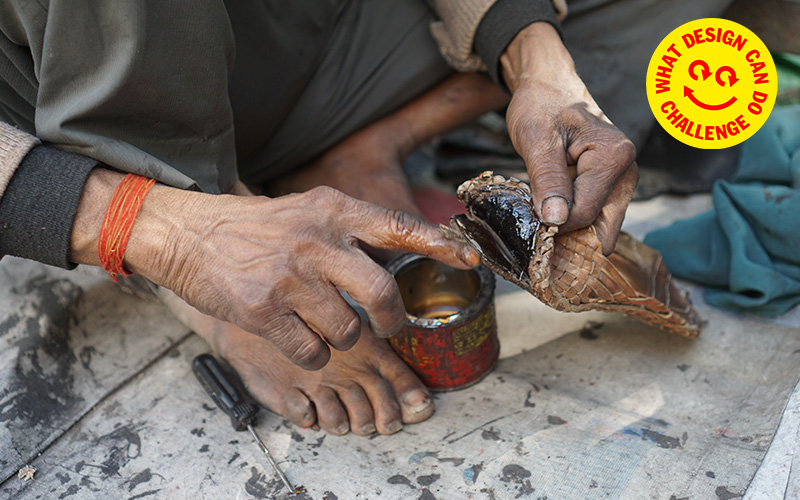
What Design Can Do (WDCD),  an international platform that advocates for design as a tool for social change since 2011, launched an ambitious design challenge programme in 2016 that engages the creative community with urgent societal issues such as the wellbeing of refugees and climate change. So far, the programme has resulted in €10m in funds raised by initiatives post programme. 

Their Fourth Challenge  Make it Circular Challengein partnership with the IKEA Foundation is inviting designers and creative entrepreneurs globally to submit design-driven innovations from 11 October 2022 – 31 January 2023.

When it comes to the climate crisis, there’s no time for cynicism. With millions of people already experiencing the effects of a warming planet first hand, we need to move forward with optimism and momentum. This is the driving force behind this challenge which is inviting solutions from all innovators — from designers to entrepreneurs — to submit their boldest climate solutions using circular design.

Winning proposals will be made into reality with an impact-driven development programme. The end goal? To create products, services and systems that are both user-centred and earth-centred, showing that a circular future is not only imaginable — but actionable.

THE HIDDEN POWER OF CREATIVITY

Most economies today are based on a linear model, where value is created by producing and selling as many products as possible. The problem is, it operates on the assumption that infinite growth is possible on a finite planet. Today, we are seeing just how wrong this assumption was, as we face an accelerating climate crisis. Yet when looking ahead at the route to a circular society, many people only see obstacles that they would rather not or cannot take on. One of the most important challenges is to convince them that we can create a new world which makes our lives not less but even more fulfilling.

circular society conscious carma

“Many people become lost in the face of so much outrage, fatigue and disinterest — but not creatives,” says Richard van der Laken, co-founder and creative director of WDCD. “The ability to imagine is the creative community’s ideal domain: seeing what does not yet exist, taking on a challenge, forging ahead with optimism.”

The challenge is released and executed in India by local amplification partners UnBox Cultural Futures Society and research partners, Quicksand Design Studio. 

“The Make it Circular Challenge shows how it is possible to use creative design practices to rethink our current problems, and address the most pressing needs in order to create a more equitable future for all. Our partnership with What Design Can Do will bring to designers and creative entrepreneurs an opportunity to drive meaningful change by submitting their radical climate solutions using actionable circular design principles,” says Ayush Chauhan, Managing Partner & Co-Founder, Quicksand Design Studio & UnBox Cultural Futures Society. Quicksand Design Studio is an interdisciplinary creative consultancy facilitating the creation of meaningful experiences through design research and innovation.

A jury of leading experts in design, social impact and climate action will select a minimum of 10 winners. Winning ideas are turned into reality with €10.000 in funding and a global development programme co-created with Impact Hub Amsterdam, which includes online training, mentoring sessions and a bootcamp. This programme will support the winning teams in further strengthening their projects, and propelling them through 2023 and beyond.

The Make it Circular Challenge is active in six countries around the world: Kenya Japan, Brazil, India, Mexico, and Netherlands.

For more information, visit www.whatdesigncando.com 

January 19, 2023 0 comment
0 FacebookTwitterPinterestEmail
EconomyEnvironment

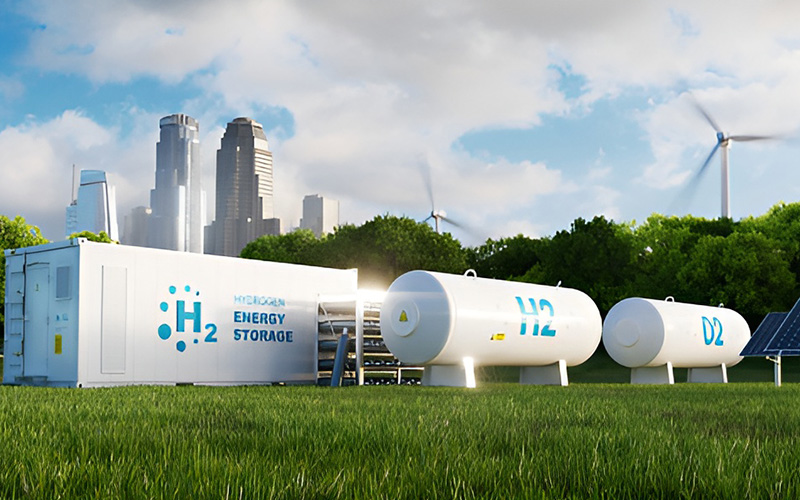
Indian govt approves National Green Hydrogen Mission

by Team Conscious Carma January 6, 2023
written by Team Conscious Carma
  • Aims to make India a Global Hub for production, utilization and export of Green Hydrogen and its derivatives
  • Will help in India becoming energy independent and in Decarbonisation of major sectors of the economy

India has taken a big leap towards its climate action goals with the Union Cabinet, chaired by the Hon’ble Prime Minister Shri Narendra Modi, approving National Green Hydrogen Mission.  The initial outlay for the Mission will be  Rs.19,744 crore.

The components of the mission include an outlay of Rs.17,490 crore for the SIGHT  programme, Rs.1,466 crore for pilot projects, Rs.400 crore for R&D, and Rs. 388 crore towards other Mission components. The allocation is expected to attract huge investments and encourage R&D, focussed on electrolysers, in the next few years.  Ministry of New & Reneawable Energy (MNRE) will formulate the scheme guidelines for implementation of the respective components.

Following likely outcomes by 2030:

  • Development of green  hydrogen production capacity of at least 5 MMT (Million Metric Tonne) per annum with an associated renewable energy capacity addition of about 125 GW in the country
  • Over Rs. Eight lakh crore in total investments
  • Creation of over Six lakh jobs
  • Cumulative reduction in fossil fuel imports over Rs. One lakh crore
  • Abatement of nearly 50 MMT of annual greenhouse gas emissions

“The Mission will have wide ranging benefits- creation of export opportunities for Green Hydrogen and its derivatives; Decarbonisation of industrial, mobility and energy sectors; reduction in dependence on imported fossil fuels and feedstock; development of indigenous manufacturing capabilities; creation of employment opportunities; and development of cutting-edge technologies.  India’s Green Hydrogen production capacity is likely to reach at least 5 MMT per annum, with an associated renewable energy capacity addition of about 125 GW.  The targets by 2030 are likely to bring in over Rs. 8 lakh crore investments and create over 6 lakh jobs.  Nearly 50 MMT per annum of CO2 emissions are expected to be averted by 2030”, according to an official statement on the cabinet’s decisions.

The Mission will facilitate demand creation, production, utilization and export of Green Hydrogen.  Under the Strategic Interventions for Green Hydrogen Transition Programme (SIGHT), two distinct financial incentive mechanisms – targeting domestic manufacturing of electrolysers and production of Green Hydrogen – will be provided under the Mission.  The Mission will also support pilot projects in emerging end-use sectors and production pathways.  Regions capable of supporting large scale production and/or utilization of Hydrogen will be identified and developed as Green Hydrogen Hubs.

Unlike grey hydrogen which uses natural gas, green hydrogen is produced by the electrolysis of water using renewable energy and thus doesn’t emit carbon dioxide into the atmosphere.

January 6, 2023 0 comment
0 FacebookTwitterPinterestEmail
Environment

Indore gets ‘Tree Ambulance’ for protection of its biodiversity

by Team Conscious Carma December 24, 2022
written by Team Conscious Carma

Madhya Pradesh’s Indore has now got ‘Tree ambulance’ which will provide all necessary facilities to preserve and protect the biodiversity in the city. Clean City Indore, which is consistently ranked number one in cleanliness, is now moving towards becoming a Green City as well.

In order to protect biodiversity and to keep the city green, the Indore Municipal Corporation in collaboration with its Horticulture department has installed vehicles with all the necessary facilities for the protection of greenery in the capital city. The ‘Tree ambulance’ is equipped with all the facilities for maintaining and keeping the trees around the city healthy. This ambulance has been prepared in the workshop of the Municipal Corporation itself and will treat sick, worm-infested trees and plants.

All facilities and equipment including spraying of trees, spraying of water as well as cutting and pruning are there in the ambulance. Pushyamitra Bhargav, Mayor of Indore said, “Tree ambulance set up by Indore Municipal Corporation for the protection of biodiversity ‘Tree ambulance’ is all-in-one with necessities like sprinklers, water arrangements, medicines and other instruments, to maintain green Indore.” The ambulance will be operated by the Horticulture Department of the Municipal Corporation.

December 24, 2022 0 comment
0 FacebookTwitterPinterestEmail
Newer Posts
Older Posts

Recent Posts

  • Norwegian Cruise Line Holdings Publishes Annual Environmental, Social and Governance (ESG) Report Detailing Progress on Sustainability Initiatives
  • Norwegian Cruise Line Holdings Publishes Annual Environmental, Social and Governance (ESG) Report Detailing Progress on Sustainability Initiatives
  • Norwegian Cruise Line Holdings Publishes Annual Environmental, Social and Governance (ESG) Report Detailing Progress on Sustainability Initiatives
  • Norwegian Cruise Line Holdings Publishes Annual Environmental, Social and Governance (ESG) Report Detailing Progress on Sustainability Initiatives
  • Norwegian Cruise Line Holdings Publishes Annual Environmental, Social and Governance (ESG) Report Detailing Progress on Sustainability Initiatives

Recent Comments

  • Team Conscious Carma on Label Shivika Agarwal – where craft meets sustainability
  • Cocomeister.jp on Label Shivika Agarwal – where craft meets sustainability
  • Team Conscious Carma on Equitable City Designs To Fight Climate Change
  • UN report calls for repurposing of USD 470 billion of agricultural support that distorts prices and steer us away from environment and social goals | Consciouscarma on UNEP & ICMR collaborate to boost understanding of environmental dimensions of antimicrobial resistance in India
  • Wild Earth : Natural body products | Consciouscarma on Sat.Suma : the true essence of flowers in your everyday skincare needs

Keep in touch

Facebook Twitter Instagram Youtube

Recent Posts

  • Norwegian Cruise Line Holdings Publishes Annual Environmental, Social and Governance (ESG) Report Detailing Progress on Sustainability Initiatives

  • Norwegian Cruise Line Holdings Publishes Annual Environmental, Social and Governance (ESG) Report Detailing Progress on Sustainability Initiatives

  • Norwegian Cruise Line Holdings Publishes Annual Environmental, Social and Governance (ESG) Report Detailing Progress on Sustainability Initiatives

  • Norwegian Cruise Line Holdings Publishes Annual Environmental, Social and Governance (ESG) Report Detailing Progress on Sustainability Initiatives

  • Norwegian Cruise Line Holdings Publishes Annual Environmental, Social and Governance (ESG) Report Detailing Progress on Sustainability Initiatives

  • Norwegian Cruise Line Holdings Publishes Annual Environmental, Social and Governance (ESG) Report Detailing Progress on Sustainability Initiatives

Categories

  • Community (35)
    • Campaigns (3)
  • CSR (4)
  • Economy (81)
    • Global (24)
    • Industry (41)
    • Innovations (4)
    • National (2)
  • Environment (41)
  • Expert Corner (46)
    • Authored Articles (45)
  • Featured (3)
    • Partners (1)
  • Global News (2)
  • Initiatives (29)
    • CSR (2)
    • Events (5)
  • Inspiration (22)
  • Lifestyle (9)
  • Media Coverage (6)
  • Press Releases (1,061)
  • Products (119)
    • Accessories (25)
    • Apparel (30)
    • Beauty (25)
    • Food (3)
    • Gifting (3)
    • Home Décor (15)
    • Skin-Care (13)
  • Reports (3)
  • Spirituality (8)
  • Sustainability (38)
  • Sustainable Startup Stories (27)
  • Travel (19)
  • Uncategorized (2)
  • Wellness (25)
    • Home Cleaners (3)

Archives

  • June 2023 (337)
  • May 2023 (623)
  • April 2023 (120)
  • March 2023 (7)
  • February 2023 (3)
  • January 2023 (11)
  • December 2022 (18)
  • November 2022 (1)
  • August 2022 (6)
  • July 2022 (8)
  • June 2022 (24)
  • May 2022 (11)
  • April 2022 (19)
  • March 2022 (11)
  • February 2022 (11)
  • January 2022 (14)
  • December 2021 (10)
  • November 2021 (4)
  • October 2021 (14)
  • September 2021 (22)
  • August 2021 (12)
  • July 2021 (17)
  • June 2021 (17)
  • May 2021 (16)
  • April 2021 (22)
  • March 2021 (33)
  • February 2021 (16)
  • January 2021 (22)
  • December 2020 (10)
  • Facebook
  • Twitter
  • Instagram
  • Pinterest
  • Linkedin
  • Youtube

@2020 - All Right Reserved. Designed and Developed by Seatice Business

Consciouscarma
  • Home
  • About Us
  • Products
  • Community
    • Campaigns
    • Inspiration
    • Initiatives
    • CSR
  • Features
    • Sustainable Startup Stories
    • Travel
    • Lifestyle
    • Partners
  • Economy
    • Industry
    • Innovations
    • National
    • Global
  • Environment
  • Expert Corner
    • Authored Articles
    • Reports
  • Magazine
  • Contact