Consciouscarma
  • Home
  • About Us
  • Products
  • Community
    • Campaigns
    • Inspiration
    • Initiatives
    • CSR
  • Features
    • Sustainable Startup Stories
    • Travel
    • Lifestyle
    • Partners
  • Economy
    • Industry
    • Innovations
    • National
    • Global
  • Environment
  • Expert Corner
    • Authored Articles
    • Reports
  • Magazine
  • Contact
Monthly Archives

April 2022

AccessoriesProducts

BOTTLETOP AND #TOGETHERBAND PARTNER WITH THE INDIGENOUS YAWANAWÁ COMMUNITY TO LAUNCH A YAWANAWÁ JEWELLERY COLLECTION IN SUPPORT OF THE AMAZON RAINFOREST AND INDIGENOUS RIGHTS

by Team Conscious Carma April 30, 2022
written by Team Conscious Carma

BOTTLETOP’s #TOGETHERBAND campaign is partnering with the Yawanawá, an Indigenous Brazilian community living in the heart of the Amazon rainforest, to create a range of unisex, vegan and zero-waste jewellery, hand-crafted from açaí seeds, the natural by-product from collecting the fruit to make juice for the community. 

The timeless collection of bracelets and necklaces acts as a powerful symbol from Indigenous Peoples, our true guardians of the natural world, to stand by them in support of climate action and protecting our forests. They make up less than 5% of the world’s population yet preserve 80% of the world’s remaining biodiversity.

The seeds are hand-painted, then woven together using fine Parley Ocean Plastic® thread. The bracelets have been created in natural, black, green, red, blue and a special edition multicolour featuring each of the 17 UN Sustainable Development Goal colours. The necklaces are available in two different lengths and have been created in natural, black and special edition multicolour. Each product also features a distinctive single seed cast from Humanium Metal, which is repurposed from decommissioned, illegal firearms, seized from the streets of Central America. In this way, the production of Humanium Metal helps to end armed violence and rebuild conflict-torn societies.

BOTTLETOP and #TOGETHERBAND have proudly committed to working with the Yawanawá community, having funded a permanent Rainforest Atelier and Workshop, with the aim of providing sustainable, long-term employment opportunities. The ongoing partnership will help protect the community’s cultural heritage and artisan skills in creating sustainable products made from materials that are natural to the forest. It will also provide a source of independent income for the Yawanawá people and allow them to continue with their traditional way of life. 

Right now, Indigenous Peoples in the Amazon are fighting a series of legislation that aims to throw Indigenous lands open to exploitation. Empowering Indigenous communities to protect their natural ecosystems is fundamental for us all in the fight against climate change.

‘Our precious forest is under great threat. It is burning. We protect the forest and she protects us. We live in harmony. The forest provides us with medicine. With shelter. With sacred knowledge. And with a livelihood. A healthy forest is vital not just for us. But for the healthy future of all humankind. For our children and their children. The açaí fruit is very special to our people. We are partnering with BOTTLETOP to create the Yawanawá collection as a symbol of hope for the future of the forest and our community. With this jewellery, we can preserve the cultural heritage and craft of our community. And provide a livelihood for our people. Help us protect mother nature. Help us protect our home.’ Tashka Yawanawá, Chief of the Yawanawá

‘Indigenous communities have lived in harmony with the planet for centuries. They are nature’s guardians and yet continually face issues from outsiders who threaten their very existence. I was privileged enough to spend time with the Yawanawá in Brazil and saw first-hand how they care for and protect the rainforest. This partnership will not only enable the community to thrive and achieve their goals but will allow them to protect the lungs of the planet.’ Cameron Saul, Co-Founder of BOTTLETOP and Co-Creator of #TOGETHERBAND

The jewellery collection starts at £25 and is available from www.togetherband.org By supporting the Yawanawá community and helping them achieve their goals, BOTTLETOP and #TOGETHERBAND hope to raise awareness of the struggles Indigenous communities face and provide a long-term sustainable livelihood.

ABOUT BOTTLETOP

BOTTLETOP is a luxury, sustainable accessories brand that began in 2002 through a handbag design collaboration with iconic British fashion house Mulberry, supporting artisans in Africa and local health education projects. With the BOTTLETOP atelier in Brazil and workshops in Nepal, the brand continues to provide skills and livelihoods for artisans in disadvantaged parts of the world.

BOTTLETOP is also a technical innovator; working to develop and apply the most innovative waste and sustainably sourced materials to its collection, including upcycled metal, marine plastic, Humanium metal (recycled decommissioned firearms), Zero Deforestation Leather and wild rubber. In November 2017 BOTTLETOP opened on Regent Street with the first ever 3D printed store created from waste plastic.

ABOUT #TOGETHERBAND

The #TOGETHERBAND campaign was launched on Earth Day 2019 by sustainable accessories brand BOTTLETOP in partnership with the UN Foundation. It uses creativity and culture to raise public awareness of the UN Sustainable Development Goals and inspire action to achieve them. The campaign has achieved a reach of over 7 billion, bringing together active citizens connected through sustainable fashion, contemporary art, music and documentary film. Ambassadors range from David Beckham and Naomi Campbell, to Halima Aden, Lewis Hamilton and Jameela Jamil. Every #TOGETHERBAND is made from reclaimed Parley Ocean Plastic®, decommissioned firearm metal and is handcrafted by artisans in Nepal, creating skills and livelihoods for local women. 

ABOUT THE YAWANAWÁ COMMUNITY

The Yawanawá, known as the people of the Wild Boar, are an Indigenous community from the State of Acre, Brazil. They live in harmony with their surroundings due to their centuries-old observation and interaction with nature, subsistence economy and spiritual connection to lands and territories. They ensure the balance of the Amazon rainforest, so it may continue to provide water, fertile soil, food, shelter and medicine. 

For hundreds of years they have survived outsiders stealing their land and resources, being enslaved, and having their traditional customs and livelihoods taken away from them. Their ancestral land was finally delineated in the 1980s by the Brazilian government which legally marked out their territory. Their threats, however, are far from over with the introduction of bills PL 490/2007 and PL191/2020 will take away their land rights and leave the Amazon open to being burnt down and mined.

April 30, 2022 0 comment
0 FacebookTwitterPinterestEmail
Environment

Sand is the world’s second most exploited resource and must be wisely managed, says UNEP report

by Team Conscious Carma April 27, 2022
written by Team Conscious Carma
  • Strategic recognition for sand and actions across sectors needed, report urges
  • Sand is the world’s second most exploited resource and must be wisely managed
  • Legal changes, recycled building material, crushed rock and ‘ore-sand’ from mining, among solutions.  

50 billion tons: enough to build a wall 27 metres wide and 27 metres high around planet Earth. This is the volume of sand and gravel used each year, making it the second most used resource worldwide after water. Given our dependency on it, sand must be recognised as a strategic resource and its extraction and use needs to be rethought, finds a new report by the United Nations Environment Programme (UNEP). The UN Environment Programme is the leading global voice on the environment. It provides leadership and encourages partnership in caring for the environment by inspiring, informing and enabling nations and peoples to improve their quality of life without compromising that of future generations. 

The report, Sand and Sustainability: 10 strategic recommendations to avert a crisis, released on Apr 26th, 2022 by UNEP’s GRID-Geneva team, provides the necessary guidance gathered from world experts to switch to improved practices for the resource’s extraction and management.

Extracting sand where it plays an active role, such as rivers, and coastal or marine ecosystems, can lead to erosion, salination of aquifers, loss of protection against storm surges and impacts on biodiversity, which pose a threat to livelihoods through, among other things, water supply, food production, fisheries, or to the tourism industry. 

According to the report’s authors, sand must be recognised as a strategic resource, not only as a material for construction, but also for its multiple roles in the environment. They stress that governments, industries and consumers should price sand in a way that recognises its true social and environmental value. For example, keeping sand on coasts may be the most cost-effective strategy for adapting to climate change due to how it protects against storm surges and impacts from sea level rise – such services should be factored into its value. 

An international standard on how sand is extracted from the marine environment should also be developed, the report proposes. This could bring about dramatic improvements as most marine dredging is done through public tenders open to international companies. Meanwhile, the report recommends that the extraction of sand from beaches be banned due to its importance for coastal resilience, the environment and the economy.

“To achieve sustainable development, we need to drastically change the way we produce, build and consume products, infrastructures and services. Our sand resources are not infinite, and we need to use them wisely. If we can get a grip on how to manage the most extracted solid material in the world, we can avert a crisis and move toward a circular economy,” said Pascal Peduzzi, Director of GRID-Geneva at UNEP and overall programme coordinator for this report.

Infrastructure, homes, food and nature at stake 

Sand is critical to economic development, needed to produce concrete and build vital infrastructure ranging from homes and roads to hospitals. By providing habitats and breeding grounds for diverse flora and fauna, sand also plays a vital function in supporting biodiversity, including marine plants that act as carbon sinks or filter water. The resource will be crucial to achieving the Sustainable Development Goals and tackling the triple planetary crisis of climate change, pollution and biodiversity loss. However, it is being used faster than it can be naturally replenished, so its responsible management is crucial.

A circular economy is within reach 

The authors note that solutions exist for moving towards a circular economy for sand, including  banning the landfilling of mineral waste and encouraging sand to be reused in public procurement contracts are among the policy measures cited. Crushed rock or recycled construction and demolition material, as well as ‘ore-sand’ from mine tailings are among the viable alternatives to sand that should also be incentivised, the report details.

They add that new institutional and legal structures are needed for sand to be more effectively governed and best practices shared and implemented. Sand resources must furthermore be mapped, monitored and reported on, the report recommends. Meanwhile, all stakeholders must be involved in decisions related to the management of sand to allow for place-based approaches and avoid one-size-fits-all solutions, the paper stresses. 

The report follows a resolution on Mineral resource governance adopted at the fourth United Nations Environment Assembly (UNEA) that called for actions on sustainable sand management. This mandate was confirmed at UNEA-5 in 2022 in the new resolution titled Environmental aspects of minerals and metals management, adopted by all member states.  

April 27, 2022 0 comment
0 FacebookTwitterPinterestEmail
CommunityInitiatives

Annual Farmers and Flea Market, Nashik

by Team Conscious Carma April 26, 2022
written by Team Conscious Carma

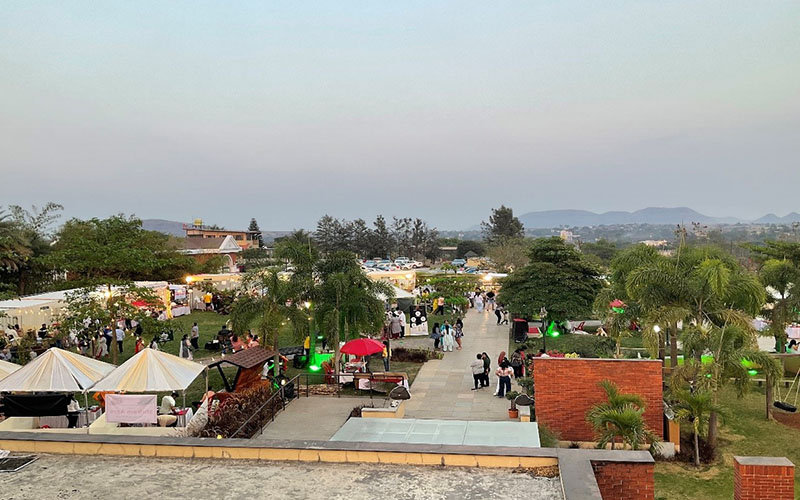
It was raining “Organic” at the Grape County’s precincts –By Dr. Freeda Maria

There is no greater joy than seeing your hard work, being recognized and the fruits of your labor being appreciated. There is no greater joy for a farmer who has toiled on his fields, fighting the harsh weathers with a grit to see his blooms. There is no greater joy, than to finally see his blooms and produce, laid out for people to buy and consume. The joy gets doubled, when he finds his produce displayed in a place which is frequented by all kinds of people, local and from outside, for its green practices…

A 20-acre property fanning out within the 250-acre sprawling biodiverse rich area. A 2000-acre reserve forestland just a stone’s throw away!

Welcome to the annual Flea and Farmer’s Market conceptualized by Green Spaces’, Grape County Resort, Nashik (https://www.grapecounty.in/). And this is the fourth time in a row for four years that they have hosted the event, in their resort premise. Carefully curated and crafted: for the best producers around this beautiful countryside, come together to showcase their labor of love.

The Valley as we call it, Nasik lies on the western edge of the Deccan Plateau, an ancient volcanic formation. Flowing through these open fertile lands are the Girna and the Godavari rivers. Being a grape country, half of our country’s vineyards and wineries are located here. A whopping 90 percent of all wine produced in our country comes from these Valleys. The strategic location of this place the bounty that is water and fertile land present, farmers have seen some good crops and are constantly thinking of employing good and sustainable practices in farming. They pride themselves of growing organic vegetables with zero use of chemical pesticides and insecticides.

What stands apart with this Farmers market and Flea market is that both have been combined. The flea market which is essentially a large open-air market where goods that are second hand, home-made crafts or merchandise are spread out for sales. Whereas Farmers markets are more retail markets that allows people to sell homegrown fruits and vegetables directly from the farmer to the customer. These markets are not limited to fruits and vegetables and can also have meat, live animals, baked goods, dairy products, poultry, and various other food items.

The Nashik Valley is a Sugarcane, Onions, Grapes and Pomegranate land. Every aim of this Market is to promote the indigenous farmers, who have marginalised lands. The stalls are given free of cost for three days with an aim to add it as an annual activity.

The Concept of having a Framers’ market and Flea market at GC (Grape County) was to give an opportunity to both kinds. The stalls at GC, reflect the sheer variety and innovation in their products and blooms. There even was an organic sugarcane juice maker bidding his business of zero maintenance and pure freshly pressed juice with the work his hands! The Machine runs with no motor or battery, the turning of the two wheels is the magic behind that refreshing glass of pure pleasure!

I chanced upon a brick slab on which few loosely packed products were placed and sitting by it this very elegant and smiling lady… neatly dressed in her traditional attire and going about her day, with her weary eyes looking for customers. Her offer was that of packets of homemade jaggery powder, from sugarcane grown on her fields, ragi powder and chakki (mill stone)pressed green gram, unpolished and broken down and unpolished raw rice.

One individual caught my immediate attention as I walked past, throwing glances at the many counters that had an array of things displayed. Shrushti organics grows its products using “Jeevamruth” to control pests replacing the chemical ones.  This is the traditional Indian  bio pesticide and organic manure that is prepared combining and fermenting cow dung, cow urine, jaggery, pulses flour, soil and water. His specialties include Rice, Sugarcane and Jaggery, processed products like Oils of Mustard, groundnut, sunflower, sesame and Desi Ghee.

A special mention goes out to the counter of Viveda Wellness Village, a unique concept of self-care and healing, this wellness centre has become a place of organic and wellness products. The centre uses traditional knowledge and local ingredients to make products like face packs, healing oils, bathing, and self-care products. (https://vivedawellness.com/). The counter of Grape County had its fruits, juices and other delectables, from farm to the counter, fresh and organic.

Our Flea Market was abuzz with Colours, and with creations from Local Women Entrepreneurs. Paintings, natural stones, Homemade soaps and cosmetics, I was spoilt for choices! Here are some pictures ….

April 26, 2022 0 comment
0 FacebookTwitterPinterestEmail
BeautyProducts

Arbū, the new generation of clean beauty

by Team Conscious Carma April 25, 2022
written by Team Conscious Carma

“Beauty is not only about how you look but how you live according to your moral values as a daily practice. Beauty is also in the small steps leading to environmental conscientiousness. arbū (arbū comes from the Latin root for tree), is a manifestation of the innate knowledge of how to always be in tune with the true needs of the mind and body.” – Violeta Malinova

Founded by Violeta Malinova, arbū was thoughtfully created not only as a unique skincare system that uses pure organics and modern science but as a philosophical concept. A leading innovator within the clean beauty market, arbū is a skincare brand which uses natural ingredients to guarantee high performance and visible results.

Violeta has always been drawn to living in tune with nature. An accomplished synchronized swimmer in her youth, she observed a regimen of wholesome food and natural remedies. And later, as a television producer and anchor, she instilled in her audience appreciation for sustainable living.

Extensive research was carried out to ensure the best practices and ingredients were being used throughout the range. Malinova consulted with leading dermatologists to ensure each product was created based on firm scientific evidence. And so, the need to replace man-made chemistry in beauty products with pure natural ingredients was born. All chemicals that are typically used in skincare products were replaced with powerful high quality natural ingredients.

arbū’s signature ingredient is Rosa Damascena Oil. The oil is extracted by water stream distillation and each Bulgarian Rose is meticulously hand-picked. The Rosa Damanscena Oil has the richest and most complex aroma, which makes it popular and sought after in the cosmetics industry. Furthermore. It has uplifting and relaxing properties for the nervous system, has the ability to calm and harmonize.

The collection also includes the Rejuvenating cream, Time Shift, a glamourous formula infused with Diamond Dust and Rose Essential Oils designed to restore the youthful appearance of the skin. Eye creams, rich moisturisers, and lip balms, including products for men and children complete the collection offering an extensive range for the whole family.

“We are the new generation of clean beauty, creating precisely targeted natural skincare that delivers results”, adds Violeta who is supported by her husband, Vlado, in this venture.

“Clean food for the mind and the body, along with care for the environment, are essential human virtues,” Violeta shares. “To Vlado and me beauty is not just how you look, but how you live in accordance with your moral values. arbū embodies this balance. We created arbū in our search of harmony with the natural world that surrounds us.”

Products range from £11- £170

Available to buy online at: https://arbucosmetics.com/

April 25, 2022 0 comment
0 FacebookTwitterPinterestEmail
BeautyProducts

Kiehl’s has planned a future with zero waste

by Team Conscious Carma April 23, 2022
written by Team Conscious Carma

As global citizens it is a responsibility to reduce plastic waste and help in curbing the global environmental crisis on plastic. In the beauty industry, 153 billion units of plastic is products and 40% of that is single use plastic that would end up at a landfill. In a movement to stop use of single use plastic there has been a rise of eco conscious consumers who are giving a boost to products that support sustainable beauty. Hence Kiehl’s as a brand has planned a future with zero waste.

Kiehl’s India has devised a programme to get consumers to kickstart their sustainability journey. As part of the Recycle & Be Rewarded Programme, all Kiehl’s stores have a recycle box where they can take their empty product containers for recycling. They are rewarded for taking this step towards a better future, and earn points that can later be accumulated and redeemed for Kiehl’s products.

In this journey Kiehl’s plans to Refill today, Reduce the waste by tomorrow and in the future rethink on making future more sustainable. This requires a paradigm shift –as the first step towards zero-waste vision, looking at ways to reduce waste, especially from a packaging perspective. Kiehl’s India products are also manufactured sustainably. The formulas are made with 98% renewable ingredients, 80% post recycled material and use renewable electricity.

Since its inception in 2020, the Co2 emissions have been reduced by 82%, water consumption has been reduced by 21% and waste generation has been drastically reduced by 36%. The Recycle & Be Rewarded Programme has increasingly gained popularity and brings in a growing number of consumers to the store to participate in the initiative.  

Since 1851, Kiehl’s has always strived for better – from responsible formulations, packaging & manufacturing to supporting communities and helping to reduce environmental impact. Kiehl’s is proud to continue its journey towards a Future Made Better™ with its first foray into refillable beauty – Kiehl’s Pouch Refillables. Refill, reuse & reduce single-use plastic waste in your daily routine with rich, gentle & refreshing body care. The Creme De Corps is a sumptuous all-over body moisturizer enriched with cocoa butter and squalene that helps visibly restore dull and dry skin into radiant, soft and supple skin.

Simple yet mindful steps taken by a beauty brand such as Kiehl’s is helping transform consumers as well to join hands and ensure a better. To innovate and execute such initiatives that promote the greater good is key to cleaning up our act as a society and becoming a powerful force against the environmental crisis. The Earth is our home and we must work tirelessly to sustain it in its entirety for the generations to come.  

April 23, 2022 0 comment
0 FacebookTwitterPinterestEmail
AccessoriesProducts

Go Sustainable & Invest in our Planet

by Team Conscious Carma April 22, 2022
written by Team Conscious Carma

The theme for this year’s Earth Day is ‘Invest in Our Planet’, stating that a greener future is a prosperous future. It encourages humanity to act, innovate, and implement sustainable choices in our practices and daily lives.

Etsy, the global marketplace for unique and creative goods, have creative entrepreneurs that are embracing sustainability, and practicing their art to produce greener results.

Team Conscious Carma picked up three such small business owners from the fashion space who integrate eco-friendly methods in their craft such as upcycling, and mini-wastage.

1. Papermelon by Devi Chand (Tamil Nadu)

Devi Chand is the founder and artist at Papermelon, a sustainable jewellery and decor brand made with upcycled paper. Based in a small home studio in Chennai, Papermelon reflects a colourful India. Devi’s fascination for design and paper started in her younger years, when she made tiny gift boxes and glitter baubles from candy wrappers. In 2009 she decided to leave her corporate job to start Papermelon. Since then, Devi has been busy shape-shifting discarded paper materials into extraordinary pieces of jewellery.  

Papermelon is a one-of-a-kind label that weaves handcrafted jewellery using minimal tools and no machinery in production. Devi captures the essence of everything she loved about her childhood and aspires to share the same magic with her buyers. Papermelon follows a zero waste policy and strives to transform everyday objects into playful & colourful pieces of wearable art. Paper is one the few truly sustainable products as it is made with wood, and is also one of the most recycled products on the planet. Devi obsessively collects all kinds of paper – newspapers, magazines, calendars, paper bags, gift wraps, and pamphlets. She’s grateful to her network of friends, neighbours and well-wishers, who unconditionally pass on their stash of vibrant paper they have collected. All supporting beads, cords and silver findings are sourced locally from small home-run businesses.The jewellery is packed in beautiful cardboard boxes handcrafted by local artisans. These boxes are reusable and recyclable, with recycled crinkle paper used as packing filler inside the boxes. Devi follows a zero waste policy in her studio by transforming everyday objects into efficient work equipment. For example, old pens and bottles are upcycled as moulds to make the base of rings and bracelets.

Today,  Devi is shipping her stunning paper jewellery to about 35 countries

2. Ninoshka by Ninoshka Alvares E Delaney (Goa)

Ninoshka is a zero waste, Indian National Award winning, apparel brand. Designer Ninoshka Alvares E Delaney always wished that her profession would act as a means for her to give back to nature and society in her own little way. Hence, after working 10 years in the Industry in Mumbai, she relocated to Goa, where she launched her label Ninoshka which focuses on sustainable fashion. Ninoshka finds her inspiration in her collaboration with artisans. Her penchant for minimalism urges her to create silhouettes which cater to all age groups, and have an international appeal despite its Indian identity.

Ninoshka’s products aim to create social improvement and environment awareness. In 2016, Ninoshka was presented with the National award for best design for handloom Indo-western menswear by the Ministry of Textiles, Govt. of India. The label follows a philosophy of zero waste, and giving back. Keeping up with this notion, Ninoshka strives to use natural and organic materials, such as indigo, pomegranate, marigold, onion peels, coconut, and more, which are earth and skin friendly. She works closely with handloom weavers from across India to procure Khadi, Malkha, Ikat, and Chanderi among others. The label also practices dyeing techniques such as tie and dye, bandhani and shibori, and printing metaphors such as Ajrak and Kalamkari. Ninoshka works with rural Indian artisans for most of her embroidery work. With this practice, she not only creates employment opportunities, but by being a fair trade advocate, she makes sure that the artisans receive fair wages.

Following an approach of Reduce-Reuse-Recycle, she reduces wastage and the use of precious resources by creating minimalistic designs and upcycled apparel. Some of her designs are constructed in a single stitch line, while some others can be reused by wearing the garment inside-out, or in multiple ways. Ninoshka also upcycled remnant pieces of fabric and thread,  to create new products, thus making it a new zero waste brand. As of September 2020, Ninoshka is the only designer in Goa to have the Indian handloom brand mark and registration for the work she has done.

3. KnitSanyasini by Priyamvada (New Delhi)

Priyamvada is a knitter who sees hand-knitting as a medium of art, with the needles being the brush and the yarns being the paint. She believes that hand knitting is a conscious effort to connect with oneself and the environment, and is strongly inspired by a sustainable yet creative palette that makes up her vibrant creations.

Priyamvada leant the craft like most who fall in love with knitting – as a young girl watching her grandmother, aunt and mother, knit scarves, beanies, gloves with their deft hands. This awoke an interest in her to create garments that are caring, and well as pieces of self-expression.


With her drive and passion, Priyamvada pursued a Bachelor’s degree in Knitwear Design from NIFT, which helped her procure knowledge and technical skills of knitting and yarn varieties. She developed an entirely hand-knit collection of five ensembles for her final graduation project which won the award for The Best Design Collection. KnitSanyasini is a continuation of her knitting story where she upcycles all the yarn collected over the years to make unique handcrafted wearable art.

Priyamvada spends ample time experimenting in her kitchen, not baking bread or preparing food, instead she brings to boil various concoctions of beetroot, pomegranate turmeric, tea, and coffee. Each ingredient is patiently stirred and boiled up to a different temperature, all to create natural and beautiful hues for KnitSanyasini, her sustainable hand-crafted knitwear label. The process of washing, drying , rolling and winding the yarn is all done by done. The only tools involved are basic kitchen utensils and Priyamvada’s knitting needles.

April 22, 2022 0 comment
0 FacebookTwitterPinterestEmail
EnvironmentSustainability

World Earth Day 2022, The theme of this year’s Earth Day is “Invest in our Planet”.

by Team Conscious Carma April 22, 2022
written by Team Conscious Carma

Earth overshoot Day, is one such important parameter which can show how ruthlessly we are consuming the renewable resources of the Planet Earth.  And inspite of all the talks and guidelines, nothing actually is happening in controlling our greed to consume.

Earth Overshoot Day marks the date when humanity’s demand for ecological resources and services in a given year exceeds what Earth can regenerate in that year. The term “overshoot” represents the level by which human population’s demand overshoots the sustainable amount of biological resources regenerated on Earth.

Earth Overshoot Day in 2018 : Aug 1st
Earth Overshoot Day in 2019 :  July 29th
Earth Overshoot Day in 2020: Aug 22nd  
Earth Overshoot Day in  : July 29th

According to Global Footprint Network (GFN),  an organization that collects each country’s consumption data and compares those data with the biocapacity of the planet, humanity’s demand for resources is now equivalent to that of more than 1.7 Earths.  The data shows us on track to require the resources of two planets well before mid-21st century. The costs of resource depletion are becoming more evident. Climate change — a result of greenhouse gases  being emitted — is the most obvious result and widespread effects. Other biophysical effects include: deforestation, species loss or fisheries collapse. Such resource insecurity can lead to economic stress (such as monetary inflation) and conflict (such as civil unrest)

The data pertaining from the recent years have highlighted India as a role model in the context of consumption of resources. While major countries have been major exploiters of the Earth’s natural resources, the Indian lifestyle provides for a possible solution to the problem. Some of the frontline countries consuming resources are Qatar, Luxembourg, the UAE, France, the UK, Germany, China, and Indonesia. It has been found that if the entire world starts living like the Qataris, an entire year’s global natural resources will be exhausted by the 11th of February.

India finds itself in a much better position compared to the above-mentioned countries. India, with the second-largest population count in the world, still has a per capita consumption rate that is not at all in the danger area of getting unsustainable

According to the GFN, in a hypothetical situation where every citizen of the world lives like a citizen of the United States, sustainability would call for a total of 5 Earth. This figure is 4.1 for Australia and 2.2 for China. In this same list, it is defined that people of the world living like Indians would actually call for only 0.7 of the planet Earth to reach sustainability.

The above figures put India in a place where it can certainly be a role model for other nations to follow in the context of resource consumption. There are several aspects in the consumption patterns of the Indians that can actually work as solutions for the resource challenges in the world. According to the GFN list, Indian lifestyles call for only 0.7 of the planet Earth. The GFN list places 50 other countries in the same place, like India.

April 22, 2022 0 comment
0 FacebookTwitterPinterestEmail
EconomyIndustry

Sustainable Fabrics making their way in Indian market

by Team Conscious Carma April 16, 2022
written by Team Conscious Carma

India is amongst the world’s largest producers and exporters of textiles. The domestic market for textiles in India was valued at $100 billion in 2019-20 with rising exports valued at ~ $50 billion.

McKinsey’s State of Fashion report marks the ascent of India into the global fashion industry due to Asia’s economic expansion. India will occupy the centre stage in the fashion industry, with a rapidly growing middle class and powerful manufacturing sector. The Indian apparel market is estimated to cross $59 billion in 2022, making it the sixth largest in the world, according McKinsey’s Fashion Scope. Moreover, India is set to become one of the most attractive consumer markets outside the Western world moving on from being an important sourcing hub.

The flip side,  the global textile industry has grown to be one of the most natural resource guzzling and polluting sector, harming both, the environment and the people.  Over production and over consumerism has made textiles, the second largest contributor of waste in the world. It has been estimated that there are 20 new garments manufactured per person each year and we are buying 60% more than we were in 2000

In 2016, a McKinsey report on “Style that’s sustainable: A new fast- fashion formula” claimed that fashion was witnessing a major changing in buying trends, with production doubling from 2000 to 2014, and the purchase index of an average consumer increasing by 60 percent.

This has led to a “fast fashion cycle” wherein consumers are purchasing clothes for summer, autumn, spring and winter, which has forced the fashion industry towards unsustainable fashion. Meaning, the industry is producing more synthetic fibres, polyester, nylon waste water and plastic waste.

Textile industry is a highly water intensive industry and chemical intensive too. Millions of gallons of Water, the scarce natural resource is used everyday and the same is polluted by the chemicals used for producing, bleaching, dyeing and cleaning the textiles, and if not treated before releasing it, the waste water pollutes the rivers and harm the health of water bodies and humans. Non-organic cotton is responsible for the consumption of 16 percent of the world’s total production of insecticides and around 7 percent of it is pesticides. Almost 2000 different varieties of chemicals are used in this industry. Mere chemical processing in this industry constitutes 70 percent of the overall pollution. Also the synthetic textiles release microplastics in the environment. Non-organic cotton is responsible for the consumption of 16 percent of the world’s total production of insecticides and around 7 percent of it is pesticides

The resources, especially water and oil, used by the global textile industry is expected to double by 2030. The global apparel production may reach 102 million tons by 2030 if the economy and the world population increase as expected.  Synthetic fibers comprise of almost 65 percent of the total world production for fibers. They consume a lot of oil which is a non renewable resource. Natural fibers like cotton, silk, wool, etc. also make use of resources that needs to be conserved.

Textile waste is another huge issue.  Studies indicate that only 48 percent of the textile waste is recycled and converted into consumables and is mostly exported to third world countries. The rest goes to landfills.

It is imperative for the textile industry to move towards sustainability, as well as effectively recycle.  While consumers should consume less and consume sustainable and also consider options like upcycling and thrifting, etc.

Some startling facts of waste generated by textiles globally

According to the National Climate Change Journal (2018), textile production is one of the most polluting industries and produced 1.2 billion tonnes of greenhouse gas emissions, which is more than the emissions of international flights and maritime shipping put together.

The United Nations Environment Program estimates that the fashion industry produces 20% of global wastewater and 10% of global carbon emissions.

According to evaluations of the World Bank, about 17 to 20 percent of all present water pollution is solely induced by coloring and finishing patterns. Nearly 72 unique toxic synthetics are stated to be available in water only for coloring patterns.

One truck capacity of textiles is landfilled or burnt every second somewhere in the world, according to the Isle of Wight-based Ellen MacArthur Foundation

The fashion industry’s annual production is 400 billion square metre of textiles leading to cutting room floor waste of 60 billion square metre.

According to the UNFCCC, carbon emissions from the apparel industry is set to cross 60 percent by 2030. In Asian countries like India and China, emerging fashion trends have increased the carbon foot print per garment, due to the use of coal fuelled plants.

Indian textiles moving the sustainable way

The global climate crisis and the pandemic has been a resetting button for the manufacturers as well as consumers across the globe. In India too, there’s increased efforts by the government as well as manufacturers to shift to sustainable textile and move to a circular economy.

Prominent players in India are undertaking major strides in introducing sustainability in the textile manufacturing value chain, including the use of newer, more eco-friendly technologies, materials and production methods.

The industry recognizing cotton as a vital ally, is opting for organic cotton.  Organic cotton farming uses 62% less energy and 88% less water than conventional cotton. Also, switching to natural colours for dyeing clothes. The industry is also remodelling its operations from linear to circular, from sourcing raw materials to production, supply chain and waste recycling.

Recycled fabrics like Ecovera which are produced from recycled plastic bottles using biofuels and energy efficient processes, is being manufactured by India’s leading textile manufacturer and fashion retailer, Raymond Group in collaboration with India’s leading conglomerate, Reliance Industries.


Another Indian conglomerate, Aditya Birla Group, has launched Liva-branded Viscose Staple Fiber. The man-made, biodegradable fiber is derived from  wood pulp, a renewable source.

Also, the Country’s leading fashion designers and fashion brands are also  using sustainable fabrics in their collections. Designers like Anita Dongre, Ritu Kumar are leading the sustainable fashion in India. And a slew of Indian startups can be seen entering the sustainable textile and fashion market which is a very positive sign.

Coupled with this is the consumer shift towards sustainable clothing and slow fashion, Sustainable fabrics market size in India is anticipated to surpass of CAGR 11.4% by 2023, as reported in the latest study by market research future

Example of Sustainable Fabrics

Sustainable Natural and Vegan Fabrics

  • Organic Cotton
  • Recycled Cotton
  • Organic Hemp
  • Organic Linen
  • Organic Bamboo Linen
  • Cork

Examples of Sustainable Semi-Synthetic Fabrics

  • Lyocell
  • Modal
  • Bamboo Lyocell
  • EcoVero
  • Pinatex
  • Cupro

Synthetic Fabrics

  • ECONYL
  • Recycled Polyester

Animal Derived Natural Fabrics (sustainable depending on source)

  • Sheep Wool
  • Merino Wool
  • Alpaca Wool
  • Cashmere
  • Camel
  • Yak Wool
  • Ahimsa Silk

FABRICS TO AVOID

  • Acrylic
  • Elastane (a.k.a. Spandex or Lycra)
  • Nylon
  • Polyamide
  • Polyester
  • Polyurethane
  • Sequins

All of these are made using oil, processed into a plastic thread, and then woven into wearable fabric. When  washed, they shed microplastics. And when they’re thrown away, they take hundreds of years to degrade.

150 billion clothes: The number of clothes produced annually in the world; enough to provide 20 new clothes to each person in the world every year

A.Water Consumption

20,000 litres: The amount of water consumed to produce one kilogram of cotton production; equivalent to the amount a person drinks in 15 years

7,000 litres: The amount of water consumed to produce 1 pair of jeans only; equivalent to the amount a person drinks in 5-6 years

2,700 litres: The amount of water consumed to produce 1 t-shirt; equivalent to the amount a person drinks in 2.5 years

Why this is important?

Our access to clean water only accounts for 1% of the global water supply. By 2025, over 2.8 billion people in almost 48 countries are likely to face water problems including scarcity. This would get even worse with numbers reaching 7 billion by 2050.

2 billion jeans: are produced every year in the world

B. Raw materials

70 million barrels: The amount of crude oil consumed every year to produce the most commonly used fiber in textiles — polyester

70 million trees: The number of trees logged every year to produce fabrics like rayon, viscose, lyocell, and modal

Why this is important?

Two mature trees can provide enough oxygen for a family of four. We can save oxygen for around 35 million families.

90% of cotton: is genetically modified which uses huge amount of water and chemicals

18% of pesticide: in the world is used for the cotton production while 25% of total insecticides in the world is used for the same

25% of chemicals: produced in the world are consumed by the textiles industry

C. Energy Consumption – by fiber type

30% of clothes: The percentage of clothes that are never sold

$210 billion dollars: is the value of inventory distortion in the global apparels and fashion industry. This is the gap between consumer’s wants and what retailers provide in their store.

One-in-six people: in the world work in the fashion and textiles industry

80% of garment workers: are women

1%: The percentage of retail price of one clothing item is what the living wage of garment workers constitute of

Number 1: is the rank of Germany in providing the highest hourly compensations in the apparel manufacturing industry when compared to other international apparel manufacturing countries

Lowest rank: Philippines ranks the lowest in providing the hourly compensations among the countries studied

90% of labours: in Bangladesh cannot afford the basic necessity of life – food for themselves and/or their families

Consumption

80 billion: clothing pieces are consumed every year in the world; 400% more as compared to 20 years ago

$460 billion: The value of clothes being discarded every year which consumers could continue to wear

50% of clothes: The percentage of clothes are discarded within one year of buying

> 3 years: The lifetime of a clothing item in the developed countries is less than 3 years

36%: The worldwide utilization of clothes (before discarding it completely to waste) has been reduced by 36% as compared to 15 years ago

Why this is important?

The lifetime of a clothing item is reducing and the purchase of regular new clothing pieces is rising, thereby increasing the total consumption of fashion and garments.

250% increase: in google searches (made by the consumers) for sustainable fashion between 2017-1

Emissions

A. Production

1.2 billion tons: The amount of total greenhouse gases emitted globally due to textile production; produced more than than all the international flights and maritime combined

8 percent: of global greenhouse emissions come from the apparel and footwear industry

262 percent: more CO2 is emitted to manufacture one polyester t-shirt as compared to one cotton t-shirt

Why this is important?

Substituting polyester offers: 60% reduction in energy consumption, around 40% less emissions, and 90% less toxic substances

B. Consumption

24 percent: of emissions can be reduced if we double the useful life of clothing from one year to two years

400 percent more carbon emissions: is produced per item per year when we wear fast fashion garments, which are only worn 5 times and kept for 35 days, as compared to clothing items worn at least 50 times and kept for one full year.

Why this is important?

Increasing greenhouse gas emissions cause earth’s atmosphere to trap excessive heat which can cause global warming

Waste

20% of waste: in the world is generated by the textiles industry

92 million tons of textile waste: is generated by the global fashion industry; around 12.3 kg per capita across the globe

85% of plastics: in the ocean is due to microfibers that come from synthetic textiles

15% of fabric: is wasted in the cutting room which could’ve been used for clothing production

70 pounds: of clothing and shoes are being discarded by one person annually instead of recycling

70% of people: in the world consume second hand clothes

$550 on unworn clothing: According to a survey of 2137 women (aged 18 and above), around $550 worth of clothing in their closet has never been worn by them.

20% of clothing: is not even worn once by the consumers in the world

Landfills

12.8 million tons of clothing: ends up on landfills every year

Only 10% of the clothes: that are donated to thrift stores or charity organizations are actually sold, while the rest goes to landfill.

95% of textile waste: that ends up on landfills every year could actually be recycled

200 years: The number of years for polyester to break down

20,000 litres of water: can be saved if we start using recycled cottn

Country stats

3rd largest water wasting industry: Textiles is the third largest water wasting industry in China, discharging more than 2.5 billion tons of wastewater each year

2.5 billion tons: of wastewater is generate by Chinese textile industry every year 253 tons of textile waste

ends up in landfills in Hong Kong every day

91 percent: The percentage of Australian fashion brands who do not pay their workers a living wage. Second largest

Australia is the second largest consumer of textiles in the world, after the US

27 kilograms: is the average unit of new clothing and textiles are bought by Australians every year 

23 kilograms: is the average unit of clothing that Australians discard every year 

40% of apparels: that are sold in the United States are imported from China; the US is also the largest apparels importer in the world

1 billion pounds of used clothing: is exported from the United States, making it the largest exporter of second hand clothing

10.5 million tons of textile: in the United States are sent to landfill each year

70 pounds of clothing: is discarded by an American every year

70 clothing items: are bought on an average per consumer in the United States every year

$46.7 billion: is the value of unworn clothes by the consumers in the United Kingdom

$66 billion: is the total consumption of clothes per household in the United Kingdom every year

Source : https://www.sustainablefashion.earth/the-reality/

April 16, 2022 0 comment
0 FacebookTwitterPinterestEmail
ProductsSustainable Startup Stories

Neeman’s – shoes made for you and the environment

by Team Conscious Carma April 15, 2022
written by Team Conscious Carma

The launch story of the brand might sound peculiar, but it came into being when Taran Chhabra and Amar Preet Singh, were going to Spain for a holiday. While packing their shoes, they realized that we were packing more than a couple of pairs for different purposes and occasions, which led to space and weight. So, they started looking for one pair that would suffice all their needs. When it didn’t happen, the duo themselves decided to produce comfortable footwear for all-day wear, but with the added trait of making them sustainable. Thus started the journey of Neeman’s.

Prior to his entrepreneurial venture, Taran has worked in the USA in business analytics and strategy for various companies. While Amar, a veteran in operations with over 15 years of experience, has worked with various start-ups. Started in the year 2018 by two shoe aficionados, Neeman’s is India’s first footwear brand that uses Natural, Renewable, Recycled and biodegradable fibres in its shoes. Thus, the driving force behind the brand is innovation.

Neeman’s uses natural and renewable materials that reduce carbon footprints. Furthermore, all the materials usedfrom the uppers, insoles, soles to packaging, are high quality and eco-friendly. It also fills the gap of one shoe for anytime, anywhere purpose.He leads the R&D and is the visionary behind launching some unique fibres in the Indian footwear industry that were unheard of and unexplored. “Research shows (according to Quantis, a sustainability consulting group) sneaker production accounts for 1.4% of the global greenhouse gas emissions. And let’s not forget that India is the 15th highest plastic polluter globally.

The challenges, Victories and the milestones

The challenge for any new brand entering the market is to garner attention, especially since marketplaces have become increasingly crowded and competitive. However, at Neeman’s, it was also about informing people about sustainable footwear and its importance. So marketing and sharing the story, USP, is essential during the initial months. Furthermore, as all companies dealt with the pandemic and the lockdown, so for us too, it was a speed breaker but, thankfully, not a roadblock. Victory for brand Neeman’s come in the form of customer’s acceptance. As a relatively new footwear brand trying to do something different by introducing revolutionary sustainable footwear, the customers have appreciated the comprehensive collection of shoes.

Since the launch, the brand has introduced many revolutionary fibres in the Indian market. The journey started with Merino Wool Sneakers made with Merino Wool that comes from Australian Sheep and is the finest and the softest wool and also apt for all year wear. People have valued the planet-friendly pairs made from natural yarns and materials that are harmful to the environment. This feedback indicates that the Indian customer is open to sustainable and comfortable footwear.

Future Plan

In addition, it is also looking at expanding categories and strengthening its commitment to the planet by being a sustainability champion through comprehensive research and development. Expanding offline presence and opening a flagship store in the future is also on the cards. Launching the international operations of Neeman’s is another aspect under consideration.

Vision: Creating Neeman’s, a brand that is synonymous with comfortable and sustainable shoes for all day wear. Being in the business of sustainable footwear, we took a revolutionary step of recycling the PET bottles into a shoe that offers supreme comfort and reduces carbon footprints. Every pair of ReLive Knits uses eight PET bottles . Neeman’s has so far recycled over one million PET bottles

April 15, 2022 0 comment
0 FacebookTwitterPinterestEmail
Wellness

Livpure unveils pocket-friendly gravity water purifiers

by Team Conscious Carma April 13, 2022
written by Team Conscious Carma

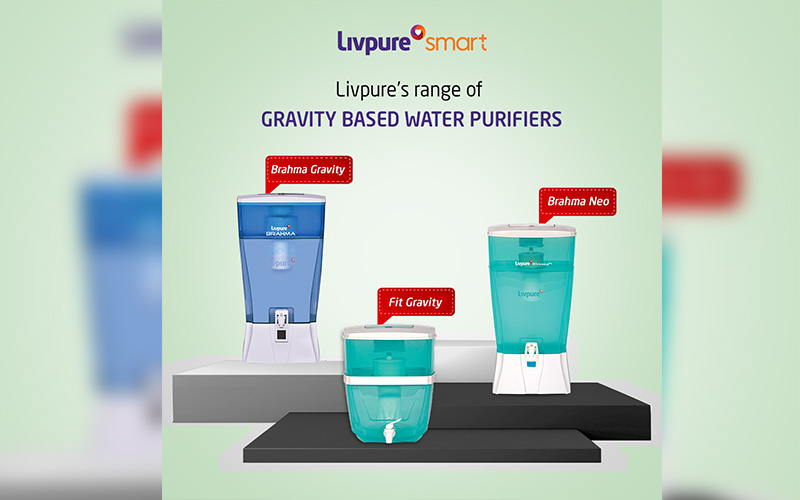
The term ‘smart living’ has become a buzzword in recent times. From navigation to home appliances – be it the water we drink, air conditioners, or other devices, every aspect of our lives now has technology woven into it. Against this backdrop, Livpure, a leading manufacturer of water purifiers, air conditioners, and sleep and wellness solutions, has recently launched an array of new, state-of-the-art tech-backed products. Underlining its commitment to simplify and transform the lives of consumers with innovative, tech-driven solutions, the brand has introduced three new water purifiers with extensive features.

Livpure has stepped up its innovation and introduced first-time technologies such as nanotechnology, non-electric operation, chemical-free purification, ultrafiltration technology, and gravity-based purification in water purifiers that will disrupt the kitchen appliances market. The products launched are  Livpure Brahma Neo Gravity, Livpure Brahma Gravity and Livpure Fit Gravity

In a short span of 8 years, Livpure has delivered many Firsts in ensuring 100% Sampoorna Suraksha. Last year in a Consumer Survey by Forbes India, Livpure figured as “Most Respected Consumer Tech Brand” in the water category. 

Availability: https://www.livpure.com/collections/gravity-water-purifier

April 13, 2022 0 comment
0 FacebookTwitterPinterestEmail
Newer Posts
Older Posts

Recent Posts

  • India–UK Free Trade Agreement Opens Global Growth Opportunities for 3R ZeroWaste’s Circular Economy Solutions
  • Plastic Free July: Why True Sustainability Goes Beyond Swapping Plastic
  • From the Editor’s Desk: When Greed Takes Over Conscience
  • Beyond the Pose: Why Your Yoga Mat Needs a Sustainable Upgrade
  • Best Sustainable Father’s Day Gifts: Conscious Carma’s Exclusive Picks

Recent Comments

  • Team Conscious Carma on Label Shivika Agarwal – where craft meets sustainability
  • Cocomeister.jp on Label Shivika Agarwal – where craft meets sustainability
  • Team Conscious Carma on Equitable City Designs To Fight Climate Change
  • UN report calls for repurposing of USD 470 billion of agricultural support that distorts prices and steer us away from environment and social goals | Consciouscarma on UNEP & ICMR collaborate to boost understanding of environmental dimensions of antimicrobial resistance in India
  • Wild Earth : Natural body products | Consciouscarma on Sat.Suma : the true essence of flowers in your everyday skincare needs

Keep in touch

Facebook Twitter Instagram Youtube

Recent Posts

  • India–UK Free Trade Agreement Opens Global Growth Opportunities for 3R ZeroWaste’s Circular Economy Solutions

  • Plastic Free July: Why True Sustainability Goes Beyond Swapping Plastic

  • From the Editor’s Desk: When Greed Takes Over Conscience

  • Beyond the Pose: Why Your Yoga Mat Needs a Sustainable Upgrade

  • Best Sustainable Father’s Day Gifts: Conscious Carma’s Exclusive Picks

  • How Sacred Sound is Reshaping the Future of Holistic Health?

Categories

  • Community (38)
    • Campaigns (3)
  • CSR (4)
  • Economy (82)
    • Global (24)
    • Industry (42)
    • Innovations (4)
    • National (2)
  • Environment (48)
  • Expert Corner (48)
    • Authored Articles (47)
  • Featured (5)
    • Partners (1)
  • Global News (2)
  • Initiatives (31)
    • CSR (3)
    • Events (6)
  • Inspiration (22)
  • Lifestyle (9)
  • Media Coverage (6)
  • Press Releases (4,358)
  • Products (126)
    • Accessories (27)
    • Apparel (32)
    • Beauty (26)
    • Food (4)
    • Gifting (3)
    • Home Décor (15)
    • Skin-Care (14)
  • Reports (3)
  • Spirituality (10)
  • Sustainability (49)
  • Sustainable Startup Stories (28)
  • Travel (19)
  • Uncategorized (2)
  • Wellness (33)
    • Home Cleaners (3)

Archives

  • August 2026 (1)
  • July 2026 (1)
  • June 2026 (6)
  • October 2024 (1)
  • September 2024 (1)
  • July 2024 (2)
  • June 2024 (2)
  • May 2024 (1)
  • November 2023 (330)
  • October 2023 (554)
  • September 2023 (631)
  • August 2023 (718)
  • July 2023 (723)
  • June 2023 (710)
  • May 2023 (608)
  • April 2023 (114)
  • March 2023 (7)
  • February 2023 (3)
  • January 2023 (11)
  • December 2022 (18)
  • November 2022 (1)
  • August 2022 (6)
  • July 2022 (8)
  • June 2022 (24)
  • May 2022 (11)
  • April 2022 (19)
  • March 2022 (11)
  • February 2022 (11)
  • January 2022 (14)
  • December 2021 (10)
  • November 2021 (4)
  • October 2021 (14)
  • September 2021 (22)
  • August 2021 (12)
  • July 2021 (17)
  • June 2021 (17)
  • May 2021 (16)
  • April 2021 (22)
  • March 2021 (33)
  • February 2021 (16)
  • January 2021 (22)
  • December 2020 (10)
  • Facebook
  • Twitter
  • Instagram
  • Pinterest
  • Linkedin
  • Youtube

@2020 - All Right Reserved. Designed and Developed by Bizopser Technologies

Consciouscarma
  • Home
  • About Us
  • Products
  • Community
    • Campaigns
    • Inspiration
    • Initiatives
    • CSR
  • Features
    • Sustainable Startup Stories
    • Travel
    • Lifestyle
    • Partners
  • Economy
    • Industry
    • Innovations
    • National
    • Global
  • Environment
  • Expert Corner
    • Authored Articles
    • Reports
  • Magazine
  • Contact