Consciouscarma
  • Home
  • About Us
  • Products
  • Community
    • Campaigns
    • Inspiration
    • Initiatives
    • CSR
  • Features
    • Sustainable Startup Stories
    • Travel
    • Lifestyle
    • Partners
  • Economy
    • Industry
    • Innovations
    • National
    • Global
  • Environment
  • Expert Corner
    • Authored Articles
    • Reports
  • Magazine
  • Contact
Category:

Innovations

Authored ArticlesIndustryInnovations

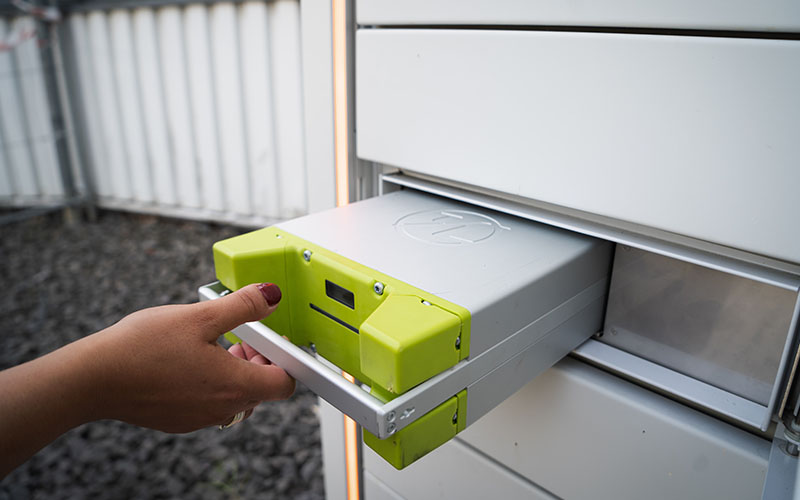
EV Battery Recycling

by Team Conscious Carma June 28, 2022
written by Team Conscious Carma

Sushobhan Mahanty – For the past century, civilization has heavily relied upon fossil fuels to literally power their lives. The urgent need to cut carbon emissions is prompting a rapid move toward electrified mobility and expanded deployment of solar and wind on the electrical grid.

With the complete world shifting its focus towards electric vehicles and other Li-ion battery products, the production size of those batteries is anticipated to be very high. The increasing volume of Li-ion batteries would successively cause a growing capacity of ‘spent’ batteries within the ecosystem.

Like many other batteries, the Li-ion cells that power most EVs rely on raw materials, like cobalt (Co), Li, and rare earth elements, that have been linked to grave environmental and human rights concerns. Extracting the metals from their ores is an “emission rich” process… emits SOx, CO2, etc. A study conducted by the IVL Swedish Environmental Research Institute states that manufacturing an electric car battery requires around 350 to 650 MJ of energy per kWh and a regular battery pack of an EV can generate 80g to 90g of CO2. In Chile’s Salar de Atacama, a significant center of Li production, 65% of the region’s water is consumed by mining activities. This affects farmers within the region who must then import water from other regions.
So, here we are able to understand the importance of recycling batteries. The limited lifetime of these batteries would eventually produce dead batteries which might require a good process to recycle them.

EV batteries aren’t yet recycled at scale. The market continues to be in its infancy. To bring down the imports and make battery manufacturing sustainable it’s necessary to speculate early in large-scale recycling infrastructure. Further, the changing international and political relations with countries owning natural reserves of those key metals and staples and fluctuating prices of raw materials in global markets could also impact the battery prices. A rise in the price of batteries could increase the cost of EVs and be a hindrance to the sale of EVs. Many companies in India have already started viewing this chance and have either already established or announced plans to line up recycling operations.

While recycling, the goal is to recover the utmost number of reusable resources while consuming the minimum amount of energy. The recycling of an EV’s battery faces a double challenge: reduce the number of waste generated by an electric battery at the tip of its life and encourage the reuse of as many components and resources involved in its manufacture as possible.

Recycling EV batteries at end-of-life are essential as it may prove to be a valuable secondary resource for critical materials. Careful management of the resources consumed by EV battery manufacturing, and recycling, surely holds the key to the sustainability of the future automotive industry.

About the author: Sushobhan Mahanty, pursuing electrical engineering, is a contributor at Conscious Carma. Having a keen interest in sustainability, he is currently exploring various sustainable fields like renewables and electric vehickes, etc and is running a newsletter on LInkedin, “Sustainability Vibes”.

June 28, 2022 0 comment
0 FacebookTwitterPinterestEmail
Innovations

Livpure strengthens product portfolio; adds 3 innovative, pocket-friendly gravity water purifiers to its extensive range

by Team Conscious Carma December 18, 2021
written by Team Conscious Carma

In compliance with safety standards and equipped with breakthrough smart technology, Livpure’s new range of water purifiers are designed to upgrade consumers’ lives

The term ‘smart living’ has become a buzzword in recent times. From navigation to home appliances – be it the water we drink, air conditioners, or other devices, every aspect of our lives now has technology woven into it. Against this backdrop, Livpure, a leading manufacturer of water purifiers, air conditioners, and sleep and wellness solutions, has recently launched an array of new, state-of-the-art tech-backed products. Underlining its commitment to simplify and transform the lives of consumers with innovative, tech-driven solutions, the brand has introduced three new water purifiers with extensive features. Livpure has stepped up its innovation and introduced first-time technologies such as nanotechnology, non-electric operation, chemical-free purification, ultrafiltration technology, and gravity-based purification in water purifiers that will disrupt the kitchen appliances market.

Speaking on the new product launches, Mr. Pritesh Talwar, CEO of Livpure, said, “Livpure has always remained committed to providing consumers state-of-the-art solutions backed by cutting-edge technologies that will cater aptly to their requirements. As consumers continue to remain at home for the majority of the time, our newly launched water purifiers with an array of features will ensure they have access to purified, safe drinking water, elevating their quality of life. We are geared up to disrupt the kitchen appliances ecosystem in India and will be launching more such products soon.”

The following are the recently launched products:

Livpure Brahma Neo Gravity: Designed to blend with the contemporary Indian home setting, the device employs an advanced 4-step purification process – Particulate filter, Sediment filter, Bacteriostatic Activated Carbon filter cum Adsorber, and the Kitanu Guard (USEPA-registered disinfection technology) efficiently convert tap water into pure, clean, and safe drinking water. Featuring the Kitanu Guard for enhanced protection against bacterial or viral infections, the Brahma Neo Gravity water purifier is wall mountable and gives up to 2000 liters of purified water at room temperature. With a tank storage capacity of 16 liters, the device is made of food-grade plastic and has a purification capacity of 12 liters per hour.

Priced at – INR 2,750

Livpure Brahma Gravity: Delivering a power-packed performance, this pocket-friendly water purifier features a 5-stage purification process – Particulate Filter, Sediment Filter, Bacteriostatic Activated Carbon Filter cum Adsorber, Protector Filter, and Anti Kitanu UF membrane to filter out all the impurities. Sporting a sleek design that adds a touch of elegance to the kitchen, the Brahma Gravity water purifier has a total storage capacity of a massive 24 liters, and the filter can be replaced after 4000 liters or 15 months, whichever is earlier. It can be conveniently placed on a small counter in the kitchen and has a 1-year warranty.

Priced at – INR 2,990

Livpure Fit Gravity: The first product in its category to come with the Kitanu Guard USEPA-registered disinfection technology, the game-changing Gravity technology employed by this purifier allows the water to go through a normal gravity purification process and has a 4-step purification process similar to the Livpure Brahma Neo Gravity. With a storage capacity of 9 liters and the ability to purify 2000 liters of water in one go, the Livpure Fit Gravity can be mounted on a wall for ultimate convenience and pure drinking water.

Priced at – INR 1,799

Livpure’s products are designed to ensure there is purity in the basic necessities of life – air and water. Since its inception, Livpure has maintained a sharp focus on manufacturing products that are backed by cutting-edge technology to elevate consumers’ quality of life through state-of-the-art water purifiers and air conditioners. 

About Livpure

At Livpure, we strive to make every Indian healthy by providing them with pure water and pure air. In a short span of 8 years, we have delivered many Firsts in ensuring 100% Sampoorna Suraksha. Last year in a Consumer Survey by Forbes India, Livpure figured as “Most Respected Consumer Tech Brand” in the water category.  As we all know the world is moving towards smart, essentially, Smart Living, hence Livpure decided to play the smart game. Livpure has launched India’s first truly smart Air conditioners and Air coolers that are powered by HEKA technology and has got a very encouraging response. Livpure Water & Air purifiers are endorsed by cricketing legend Shri Sachin Tendulkar as the brand values of consistency, quality, reliability, performance resonate very strongly with him. Livpure is a venture of the SAR group founded by Mr. Rakesh Malhotra and Navneet Kapoor, who were the Founders of Luminous. https://www.livpure.com/.


Availability: https://www.livpure.com/collections/gravity-water-purifier

December 18, 2021 0 comment
0 FacebookTwitterPinterestEmail
transparent solar cells
EconomyInnovations

‘Transparent solar cells’ can take us towards a new era of personalized energy

by Team Conscious Carma February 28, 2021
written by Team Conscious Carma

Researchers from Incheon National University, Republic of Korea, and Michigan State University (MSU), USA design novel transparent solar cells

Solar power has shown immense potential as a futuristic, ‘clean’ source of energy. No wonder environmentalists worldwide have been looking for ways to advance the current solar cell technology. Now, scientists have put forth an innovative design for the development of a high-power transparent solar cell. This innovation brings us closer to realizing our goal of a sustainable green future with off-the-grid living.

Today, the imminent climate change crisis demands a shift from conventionally used fossil fuels to efficient sources of green energy. This has led to researchers looking into the concept of “personalized energy,” which would make on-site energy generation possible. For example, solar cells could possibly be integrated into windows, vehicles, cellphone screens, and other everyday products. But for this, it is important for the solar panels to be handy and transparent. To this end, scientists have recently developed “transparent photovoltaic” (TPV) devices — transparent versions of the traditional solar cell. Unlike the conventionally dark, opaque solar cells (which absorb visible light), TPVs make use of the “invisible” light that falls in the ultraviolet (UV) range.

Conventional solar cells can be either “wet type” (solution-based) or “dry type” (made up of metal-oxide semiconductors). Of these, dry-type solar cells have a slight edge over the wet-type ones: they are more reliable, eco-friendly, and cost-effective. Moreover, metal-oxides are well-suited to make use of UV light. Despite all this, however, the potential of metal-oxide TPVs has not been fully explored until now.

Researchers from Incheon National University, Republic of Korea, came up with an innovative design for a metal-oxide-based TPV device, consisting of an ultra-thin layer of silicon (Si). Based on the findings, the research team is optimistic that the real-life applicability of this new TPV design will soon be possible. As for potential applications, there are plenty, as Prof Joondong Kim, who led the study explains, “We hope to extend the use of our TPV design to all kinds of material, right from glass buildings to mobile devices like electric cars, smartphones, and sensors.” Says Not just this, the team is excited to take their design to the next level, by using innovative materials such as 2D semiconductors, nanocrystals of metal-oxides, and sulfide semiconductors. As Prof Kim concludes, “Our research is essential for a sustainable green future — especially to connect the clean energy system with no or minimal carbon footprint.”

Meanwhile, in the US, Researchers at Michigan State University (MSU) originally created the first fully transparent solar concentrator in 2014. This clear solar panel could turn virtually any glass sheet or window into a PV cell. By 2020, researchers in the U.S. and Europe have already achieved full transparency for solar glass.

Photovoltaic glass is probably the most cutting-edge new solar panel technology that promises to be a game-changer in expanding the scope of solar. These are transparent solar panels that can literally generate electricity from windows—in offices, homes, car’s sunroof, or even smartphones.  The two major types of transparent solar panels include partial and full transparent panels. As these solar power windows can simply replace the traditional glass windows in offices and homes, the technology holds the potential to virtually turn every building in the United States and the world into a solar producer. 

Just the way solar roof panels are currently produced using different technologies, solar windows are also being developed using different techniques. 

The potential to generate renewable, clean energy from the sun is enormous with transparent solar panels, considering the number of skyscrapers and buildings already in existence or under construction with a massive amount of glass surface.

According to Richard Lunt, the Johansen Crosby Endowed Associate Professor of Chemical Engineering and Materials Science at MSU, highly transparent solar cells represent the “wave of the future” for new solar panel technologies.

Lunt says that these clear solar panels have a similar power-generation potential as rooftop solar, along with additional applications to improve the efficiency of buildings, cars and mobile devices. Lunt and his team estimate that the U.S. alone has about 5 to 7 billion square meters of glass surface at present. (Just in the last 10 years, as much as 682 million sq. ft. of office space has been added in the U.S.).

With this much glass surface to cover, transparent solar panel technology has the potential to meet about 40 per cent of the country’s annual energy demand. This potential is nearly the same as that of rooftop solar. When both these technologies are deployed complimentarily, it could help meet nearly 100 per cent of the U.S. electricity needs if we also improve energy storage. 

Story Source: Information is sourced from www.sciencedaily.com, www.solarmagazine.com

Note: Content has been edited for style and length

To check out more innovations, Click Here

February 28, 2021 0 comment
0 FacebookTwitterPinterestEmail
black and white old fashion man
EconomyInnovations

KVIC Appoints Design and Fashion Icon Sunil Sethi, as Advisor

by Team Conscious Carma December 16, 2020
written by Team Conscious Carma

The Khadi and Village Industries Commission (KVIC) has appointed Mr Sunil Sethi as its advisor. He is a leading personality in the Indian fashion industry. Sethi will advise the Commission on latest design interventions in the readymade garments segment as well as the promotion of Khadi in India and abroad.

Mr Sethi has over four decades of experience in global merchandising. Here he has contributed significantly to the growth of Indian handicrafts, design and the textile industry, through many innovative and successful initiatives. As Chairman of the Fashion Design Council of India, Sethi has been working to take the Indian fashion industry global. 400 designers represent the Fashion Design Council of India.

Sustainable growth of Khadi in the fashion industry

“Sustainable growth of Khadi in the fashion industry, both locally and internationally, is the key idea behind the appointment. KVIC has already marked its advent on the global platform and from here on we must capitalize on every opportunity. Khadi artisans are capable of producing the finest quality and the most unique fabric in the world and with the newest design innovations, Khadi can be a favourite of a vast global consumer segment,” KVIC Chairman, Shri Vinai Kumar Saxena said.

Incidentally, this is also aligned with the clarion call of the Hon’ble Prime Minister – Local to Global and Vocal for Local – in the context of Indian manufacturing sector. The development assumes greater significance in wake of the growing buzz around Indian handcrafted products and the consumers increasingly becoming fashion oriented.

Before being appointed Advisor to the KVIC, Sethi has discharged advisory roles in various government bodies like the HHEC, National Crafts Museum and Hastkala Academy, Ministry of Textile, Ministry of
Tourism and Ministry of Culture. He has also served as Member, Board of Governors, at the National
Institute of Fashion Technology (NIFT).

To checkout more articles from our Magazine, Click Here

December 16, 2020 0 comment
0 FacebookTwitterPinterestEmail

Recent Posts

  • Norwegian Cruise Line Holdings Publishes Annual Environmental, Social and Governance (ESG) Report Detailing Progress on Sustainability Initiatives
  • Norwegian Cruise Line Holdings Publishes Annual Environmental, Social and Governance (ESG) Report Detailing Progress on Sustainability Initiatives
  • Norwegian Cruise Line Holdings Publishes Annual Environmental, Social and Governance (ESG) Report Detailing Progress on Sustainability Initiatives
  • Norwegian Cruise Line Holdings Publishes Annual Environmental, Social and Governance (ESG) Report Detailing Progress on Sustainability Initiatives
  • Norwegian Cruise Line Holdings Publishes Annual Environmental, Social and Governance (ESG) Report Detailing Progress on Sustainability Initiatives

Recent Comments

  • Team Conscious Carma on Label Shivika Agarwal – where craft meets sustainability
  • Cocomeister.jp on Label Shivika Agarwal – where craft meets sustainability
  • Team Conscious Carma on Equitable City Designs To Fight Climate Change
  • UN report calls for repurposing of USD 470 billion of agricultural support that distorts prices and steer us away from environment and social goals | Consciouscarma on UNEP & ICMR collaborate to boost understanding of environmental dimensions of antimicrobial resistance in India
  • Wild Earth : Natural body products | Consciouscarma on Sat.Suma : the true essence of flowers in your everyday skincare needs

Keep in touch

Facebook Twitter Instagram Youtube

Recent Posts

  • Norwegian Cruise Line Holdings Publishes Annual Environmental, Social and Governance (ESG) Report Detailing Progress on Sustainability Initiatives

  • Norwegian Cruise Line Holdings Publishes Annual Environmental, Social and Governance (ESG) Report Detailing Progress on Sustainability Initiatives

  • Norwegian Cruise Line Holdings Publishes Annual Environmental, Social and Governance (ESG) Report Detailing Progress on Sustainability Initiatives

  • Norwegian Cruise Line Holdings Publishes Annual Environmental, Social and Governance (ESG) Report Detailing Progress on Sustainability Initiatives

  • Norwegian Cruise Line Holdings Publishes Annual Environmental, Social and Governance (ESG) Report Detailing Progress on Sustainability Initiatives

  • Norwegian Cruise Line Holdings Publishes Annual Environmental, Social and Governance (ESG) Report Detailing Progress on Sustainability Initiatives

Categories

  • Community (35)
    • Campaigns (3)
  • CSR (4)
  • Economy (81)
    • Global (24)
    • Industry (41)
    • Innovations (4)
    • National (2)
  • Environment (41)
  • Expert Corner (46)
    • Authored Articles (45)
  • Featured (3)
    • Partners (1)
  • Global News (2)
  • Initiatives (29)
    • CSR (2)
    • Events (5)
  • Inspiration (22)
  • Lifestyle (9)
  • Media Coverage (6)
  • Press Releases (1,061)
  • Products (119)
    • Accessories (25)
    • Apparel (30)
    • Beauty (25)
    • Food (3)
    • Gifting (3)
    • Home Décor (15)
    • Skin-Care (13)
  • Reports (3)
  • Spirituality (8)
  • Sustainability (38)
  • Sustainable Startup Stories (27)
  • Travel (19)
  • Uncategorized (2)
  • Wellness (25)
    • Home Cleaners (3)

Archives

  • June 2023 (337)
  • May 2023 (623)
  • April 2023 (120)
  • March 2023 (7)
  • February 2023 (3)
  • January 2023 (11)
  • December 2022 (18)
  • November 2022 (1)
  • August 2022 (6)
  • July 2022 (8)
  • June 2022 (24)
  • May 2022 (11)
  • April 2022 (19)
  • March 2022 (11)
  • February 2022 (11)
  • January 2022 (14)
  • December 2021 (10)
  • November 2021 (4)
  • October 2021 (14)
  • September 2021 (22)
  • August 2021 (12)
  • July 2021 (17)
  • June 2021 (17)
  • May 2021 (16)
  • April 2021 (22)
  • March 2021 (33)
  • February 2021 (16)
  • January 2021 (22)
  • December 2020 (10)
  • Facebook
  • Twitter
  • Instagram
  • Pinterest
  • Linkedin
  • Youtube

@2020 - All Right Reserved. Designed and Developed by Seatice Business

Consciouscarma
  • Home
  • About Us
  • Products
  • Community
    • Campaigns
    • Inspiration
    • Initiatives
    • CSR
  • Features
    • Sustainable Startup Stories
    • Travel
    • Lifestyle
    • Partners
  • Economy
    • Industry
    • Innovations
    • National
    • Global
  • Environment
  • Expert Corner
    • Authored Articles
    • Reports
  • Magazine
  • Contact