Consciouscarma
  • Home
  • About Us
  • Products
  • Community
    • Campaigns
    • Inspiration
    • Initiatives
    • CSR
  • Features
    • Sustainable Startup Stories
    • Travel
    • Lifestyle
    • Partners
  • Economy
    • Industry
    • Innovations
    • National
    • Global
  • Environment
  • Expert Corner
    • Authored Articles
    • Reports
  • Magazine
  • Contact
Category:

Industry

EnvironmentIndustry

Largest Sustainable Packaging platform in India and South Asia

by Team Conscious Carma June 6, 2023
written by Team Conscious Carma

Constantia Flexibles and SB Packagings kick off joint venture

Constantia Flexibles, Premji Invest and SB Packagings, have finalized the joint venture to create one of the largest sustainable packaging platforms in India and South Asia, following the regulatory approval from Competition Commission of India. The joint venture (SB-Constantia Flexibles), between two flexible packaging industry leaders and Premji Invest as shareholders, will leverage each company’s unique strengths and resources to achieve greater success in the Indian market.

 “I have full confidence in the partnership’s ability to be an effective solution provider to its customers in India through innovation and excellence. We will drive growth and profitability for all stakeholders,” said Pim Vervaat, Global CEO, Constantia Flexibles.

“The joint venture positions us as a clear leader to drive the sustainable packaging agenda in India and beyond with a unique product offering,” noted Amit Banga, Managing Director, SB Packagings.

Strong synergy potential with a focus on sustainability

SB-Constantia Flexibles will operate in the food and hygiene markets, offering medium to high-barrier packaging solutions. It will have close to 2,700 employees across nine plants spread across the country.

The JV will pursue organic and inorganic growth opportunities in higher value-added market segments, continuing its strong growth trajectory in the hygiene, food and HPC segment even as it further develops the sustainable mono-material EcoLam product range. It will bring together the mono-material capabilities of both Constantia Flexibles India and SB Packagings and offer medium to high-barrier packaging solutions to food and hygiene markets.

About the joint venture partners:

Constantia Flexibles is the world’s third largest producer of flexible packaging. Based on the guiding principle of ‘People, Passion, Packaging’, 8,700 employees manufacture tailor-made packaging solutions at 37 sites in 17 countries. Many international companies and local market leaders from the consumer and pharma industries choose Constantia Flexibles’ more sustainable and innovative products. Sustainability is a top priority at Constantia Flexibles: the company was rated Level A by Climate Change Leadership (CDP) in 2021 and Gold by EcoVadis in 2022.

SB Packagings, founded in 1989 by Mr. O.P Banga & Mr. Amit Banga, is one of the leading flexible packaging companies based out of India. SBP group over the past 4 decades, has been at the forefront of manufacturing mono-polymer sustainable packaging much ahead of its peers. It has won various awards and global accolades for its innovation & printing excellence. In 2022, it was chosen as the ‘Packaging Company of the Year’ by PrintWeek and won the “WorldStar” award in Milan for sustainable packaging and also the ‘Gold’ at the Asian Packaging Excellence Awards. SBP with over 50% market share, is by far the largest company manufacturing hygiene packaging for leading global and Indian brands. SBP also has a strong footprint in the Food and Beverages space.

Premji Invest’s (PI) investments primarily support the philanthropic initiatives of the Azim Premji Foundation, a not-for-profit organisation that seeks to help improve the lives of the underserved and underprivileged in society. PI invests in India and overseas with the objective of building long-term sustainable capital to fund philanthropic initiatives and nurture the spirit of entrepreneurship in the country.  PI invests in sectors including healthcare, technology and financial services, with the overwhelming aim to make sure that global companies with scale are created using the access and capital that PI is able to provide.

June 6, 2023 0 comment
0 FacebookTwitterPinterestEmail
Authored ArticlesIndustryInnovations

EV Battery Recycling

by Team Conscious Carma June 28, 2022
written by Team Conscious Carma

Sushobhan Mahanty – For the past century, civilization has heavily relied upon fossil fuels to literally power their lives. The urgent need to cut carbon emissions is prompting a rapid move toward electrified mobility and expanded deployment of solar and wind on the electrical grid.

With the complete world shifting its focus towards electric vehicles and other Li-ion battery products, the production size of those batteries is anticipated to be very high. The increasing volume of Li-ion batteries would successively cause a growing capacity of ‘spent’ batteries within the ecosystem.

Like many other batteries, the Li-ion cells that power most EVs rely on raw materials, like cobalt (Co), Li, and rare earth elements, that have been linked to grave environmental and human rights concerns. Extracting the metals from their ores is an “emission rich” process… emits SOx, CO2, etc. A study conducted by the IVL Swedish Environmental Research Institute states that manufacturing an electric car battery requires around 350 to 650 MJ of energy per kWh and a regular battery pack of an EV can generate 80g to 90g of CO2. In Chile’s Salar de Atacama, a significant center of Li production, 65% of the region’s water is consumed by mining activities. This affects farmers within the region who must then import water from other regions.
So, here we are able to understand the importance of recycling batteries. The limited lifetime of these batteries would eventually produce dead batteries which might require a good process to recycle them.

EV batteries aren’t yet recycled at scale. The market continues to be in its infancy. To bring down the imports and make battery manufacturing sustainable it’s necessary to speculate early in large-scale recycling infrastructure. Further, the changing international and political relations with countries owning natural reserves of those key metals and staples and fluctuating prices of raw materials in global markets could also impact the battery prices. A rise in the price of batteries could increase the cost of EVs and be a hindrance to the sale of EVs. Many companies in India have already started viewing this chance and have either already established or announced plans to line up recycling operations.

While recycling, the goal is to recover the utmost number of reusable resources while consuming the minimum amount of energy. The recycling of an EV’s battery faces a double challenge: reduce the number of waste generated by an electric battery at the tip of its life and encourage the reuse of as many components and resources involved in its manufacture as possible.

Recycling EV batteries at end-of-life are essential as it may prove to be a valuable secondary resource for critical materials. Careful management of the resources consumed by EV battery manufacturing, and recycling, surely holds the key to the sustainability of the future automotive industry.

About the author: Sushobhan Mahanty, pursuing electrical engineering, is a contributor at Conscious Carma. Having a keen interest in sustainability, he is currently exploring various sustainable fields like renewables and electric vehickes, etc and is running a newsletter on LInkedin, “Sustainability Vibes”.

June 28, 2022 0 comment
0 FacebookTwitterPinterestEmail
EconomyIndustry

Adani And TotalEnergies To Create The World’s Largest Green Hydrogen Ecosystem

by Team Conscious Carma June 20, 2022
written by Team Conscious Carma

Adani New Industries Ltd to invest USD 50 Bn in green hydrogen
Adani, India’s fastest-growing diversified business portfolio, and energy supermajor TotalEnergies of France, have entered into a new partnership to jointly create the world’s largest green hydrogen ecosystem. In this strategic alliance, TotalEnergies will acquire 25% minority interest in Adani New Industries Ltd (ANIL) from Adani Enterprises Ltd (AEL).

The new partnership, centered on green hydrogen, is expected to transform the energy landscape both in India and globally. Both Adani and TotalEnergies are pioneers in energy transition and clean energy adoption, and this joint energy platform further strengthens the public ESG commitments made by both companies.

 ANIL’s ambition is to invest over USD 50 billion over the next 10 years in green hydrogen and associated ecosystem. In the initial phase, ANIL will develop green hydrogen production capacity of 1 million ton per annum before 2030.

“The strategic value of the Adani-TotalEnergies relationship is immense at both the business level and the ambition level,” said Mr. Gautam Adani, Chairman, Adani Group. “In our journey to become the largest green hydrogen player in the world, the partnership with TotalEnergies adds several dimensions that include R&D, market reach and an understanding of the end consumer. This fundamentally allows us to shape market demand. This is why I find the continued extension of our partnership to hold such great value. Our confidence in our ability to produce the world’s least expensive electron is what will drive our ability to produce the world’s least expensive green hydrogen. This partnership will open up a number of exciting downstream pathways.”

 “TotalEnergies’ entry into ANIL is a major milestone in implementing our renewable and low carbon hydrogen strategy, where we want to not only decarbonize the hydrogen used in our European refineries by 2030, but also pioneer the mass production of green hydrogen to meet demand, as the market will take off by the end of this decade.” said Mr. Patrick Pouyanné, Chairman and CEO of TotalEnergies. “We are also very pleased with this agreement, which further strengthens our alliance with the Adani Group in India and contributes to the valorization of India’s abundant low-cost renewable power potential. This future production capacity of 1 million ton per annum of green hydrogen will be a major step in increasing TotalEnergies’ share of new decarbonized molecules including biofuels, biogas, hydrogen, and e-fuels to 25% of its energy production and sales by 2050.”

This partnership builds on the exceptional synergies between the two platforms. While Adani will bring its deep knowledge of the Indian market, rapid execution capabilities, operations excellence and capital management philosophy to the partnership, TotalEnergies will bring its deep understanding of the global and European market, credit enhancement and financial strength to lower the financing costs, and expertise in underlying technologies. The complementary strengths of the partners will help ANIL deliver the largest green hydrogen ecosystem in the world, which, in turn, will deliver the lowest cost of Green Hydrogen to the consumer and help accelerate the global energy transition.

ANIL aims to be the largest fully integrated green hydrogen player in the world, with presence across the entire value chain, from the manufacturing of renewables and green hydrogen equipment (solar panels, wind turbines, electrolysers, etc.), to large scale generation of green hydrogen, to downstream facilities producing green hydrogen derivatives.

With this investment in ANIL, the strategic alliance between the Adani Portfolio and TotalEnergies now covers LNG terminals, the gas utility business, renewables business and green hydrogen production. The partnership helps India in its quest to build the fundamental pillars of economic sustainability by driving decarbonisation of industry, power generation, mobility, and agriculture thereby mitigating climate change, and ensuring energy independence.

June 20, 2022 0 comment
0 FacebookTwitterPinterestEmail
IndustryTravel

LUX* South Ari Atoll Leads The Way To Eco-Conscious Travel

by Team Conscious Carma June 7, 2022
written by Team Conscious Carma

Malé – The family-oriented luxury resort in the Maldives inspires by example, with an array of sustainable initiatives to support the global conscious travelling trend.

‘Empowered’ by the sun

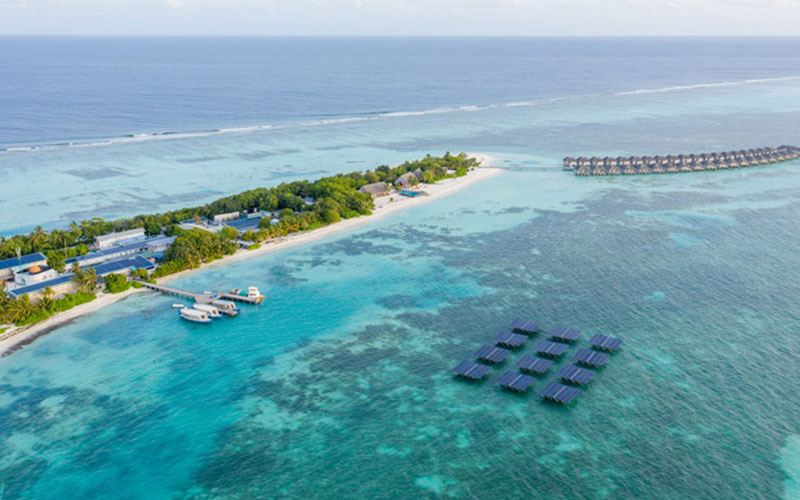
Being one of the biggest resort islands in the country, LUX* South Ari Atoll is always on the lookout for new ways to make a difference and lower its impact on the beautiful natural surroundings. The property has installed one of the world’s largest floating solar systems at sea, in partnership with Swimsol GmbH. Including utilised rooftops, the solar panels of the island power up to 33 per cent of the whole resort’s use, powering all 193 guest villas during peak sun hours. The island cruisers that take guests around the resort are also powered by the bright Maldivian sunshine, saving more than 260,000 litres of diesel per year. Guests can track real-time solar energy production and consumption from their villas through the resort’s dedicated TV channel.

Planet-friendly resort experience

Plastic bottles and take-away cups at LUX* South Ari Atoll are replaced with glass and bamboo fiber alternatives, and the island’s very own water plant has saved about 810,000 plastic bottles since its launch in December 2011. All bathroom amenities in the guest villas, spa treatment products, and skincare collection at the resort’s LUX* ME Spa boutique are not tested on animals and made of natural ingredients. The brand’s signature Shirley Page treatments offer cruelty-free spa experiences with organic essential and body oils.

With Maldives being popular as a romantic destination, the resort goes an extra mile in sustainability when it comes to couple travel. Awarded the Most Sustainable Wedding Resort in South Asia, LUX* South Ari Atoll is proud to offer a unique Zero-Waste Wedding concept. Ensuring the co-existence of low-impact destination wedding and luxury, wedding packages are wrapped around sustainable island-chic style, with love for nature in the core. Moreover, every wedding celebrated at LUX* South Ari Atoll funds education of a child at one of the local care homes.

Special care for the oceans

Located in a Marine Protected Area, LUX* South Ari Atoll offers unique underwater experiences, from swimming with whale sharks and manta rays to studying local reef’s life. The on-site Marine Biology Centre in on a mission to support ongoing scientific research and protect the native wildlife population, restore and protect local environment.

In collaboration with its long-term partners in research and nature conservation, Whale Shark Research Programme and Olive Ridley Project, the resort organises charity auctions, updates the existing database of ocean inhabitants, and offers the Turtle and Whale Shark Adoption to its guests. Once a new resident of the atoll is discovered, a guest has the naming and ‘adoption’ rights, confirmed with a special cerfiticate. The resort’s first ‘adopted’ female whale shark LUXMAS is a significant discovery for the ocean life research, as the majority of sighted species in the area are male. Since 2018 the island’s team helped to identify over a dozen of new ‘gentle giants’ around the atoll.

Coral planting workshops is another exciting activity that allows travellers to contribute to the ocean’s wellbeing. Travellers of all ages are invited to participate in reef restoration efforts as well as learning more about wonderful life under water. And to take their love to the ocean to a whole new level, LUX* South Ari Atoll offers the Coral Frame Adoption programme – a long-term initiative aimed at involving people from around the world into saving Maldivian marine life. Every guest signed up for the programme receives regular photo updates on the growth of their planted baby corals from the resort’s marine biologist.

Keen on Green

Every restaurant at LUX* South Ari Atoll offers a great variety of plant-based, vegetarian, vegan, and raw dishes, from organic and locally sourced ingredients. The Keen on Green concept invites for a healthy and creative culinary journey, supporting sustainable approach to food and helping reduce carbon footprint. The resort’s passion for clean and green food got us recognised as the first as ‘Vegan-Friendly Hotel’ in the Maldives by Vegan Welcome. The island’s Herb Garden grows fresh herbs and vegetables for plant-based restaurant dishes and Master Chef cooking classes. During the stay, guests of LUX* South Ari Atoll have plenty of opportunities to learn more about ‘green’ cuisine: from tapping into amazing selection of vegetarian dining options to learning how to regrow their own herbs back home and cook healthy meals for the whole family.

For its dedication to waste-free guest experience and care for nature, the resort has been recognised by numerous awards and it also holds a Green Globe certificate.

To learn more about sustainability initiatives at LUX* South Ari Atoll, visit www.luxresorts.com or follow the resort’s Instagram page @luxsouthari

Media contact: Anastasiya Babenko, Marketing & PR Manager, Anastasiya.babenko@luxmaldivesresort.com

About LUX* Resorts & Hotels

LUX* Resorts & Hotels helps people to celebrate life by delivering consistently on the promise of a different kind of luxury; hospitality that is Lighter. Brighter. LUX* stages exceptional experiences in different locales – whether on the Beach, in the City or in Nature – by banishing thoughtless patterns and being more simple, fresh and sensory for the benefit of all our guests.

www.luxresorts.com/

June 7, 2022 0 comment
0 FacebookTwitterPinterestEmail
EconomyIndustry

Borosil Renewables to invest Rs 1,500 cr in two years to add capacity by 2.5 times

by Team Conscious Carma May 14, 2022
written by Team Conscious Carma

The company will also invest in its German plant to increase its capacity to 500 TPD from 300 TDP now by 2023
Solar panel glass manufacturer Borosil Renewables on Monday said it will invest Rs 1,500 over the next two years to expand its capacity by nearly 2.5 times and supply 15 GW of solar modules by FY25.

”We are doubling down on our investments because being the first and the only domestic manufacturer of solar panel glasses we see sky is the limit for demand. Accordingly, we are investing another Rs 1,500 crore to take our capacity to 1,550 TPD by FY24 and to 2,100 TPD by FY25 which will help us supply 15 GW of solar modules,” Pradeep Kheruka, executive chairman of Borosil Renewables, told PTI.

The company will also invest in its German plant to increase its capacity to 500 TPD (Tonnes Per Day) from 300 TDP now by 2023, he said. ”With these capacity augmentation, by FY25 we will be able to supply 2,600 TDP of solar panel glasses that can generate 15 GW of power and make us the largest non-Chinese-owned company in the world,” Kheruka said, adding all the domestic expansion will be in and around the company’s Baruch facility in Gujarat. The Borosil Group firm in late April acquired German company Interfloat Group — the largest solar glass manufacturer in Europe — for 55.5 million euro.

The deal involved an upfront cash payout of 30 million euro, and 22.5 million euro through issuing of fresh equity (by Borosli Universal) and 50 per cent sharing of earned profit from 2023, a top Borosil official said. ”While our ongoing expansion has been delayed by a few months due to the pandemic-induced supply disruptions and the resultant cost increase to Rs 680 crore from the initially-planned Rs 500 crore. Now the brownfield expansion in Baruch should be ready by September from the originally planned commissioning of July, and more than double our domestic capacity to 1,000 TPD (Tonnnes Per Day)”, Kheruka said.

Kheruka said that the company’s expansion is underway which ”will take our capacity to 1,000 TPD by September”. In the next expansion phases, he said, the company will reach 1,550 TPD capacity by the end of FY24, and 2,100 TPD by the end of FY25 and add another 500 TPD in Germany. ”This means that, we will have about 2,600 TPD manufacturing capacity by FY25, and we will be able to supply solar glass for more than 15 GW of solar modules while de-risking production from a single location,” Kheruka said. On the cost escalation since the pandemic and of late due to the Russia-Ukraine war, he said the cost of steel and labour has jumped 30-40 per cent. In the first nine months of FY22, Borosil earned Rs 502.3 crore in revenue, up from Rs 465.2 crore in FY21. Its exports in FY21 stood at 20 per cent or worth Rs 110 crore, which included Rs 70 crore from SEZ exports.

The company ships to Germany Poland, Canada, the US, Mexico, and the Middle East. About the company’s deal with German firm, Kheruka said the acquisition will further cement its position as the largest non-Chinese-owned solar glass producer in the world. The French major Saint Gobain was producing solar panel glasses till April 2021 but stopped since then due to Chinese imports, he said. On the Interfloat Group, Kheruka said the German firm is currently profitable and debt-free and had closed 2021 with a revenue of 60 million euro. He hopes to complete the deal over the next 18 weeks. The Interfloat Group consists of Glass Manufacturing Brandenburg, located at Tschernitz near Berlin, that operates a solar glass plant with 300 tonnes per day and Interfloat Corporation based in Ruggell in the Liechtenstein.

The group has also been manufacturing glass for solar thermal plants and greenhouse glass markets since 2010 and servicing customers in Europe for close to 40 years. Borosil Renewables, part of the six decades old Borosil Group, commissioned its first solar glass manufacturing facility at Baruch in Gujarat in January 2010 with 180 TPD capacity, which was then expanded to 450 TPD or 2.8 GW of solar modules. The Borosil Group was founded in 1962 in collaboration with Corning Glass of the US, comprises two publicly listed entities — Borosil and Borosil Renewables. Borosil manufactures around 600 consumer and laboratory glass products such as laboratory glassware, pharma packaging, microwavable kitchenware, and now cookwares tableware and solar glass at its Jaipur, Nashik, Pune and Tarapur plants. The Borosil counter shed over 5.6 percent to close at Rs 595.60 on the BSE which closed down 67 basis points over Friday close.

Source: PTI


May 14, 2022 0 comment
0 FacebookTwitterPinterestEmail
EconomyIndustry

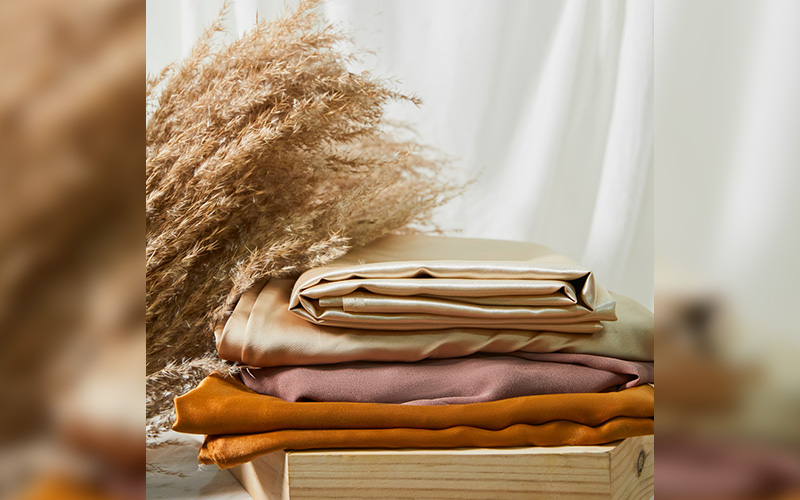
Sustainable Fabrics making their way in Indian market

by Team Conscious Carma April 16, 2022
written by Team Conscious Carma

India is amongst the world’s largest producers and exporters of textiles. The domestic market for textiles in India was valued at $100 billion in 2019-20 with rising exports valued at ~ $50 billion.

McKinsey’s State of Fashion report marks the ascent of India into the global fashion industry due to Asia’s economic expansion. India will occupy the centre stage in the fashion industry, with a rapidly growing middle class and powerful manufacturing sector. The Indian apparel market is estimated to cross $59 billion in 2022, making it the sixth largest in the world, according McKinsey’s Fashion Scope. Moreover, India is set to become one of the most attractive consumer markets outside the Western world moving on from being an important sourcing hub.

The flip side,  the global textile industry has grown to be one of the most natural resource guzzling and polluting sector, harming both, the environment and the people.  Over production and over consumerism has made textiles, the second largest contributor of waste in the world. It has been estimated that there are 20 new garments manufactured per person each year and we are buying 60% more than we were in 2000

In 2016, a McKinsey report on “Style that’s sustainable: A new fast- fashion formula” claimed that fashion was witnessing a major changing in buying trends, with production doubling from 2000 to 2014, and the purchase index of an average consumer increasing by 60 percent.

This has led to a “fast fashion cycle” wherein consumers are purchasing clothes for summer, autumn, spring and winter, which has forced the fashion industry towards unsustainable fashion. Meaning, the industry is producing more synthetic fibres, polyester, nylon waste water and plastic waste.

Textile industry is a highly water intensive industry and chemical intensive too. Millions of gallons of Water, the scarce natural resource is used everyday and the same is polluted by the chemicals used for producing, bleaching, dyeing and cleaning the textiles, and if not treated before releasing it, the waste water pollutes the rivers and harm the health of water bodies and humans. Non-organic cotton is responsible for the consumption of 16 percent of the world’s total production of insecticides and around 7 percent of it is pesticides. Almost 2000 different varieties of chemicals are used in this industry. Mere chemical processing in this industry constitutes 70 percent of the overall pollution. Also the synthetic textiles release microplastics in the environment. Non-organic cotton is responsible for the consumption of 16 percent of the world’s total production of insecticides and around 7 percent of it is pesticides

The resources, especially water and oil, used by the global textile industry is expected to double by 2030. The global apparel production may reach 102 million tons by 2030 if the economy and the world population increase as expected.  Synthetic fibers comprise of almost 65 percent of the total world production for fibers. They consume a lot of oil which is a non renewable resource. Natural fibers like cotton, silk, wool, etc. also make use of resources that needs to be conserved.

Textile waste is another huge issue.  Studies indicate that only 48 percent of the textile waste is recycled and converted into consumables and is mostly exported to third world countries. The rest goes to landfills.

It is imperative for the textile industry to move towards sustainability, as well as effectively recycle.  While consumers should consume less and consume sustainable and also consider options like upcycling and thrifting, etc.

Some startling facts of waste generated by textiles globally

According to the National Climate Change Journal (2018), textile production is one of the most polluting industries and produced 1.2 billion tonnes of greenhouse gas emissions, which is more than the emissions of international flights and maritime shipping put together.

The United Nations Environment Program estimates that the fashion industry produces 20% of global wastewater and 10% of global carbon emissions.

According to evaluations of the World Bank, about 17 to 20 percent of all present water pollution is solely induced by coloring and finishing patterns. Nearly 72 unique toxic synthetics are stated to be available in water only for coloring patterns.

One truck capacity of textiles is landfilled or burnt every second somewhere in the world, according to the Isle of Wight-based Ellen MacArthur Foundation

The fashion industry’s annual production is 400 billion square metre of textiles leading to cutting room floor waste of 60 billion square metre.

According to the UNFCCC, carbon emissions from the apparel industry is set to cross 60 percent by 2030. In Asian countries like India and China, emerging fashion trends have increased the carbon foot print per garment, due to the use of coal fuelled plants.

Indian textiles moving the sustainable way

The global climate crisis and the pandemic has been a resetting button for the manufacturers as well as consumers across the globe. In India too, there’s increased efforts by the government as well as manufacturers to shift to sustainable textile and move to a circular economy.

Prominent players in India are undertaking major strides in introducing sustainability in the textile manufacturing value chain, including the use of newer, more eco-friendly technologies, materials and production methods.

The industry recognizing cotton as a vital ally, is opting for organic cotton.  Organic cotton farming uses 62% less energy and 88% less water than conventional cotton. Also, switching to natural colours for dyeing clothes. The industry is also remodelling its operations from linear to circular, from sourcing raw materials to production, supply chain and waste recycling.

Recycled fabrics like Ecovera which are produced from recycled plastic bottles using biofuels and energy efficient processes, is being manufactured by India’s leading textile manufacturer and fashion retailer, Raymond Group in collaboration with India’s leading conglomerate, Reliance Industries.


Another Indian conglomerate, Aditya Birla Group, has launched Liva-branded Viscose Staple Fiber. The man-made, biodegradable fiber is derived from  wood pulp, a renewable source.

Also, the Country’s leading fashion designers and fashion brands are also  using sustainable fabrics in their collections. Designers like Anita Dongre, Ritu Kumar are leading the sustainable fashion in India. And a slew of Indian startups can be seen entering the sustainable textile and fashion market which is a very positive sign.

Coupled with this is the consumer shift towards sustainable clothing and slow fashion, Sustainable fabrics market size in India is anticipated to surpass of CAGR 11.4% by 2023, as reported in the latest study by market research future

Example of Sustainable Fabrics

Sustainable Natural and Vegan Fabrics

  • Organic Cotton
  • Recycled Cotton
  • Organic Hemp
  • Organic Linen
  • Organic Bamboo Linen
  • Cork

Examples of Sustainable Semi-Synthetic Fabrics

  • Lyocell
  • Modal
  • Bamboo Lyocell
  • EcoVero
  • Pinatex
  • Cupro

Synthetic Fabrics

  • ECONYL
  • Recycled Polyester

Animal Derived Natural Fabrics (sustainable depending on source)

  • Sheep Wool
  • Merino Wool
  • Alpaca Wool
  • Cashmere
  • Camel
  • Yak Wool
  • Ahimsa Silk

FABRICS TO AVOID

  • Acrylic
  • Elastane (a.k.a. Spandex or Lycra)
  • Nylon
  • Polyamide
  • Polyester
  • Polyurethane
  • Sequins

All of these are made using oil, processed into a plastic thread, and then woven into wearable fabric. When  washed, they shed microplastics. And when they’re thrown away, they take hundreds of years to degrade.

150 billion clothes: The number of clothes produced annually in the world; enough to provide 20 new clothes to each person in the world every year

A.Water Consumption

20,000 litres: The amount of water consumed to produce one kilogram of cotton production; equivalent to the amount a person drinks in 15 years

7,000 litres: The amount of water consumed to produce 1 pair of jeans only; equivalent to the amount a person drinks in 5-6 years

2,700 litres: The amount of water consumed to produce 1 t-shirt; equivalent to the amount a person drinks in 2.5 years

Why this is important?

Our access to clean water only accounts for 1% of the global water supply. By 2025, over 2.8 billion people in almost 48 countries are likely to face water problems including scarcity. This would get even worse with numbers reaching 7 billion by 2050.

2 billion jeans: are produced every year in the world

B. Raw materials

70 million barrels: The amount of crude oil consumed every year to produce the most commonly used fiber in textiles — polyester

70 million trees: The number of trees logged every year to produce fabrics like rayon, viscose, lyocell, and modal

Why this is important?

Two mature trees can provide enough oxygen for a family of four. We can save oxygen for around 35 million families.

90% of cotton: is genetically modified which uses huge amount of water and chemicals

18% of pesticide: in the world is used for the cotton production while 25% of total insecticides in the world is used for the same

25% of chemicals: produced in the world are consumed by the textiles industry

C. Energy Consumption – by fiber type

30% of clothes: The percentage of clothes that are never sold

$210 billion dollars: is the value of inventory distortion in the global apparels and fashion industry. This is the gap between consumer’s wants and what retailers provide in their store.

One-in-six people: in the world work in the fashion and textiles industry

80% of garment workers: are women

1%: The percentage of retail price of one clothing item is what the living wage of garment workers constitute of

Number 1: is the rank of Germany in providing the highest hourly compensations in the apparel manufacturing industry when compared to other international apparel manufacturing countries

Lowest rank: Philippines ranks the lowest in providing the hourly compensations among the countries studied

90% of labours: in Bangladesh cannot afford the basic necessity of life – food for themselves and/or their families

Consumption

80 billion: clothing pieces are consumed every year in the world; 400% more as compared to 20 years ago

$460 billion: The value of clothes being discarded every year which consumers could continue to wear

50% of clothes: The percentage of clothes are discarded within one year of buying

> 3 years: The lifetime of a clothing item in the developed countries is less than 3 years

36%: The worldwide utilization of clothes (before discarding it completely to waste) has been reduced by 36% as compared to 15 years ago

Why this is important?

The lifetime of a clothing item is reducing and the purchase of regular new clothing pieces is rising, thereby increasing the total consumption of fashion and garments.

250% increase: in google searches (made by the consumers) for sustainable fashion between 2017-1

Emissions

A. Production

1.2 billion tons: The amount of total greenhouse gases emitted globally due to textile production; produced more than than all the international flights and maritime combined

8 percent: of global greenhouse emissions come from the apparel and footwear industry

262 percent: more CO2 is emitted to manufacture one polyester t-shirt as compared to one cotton t-shirt

Why this is important?

Substituting polyester offers: 60% reduction in energy consumption, around 40% less emissions, and 90% less toxic substances

B. Consumption

24 percent: of emissions can be reduced if we double the useful life of clothing from one year to two years

400 percent more carbon emissions: is produced per item per year when we wear fast fashion garments, which are only worn 5 times and kept for 35 days, as compared to clothing items worn at least 50 times and kept for one full year.

Why this is important?

Increasing greenhouse gas emissions cause earth’s atmosphere to trap excessive heat which can cause global warming

Waste

20% of waste: in the world is generated by the textiles industry

92 million tons of textile waste: is generated by the global fashion industry; around 12.3 kg per capita across the globe

85% of plastics: in the ocean is due to microfibers that come from synthetic textiles

15% of fabric: is wasted in the cutting room which could’ve been used for clothing production

70 pounds: of clothing and shoes are being discarded by one person annually instead of recycling

70% of people: in the world consume second hand clothes

$550 on unworn clothing: According to a survey of 2137 women (aged 18 and above), around $550 worth of clothing in their closet has never been worn by them.

20% of clothing: is not even worn once by the consumers in the world

Landfills

12.8 million tons of clothing: ends up on landfills every year

Only 10% of the clothes: that are donated to thrift stores or charity organizations are actually sold, while the rest goes to landfill.

95% of textile waste: that ends up on landfills every year could actually be recycled

200 years: The number of years for polyester to break down

20,000 litres of water: can be saved if we start using recycled cottn

Country stats

3rd largest water wasting industry: Textiles is the third largest water wasting industry in China, discharging more than 2.5 billion tons of wastewater each year

2.5 billion tons: of wastewater is generate by Chinese textile industry every year 253 tons of textile waste

ends up in landfills in Hong Kong every day

91 percent: The percentage of Australian fashion brands who do not pay their workers a living wage. Second largest

Australia is the second largest consumer of textiles in the world, after the US

27 kilograms: is the average unit of new clothing and textiles are bought by Australians every year 

23 kilograms: is the average unit of clothing that Australians discard every year 

40% of apparels: that are sold in the United States are imported from China; the US is also the largest apparels importer in the world

1 billion pounds of used clothing: is exported from the United States, making it the largest exporter of second hand clothing

10.5 million tons of textile: in the United States are sent to landfill each year

70 pounds of clothing: is discarded by an American every year

70 clothing items: are bought on an average per consumer in the United States every year

$46.7 billion: is the value of unworn clothes by the consumers in the United Kingdom

$66 billion: is the total consumption of clothes per household in the United Kingdom every year

Source : https://www.sustainablefashion.earth/the-reality/

April 16, 2022 0 comment
0 FacebookTwitterPinterestEmail
Industry

Dabur becomes first Indian ‘Plastic Waste Neutral’ FMCG Company Recycles 100% of Plastic sold as Product Packaging in India

by Team Conscious Carma February 14, 2022
written by Team Conscious Carma

India’s largest Science-based Ayurveda major Dabur India Ltd has now become a 100% ‘Plastic Waste Neutral company’ in India, having collected, processed and recycled around 27,000 MT of post-consumer plastic waste from all over India in the 2021-22 financial year.

With this, Dabur has become the first Indian consumer goods company to achieve this landmark. Today, Dabur collects, processes and recycles the same amount of plastic waste that Dabur sells in its product packaging in a year, thereby becoming a ‘Plastic Waste Neutral’ enterprise.

“It is a matter of great pride for the entire Dabur family, who have worked towards not just collecting plastic waste from our cities, towns and villages, but also preventing the waste from reaching our landfills and oceans. This includes all types of plastic waste, from PET and HDPE bottles, PP caps and labels to multi-layered plastics and beverage cartons. As a Responsible Corporate Citizen, Dabur has always been recognized for its commitment towards sustainability and ecological responsibility. We have made significant progress in our Environment, Social and Governance (ESG) journey and have now become the first Indian FMCG Company to become Plastic Waste Neutral in India,” Dabur India Ltd Executive Director-Operations Mr. Shahrukh A. Khan said.

Dabur had set itself the target of collecting, processing and recycling over 22,000MT of post-consumer plastic waste from across India in the year 2021-22. “We surpassed that target three months ahead of schedule and have enhanced our full-year target to 26,956 MT. We work with government-registered recycling partners across the country and have taken progressive actions to reduce plastic waste in cities, town, villages, while also raising awareness about plastic waste management within the community. The collected plastic waste is being sent to different Recyclers, Waste-to-Energy Plants and Cement Kilns,” Mr. Khan added.

Dabur’s Plastic Waste Management initiative was rolled out in the year 2017-18 as part of the Plastic Waste Management (PWM) Rule 2016, 2018 (amended). Under this initiative, Dabur has till date collected a total of over 54,000 MT of plastic waste (Recyclable and Non-Recyclable) direct from the end-users with the help of around local ragpickers in 150 cities across India. Dabur has also put in place a robust audit mechanism to ensure complete transparency and compliance to the state and central regulations and guidelines on Plastic Waste Management.

Moving forward on its mission to protect the environment and roll out special initiatives for ecologically sensitive areas, Dabur announced the launch of a new ‘Save the Environment’ campaign in Himachal Pradesh to create awareness within communities on managing plastic waste within their household. The Company will be distributing Cotton Carry Bags to replace the Plastic Bags that are currently being used in households, Dabur India Ltd Corporate Head-Environment, Health & Safety Mr. Tusar Pattnaik said.

As part of this commitment, Dabur has also been working with school children across small town and villages, educating them about various types of waste and the benefits of segregating them at source. “We have also been supporting government schools by supplying them with waste-bins, sanitation facilities, Information, Education and Communication (IEC) material, etc. These initiatives, we feel, will go a long way in creating a Swachh Bharat and Swachh Himachal Pradesh. We are also working towards improving the livelihood and health of local ragpickers, waste collectors, recyclers in the state,” Mr. Pattnaik said.

Dabur is a registered brand-owner with Central Pollution Control Board (CPCB) since November 2018 and with all State Pollution Control Boards across the country, and is committed to collect different types of plastic waste from across the country. “We take our impact on the natural resources in the communities where we operate seriously and have put in place measures to not merely comply with regulations but to responsibly take care of our country and the Planet, preserve its beauty and resources for future generations. Every action at Dabur is a step towards a sustainable future,” Mr. Pattnaik added.

About Dabur India Ltd.: Dabur India Ltd. is one of India’s leading FMCG Companies. Building on a legacy of quality and experience for 137 years, Dabur is today India’s most trusted name and the world’s largest Ayurvedic and Natural Health Care Company. Dabur India’s FMCG portfolio includes nine Power Brands: Dabur Chyawanprash, Dabur Honey, Dabur Honitus, Dabur Lal Tail and Dabur Pudin Hara in the Healthcare category; Dabur Amla, Vatika and Dabur Red Paste in the Personal care space; and Réal in the Food & Beverages category.

February 14, 2022 0 comment
0 FacebookTwitterPinterestEmail
EconomyIndustry

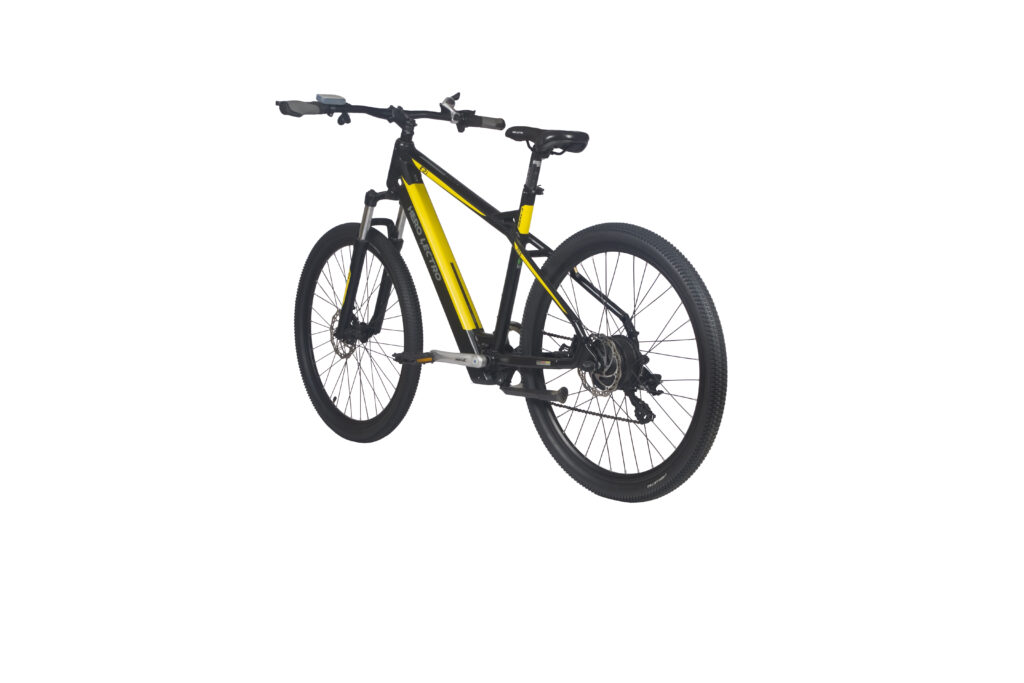
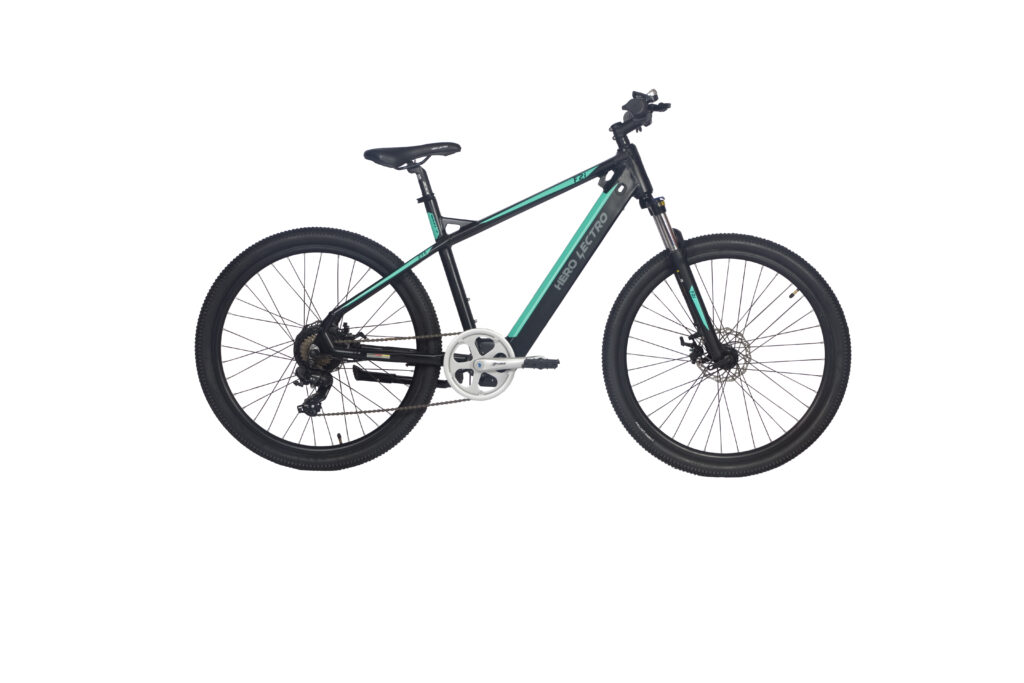
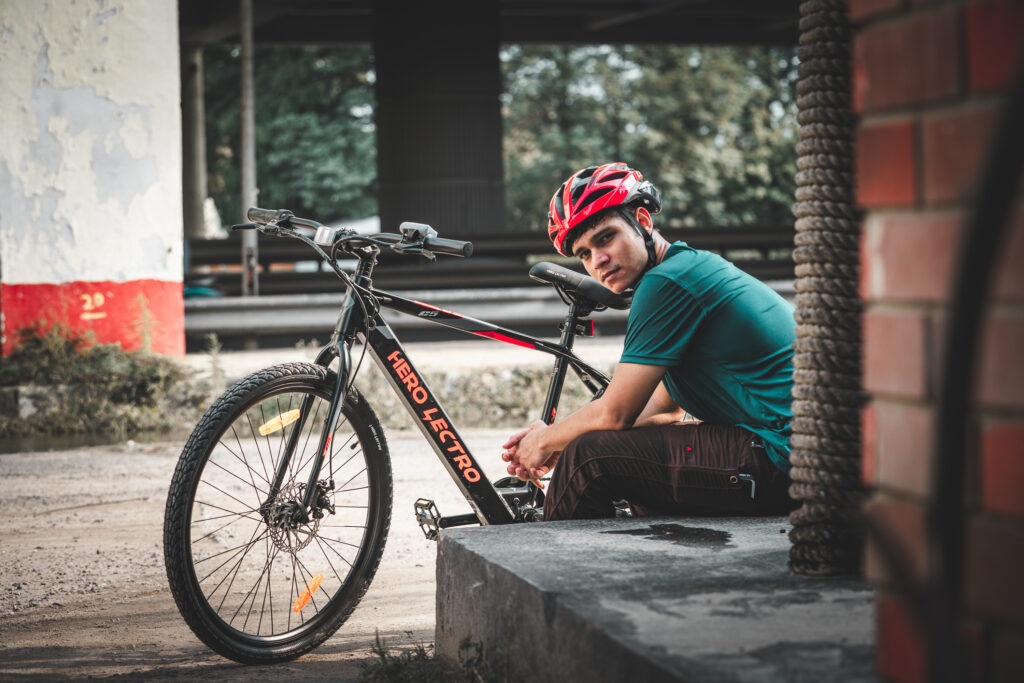
The Indian e-cycle market trending its way to 2022

by Team Conscious Carma February 1, 2022
written by Team Conscious Carma

The climate change coupled with the pandemic has led to an unprecedented increase in the number of cyclists all around the globe.  Be it to cover short distances or to stay healthy, people are getting on to cycles.  And e-cycle is going to be the most trending mobility vehicle in the year 2022.

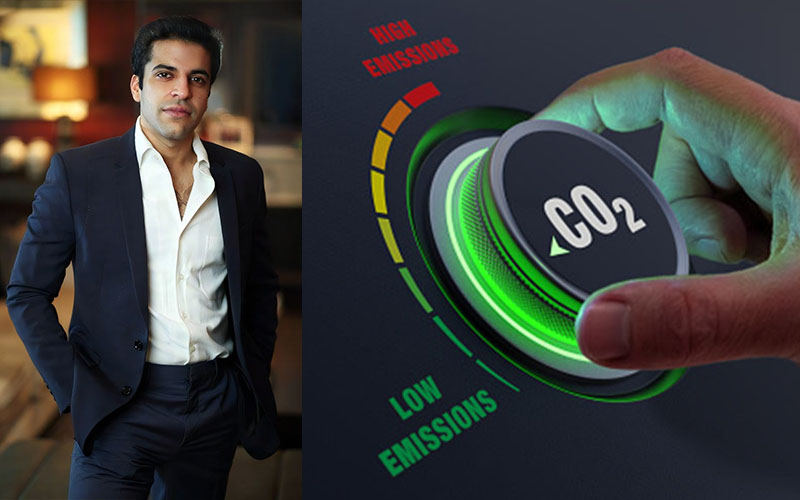
The pressing need to curb carbon emissions together with significant improvement in technology has put a global focus on e-mobility in recent years. As India aims to tread the model of smart and sustainable cities, e-mobility is poised to play an important role in achieving this goal Aditya Munjal, CEO, Hero Lectro

Conscious Carma in a candid chat with the country’s leading e-cycle manufacturer, Hero Lectro on the growing share of e-cycles in the e-mobility market of India and the way ahead.

1. What does 2021 reflect on India’s e-mobility scenario

The Indian e-cycle market is growing steadily at a CAGR of 55% as per the forecast period of 2021-2026, and the pandemic has acted as a major trigger in the adoption of e-cycles, with consumers seeking healthier, sustainable and affordable mobility solutions. Today, about 300 million people in the country commute for various needs and about 70 % of that number commutes within 20 km daily. According to our consumer audit reports, a huge segment of our customers (30%+) have adopted e-cycles for their daily commute and we have recorded over 100% growth in sales from May to October 2021 over 2020. Increasingly, people are beginning to understand the value proposition of e-cycles and are willing to switch from their regular modes of commute, which is a very positive sign for the sector. 

2. Can you please list down some of the initiatives and policies are taken by the government to promote the e-mobility sector

The Indian government has introduced various e-mobility initiatives in order to provide an eco-friendly alternative for both commercial and private transportation. While various state governments have rolled out policies that actively encourage the use of EVs, consideration for e-cycle inclusive initiatives are at a nascent stage. There are certain efforts by the state governments to improve cycling infrastructure, for example, as part of a recent project, the Delhi government is redesigning 540km of the city roads and adding more cycling tracks to it. The Delhi Development Authority in Dwarka is also developing a 16 km cycling corridor while the South Delhi Municipal Corporation is looking to set up 82 e-cycle stations connecting residential areas, metro stations and landmark spots in the city.

Though e-cycles are known to be the highest selling products across all forms of e-mobility, we still have a long way to go as far as incentives for this segment.  While India is only beginning to take a step towards democratizing e-cycles usage, countries such as the UK and Europe have extensively invested in this space.

Paris is known to have 1,400 docking points with 20,000 bicycles, while London has 750 docking stations with close to 12,000 bicycles. The UK government has also introduced subsidies on the purchase of e-cycles, which according to research reveals that 66% of the country’s population is looking to adopt e-cycles because of this initiative.

We, at Hero Lectro, are working with central and state governments to include e-cycles under various government schemes so that e-cycles can be more affordable and accessible to a larger segment of society. Our vision is to grow the category of e-cycles In India and make it mainstream. In the long term, we want to democratize e-cycles across all segments and all strata of society and make it an integral element of personal mobility in the country.

3.. Consumer behaviour towards e-mobility

We have seen a growing level of awareness around e-mobility in the country, with higher interest and acceptance for EVs among consumers. Since the pandemic, the emergence of short-distance commutes has grown and people are willing to make a shift towards an affordable, sustainable and efficient mobility solution.

We see users taking a use-case approach, on both the personal and commercial fronts. While some are using it for micro-mobility needs such as running errands, many others are using it for reasons such as fitness, commute to work etc.

We see the youth, in the age group of 18-35 as the biggest adopters of e-cycles, given their inherent nature to experiment as well as seek newer and more connected experiences. And because of that we believe that e-cycles today are not just a means of commuting but also a smart connected device for their lifestyle needs.

4. Similarly, what are the actions taken by Hero Group towards e-mobility business and action plan for 2022

We see several factors that will accelerate the growth and adoption of e-cycles in India. With rising fuel costs, increased congestion, pollution, parking hassles, and time to travel, e-cycles are best poised to address these challenges owing to their cost-effectiveness, ease of use, low maintenance safety and added benefits such as fitness and sustainability.

Today, we have a robust omnichannel sales and distribution network with  600 outlets + eCommerce channels, across 150 cities in India. We have seen healthy contributions from across Metros, Tier II and Tier III cities. Because of the multiple use cases of an e-cycle and the benefits, it provides from both savings on travelling cost, health and even the environment, the adoption of Hero Lectro E-Cycles has been panned India.

As we move into 2022, we see commute as the biggest use case for e-cycles, both from a personal and commercial perspective. With most companies returning back to offices over time, e-cycles are estimated to gradually replace public transport utilities, and we intend to tap into the office going community to drive the adoption of e-cycles. With the eCommerce business booming in India, we see the logistics and last-mile delivery segment as a huge opportunity for growth, and to that extent, we are in talks with e-commerce partners and rental companies to add e-cycles into their fleet.

From a regulatory perspective, we are working with central and state governments to include e-cycles under various government schemes so that e-cycles can be more affordable and accessible to a larger segment of the society. Our vision is to grow the category of e-cycles In India and make it mainstream. In the long term, we want to democratize e-cycles across all segments and all strata of society and make it an integral element of personal mobility in the country.

February 1, 2022 0 comment
0 FacebookTwitterPinterestEmail
EconomyIndustry

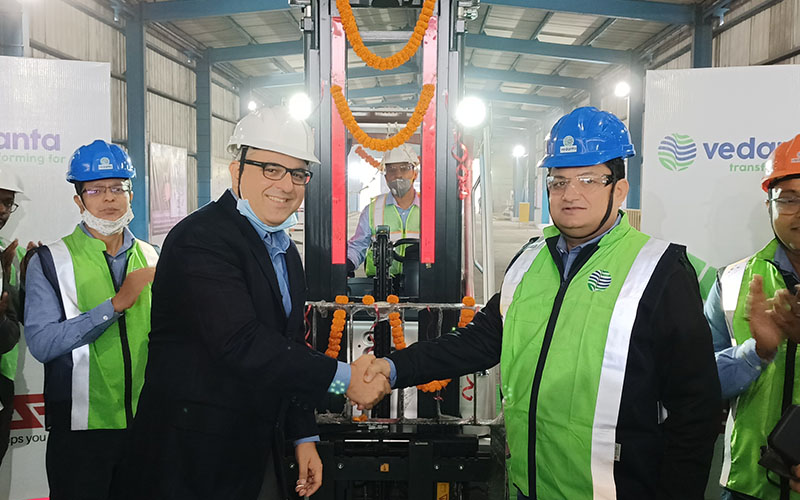
Vedanta Aluminium and GEAR India to deploy one of India’s largest Lithium-Ion Forklift Fleets

by Team Conscious Carma January 6, 2022
written by Team Conscious Carma
  • 23 lithium-ion battery-powered electric forklifts to be deployed at Vedanta’s Aluminium Smelter at Jharsuguda (Odisha)
  • IOT- based Smart Fleet Management system for enhanced safety at site
  • Potential for greenhouse gas (GHG) emission reduction of ~690 tonnes of CO2 equivalent annually

Mumbai: Vedanta Aluminium Business, India’s largest producer of aluminium and value-added products, has signed an agreement with GEAR (Gemini Equipment and Rentals Private Limited) India, to deploy one of the largest fleets of lithium-ion battery-powered electric forklifts, becoming the first in Indian aluminium industry to undertake such an initiative. The company shall commission 23 such forklifts in a phased manner over the next few months at its aluminium smelter in Jharsuguda, Odisha, which is one of the world’s largest single-location aluminium smelters. Substituting diesel-fuelled forklifts with this green fleet will reduce diesel consumption by more than 2.5 lakh litres annually, thereby ensuring GHG (greenhouse gas) emission savings of nearly 690 tonnes of CO2 equivalent.

Vedanta Aluminium currently operates a large fleet of forklifts for finished goods handling, material movement, etc. The new lithium-ion forklifts will help maximise productivity of operations by enabling longer working cycles via rapid charging. What’s unique about the lithium-ion batteries is that they avoid the hassles of frequent battery change and have a substantially longer life than conventional lead-acid batteries, while being virtually maintenance-free, as they are completely sealed.

These forklifts make use of the cutting-edge ‘Smart Fleet Management’ system to help ensure the highest levels of safety at site. The Smart Fleet Management system uses IOT (Internet of Things) technology to integrate the data collected by intelligent terminals and provide Vedanta Aluminium insights on a real-time basis with respect to forklift speed, access to operate, collision avoidance, optimization analysis for operational efficiency and equipment maintenance, among others. Further, these electric forklifts are equipped with forward and reverse cameras, ensuring complete visibility to the operators, red-zone light and blue spotlights that create a safe operating zone around the forklift, as well as automatic deceleration mechanism while turning, for enhanced safety. 

Speaking about the partnership, Mr Rahul Sharma, CEO – Aluminium Business, Vedanta Limited, said, “Vedanta Aluminium is committed to achieving Net Zero Carbon emissions by 2050. Our partnership with GEAR to deploy one of India’s largest and most advanced electric forklift fleets, is in line with our endeavour towards leveraging the power of innovation and technology to make our operations future-ready. In addition to reducing carbon footprint, this initiative uses cloud computing to provide real-time analytics to enhance productivity and further bolster our people’s safety.”

Mr. Varun Chopra, Executive Chairman of GEAR India, added, “Vedanta Aluminium’s endeavour to replace fossil-fuelled heavy vehicles with technologically-advanced lithium-ion forklifts at such a mammoth scale is a praiseworthy move. It is our privilege to be Vedanta’s partner in this pioneering venture, which will go a long way towards decarbonizing their industrial vehicle fleet. This will serve as an inspiration for the Indian manufacturing industry to explore emerging technology solutions for achieving their Net Zero vision.”

Founded in 2007, GEAR is one of India’s leading Warehousing/Intralogistics Material Handling Equipment (MHE) rental service providers. GEAR prides itself on providing efficient and cost effective MHE Rental and Sale solutions for tasks such as stacking, lifting and moving, facilitating its customers to focus singularly on their core business for better productivity.

Vedanta Aluminium Business, a division of Vedanta Limited, is India’s largest manufacturer of aluminium, producing half of India’s aluminium i.e., 1.97 million tonnes in FY21. It is a leader in value-added aluminium products that find critical applications in core industries. With its world-class Aluminium Smelters, Alumina Refinery and Power Plants in India, the company fulfils its mission of spurring emerging applications of aluminium as the ‘Metal of the Future’ for a greener tomorrow.


About Vedanta Limited:

Vedanta Limited, a subsidiary of Vedanta Resources Limited, is one of the world’s leading Oil & Gas and Metals company with significant operations in Oil & Gas, Zinc, Lead, Silver, Copper, Iron Ore, Steel, and Aluminium & Power across India, South Africa and Namibia. For two decades, Vedanta has been contributing significantly to nation building. Governance and sustainable development are at the core of Vedanta’s strategy, with a strong focus on health, safety, and environment. Vedanta has put in place a comprehensive framework to be the ESG leader in the natural resources sector. Vedanta is committed to reducing carbon emissions to zero by 2050 or sooner and has pledged $5 billion over the next 10 years to accelerate the transition to net zero operations. Giving back is in the DNA of Vedanta, which is focused on enhancing the lives of local communities. The company’s flagship social impact program, Nand Ghars, have been set up as model anganwadis focused on eradicating child malnutrition, providing education, healthcare, and empowering women with skill development. Under the aegis of the Anil Agarwal Foundation, the umbrella entity for Vedanta’s social initiatives, the Vedanta group has pledged Rs 5000 crore over the next five years on social impact programmes with a thrust on nutrition, women & child development, healthcare, animal welfare, and grass-root level sports. Vedanta and the group companies company have been featured in Dow Jones Sustainability Index 2020, and was conferred Frost & Sullivan Sustainability Awards 2020, CII Environmental Best Practices Award 2020, CSR Health Impact Award 2020, CII National Award 2020 for Excellence in Water Management, CII Digital Transformation Award 2020, ICSI National Award 2020 for excellence in Corporate Governance, People First HR Excellence Award 2020, ‘Company with Great Managers 2020’ by People Business and certified as a Great Place to Work 2021. Vedanta’s flagship Nand Ghar Project was identified as best CSR project by Government of Rajasthan. Vedanta Limited is listed on the Bombay Stock Exchange and the National Stock Exchange. For more information, please visit www.vedantalimited.com

About Vedanta Aluminium Business:

Vedanta Aluminium Business, a part of Vedanta Limited, is India’s largest producer of Aluminium, producing almost half of India’s aluminium or 1.97 million tonnes per annum (MTPA) in FY21. Vedanta is a leader in value-added aluminium products that find critical applications in core industries. With its world-class Aluminium Smelters, Alumina Refinery and Power Plants in India, the company fulfils its mission of spurring emerging applications of aluminium as the ‘Metal of the Future’ for a greener tomorrow. For more information, please log on to www.vedantaaluminium.com

About GEAR (Gemini Equipment And Rentals Pvt. Ltd.) India:

Founded in the year 2007, GEAR is one of India’s leading Warehousing/Intralogistics Material Handling Equipment (MHE) rental service providers. GEAR, in its pursuit of providing world class MHE to its customers in India, is offering products powered with ‘green lithium-ion technology’, which apart from being environmentally friendly, offer significant other benefits that maximise productivity and safety of its customers. These products have the potential to usher in a New ‘Green Revolution’ in India with its applications cutting across industries. GEAR also runs NIFOT (National Institute For Operator Training) with the vision of providing MHE operator training with respect to Operating MHEs, driving Efficiency and the highest level of Safety and Quality. For more information, please visit https://www.gear-india.com/ & https://nifot.com/

January 6, 2022 0 comment
0 FacebookTwitterPinterestEmail
EconomyIndustry

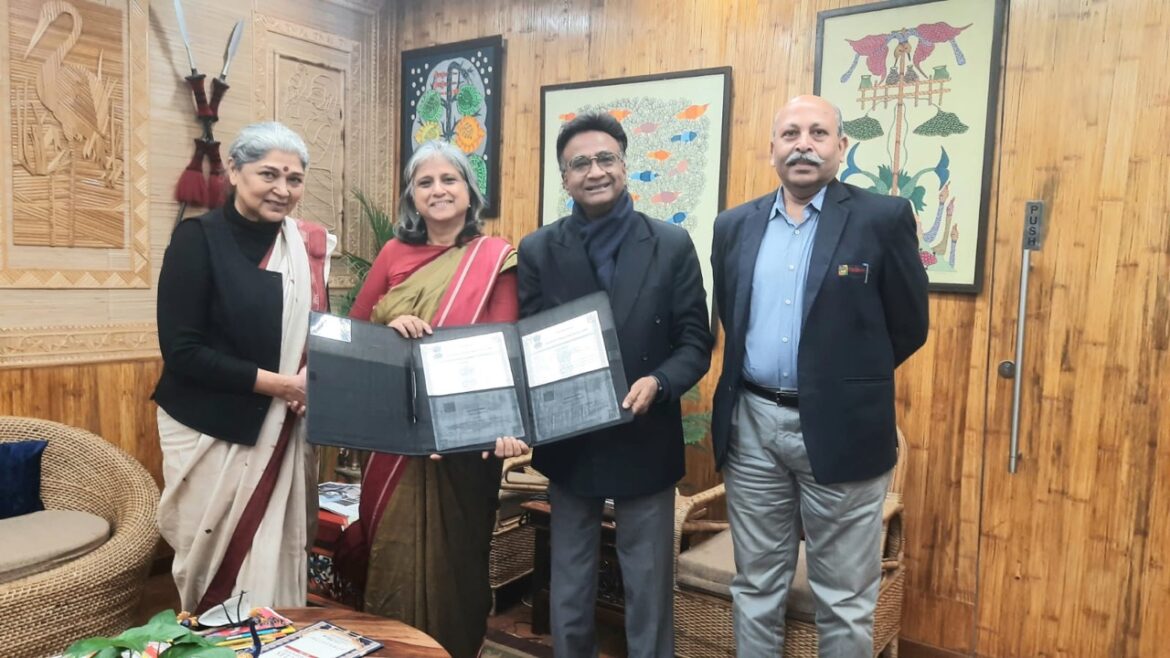
TRIFED and Industree Foundation join Hands to Promote Tribal Livelihoods

by Team Conscious Carma December 25, 2021
written by Team Conscious Carma

 The memorandum of understanding outlines areas of association that is aimed at strengthening livelihood opportunities for tribal artisans and producers.

Tribal Cooperative Marketing Development Federation of India Ltd (TRIFED) and Industree Foundation have signed an MoU for initiatives related to marketing and promoting tribal products.  The MoU signed by Shri Pravir Krishna, Managing Director, TRIFED and  Shrimati Neelam Chhiber, Co-founder, Industree Foundation, is aimed at improving the livelihood of tribal artisans and producers through strategic inputs. Areas of the association outlined are Retail Marketing of tribal handicrafts and handloom products, TRIFOOD Project, and Van Dhan Yojana. 

As a part of the association, Industree Foundation will assist TRIFED in strengthening its presence through a variety of modes, including branding, packaging, etc. Industree will also assist TRIFED in finding appropriate partners and professional managers for the TRIFOOD value addition facilities, besides training managers and paraprofessionals from communities to manage the Van Dhan collectives. As part of the agreement, Industree will work on accessing various funding opportunities available via CSR, domestic and international donor agencies to support the Van Dhan Yojana and other projects. TRIFED is instrumental in the procurement and marketing of handicraft, handloom, and natural products produced by tribal artisans and tribal entrepreneurs through its Retail Chain Network of 144 showrooms “Tribes India”, located across the country. Industree Foundation promotes and fosters producer-owned collectives, and creates access to national and international markets for the products as ‘final mile’ access. 

 Speaking on the occasion Neelam Chhiber, Co-founder of Industree Foundation said, “We are delighted to be partnering with TRIFED. The synergies are great, as is the common commitment – TRIFED has done remarkable work in safe-guarding livelihoods for the marginalized tribal community and for the promotion of tribal craft and products. Industree will support TRIFED with its on-ground experience and reach.”

About the Organisations Involved : 

Industree Foundation

Established in 2000, Industree Foundation holistically tackles the root causes of poverty by creating an ownership based, organised creative manufacturing ecosystem for women.

The Foundation works with a vision to co-create an ecosystem with farmers, artisans, and stakeholders, creating a new way of building sustainable enterprises and work culture. Its mission is to work towards economically and socially empowering women from marginalized communities in off-farm, natural resource based and value-added farm occupations. This is done by enabling them to equitably engage with global and local markets through producer-owned enterprises, thus becoming wealth creators for them, creating resilience to life crises, and helping society meet its sustainable development goals. Their approach has tripled the incomes of artisans in non-farm occupations by leveraging their artisanal skills and integrating them into the creative industries sector.

The Foundation works with a vision to co-create an ecosystem with farmers, artisans, and stakeholders, creating a new way of building sustainable enterprises and work culture. Its mission is to work towards economically and socially empowering women from marginalized communities in off-farm, natural resource based and value-added farm occupations. This is done by enabling them to equitably engage with global and local markets through producer-owned enterprises, thus becoming wealth creators for them, creating resilience to life crises, and helping society meet its sustainable development goals. Their approach has tripled the incomes of artisans in non-farm occupations by leveraging their artisanal skills and integrating them into the creative industries sector.

TRIFED

Tribal Cooperative Marketing Development Federation of India Ltd. (hereafter referred to as TRIFED) is mandated with the marketing and development of tribal products with the ultimate objective of socio-economic development of tribal communities in India. TRIFED aims to improve the livelihoods of tribal communities by creating a sustainable market and new business opportunities for them based on their culture, knowledge, and traditional skills whilst ensuring fair and equitable remuneration.

December 25, 2021 0 comment
0 FacebookTwitterPinterestEmail
Newer Posts
Older Posts

Recent Posts

  • Norwegian Cruise Line Holdings Publishes Annual Environmental, Social and Governance (ESG) Report Detailing Progress on Sustainability Initiatives
  • Norwegian Cruise Line Holdings Publishes Annual Environmental, Social and Governance (ESG) Report Detailing Progress on Sustainability Initiatives
  • Norwegian Cruise Line Holdings Publishes Annual Environmental, Social and Governance (ESG) Report Detailing Progress on Sustainability Initiatives
  • Norwegian Cruise Line Holdings Publishes Annual Environmental, Social and Governance (ESG) Report Detailing Progress on Sustainability Initiatives
  • Norwegian Cruise Line Holdings Publishes Annual Environmental, Social and Governance (ESG) Report Detailing Progress on Sustainability Initiatives

Recent Comments

  • Team Conscious Carma on Label Shivika Agarwal – where craft meets sustainability
  • Cocomeister.jp on Label Shivika Agarwal – where craft meets sustainability
  • Team Conscious Carma on Equitable City Designs To Fight Climate Change
  • UN report calls for repurposing of USD 470 billion of agricultural support that distorts prices and steer us away from environment and social goals | Consciouscarma on UNEP & ICMR collaborate to boost understanding of environmental dimensions of antimicrobial resistance in India
  • Wild Earth : Natural body products | Consciouscarma on Sat.Suma : the true essence of flowers in your everyday skincare needs

Keep in touch

Facebook Twitter Instagram Youtube

Recent Posts

  • Norwegian Cruise Line Holdings Publishes Annual Environmental, Social and Governance (ESG) Report Detailing Progress on Sustainability Initiatives

  • Norwegian Cruise Line Holdings Publishes Annual Environmental, Social and Governance (ESG) Report Detailing Progress on Sustainability Initiatives

  • Norwegian Cruise Line Holdings Publishes Annual Environmental, Social and Governance (ESG) Report Detailing Progress on Sustainability Initiatives

  • Norwegian Cruise Line Holdings Publishes Annual Environmental, Social and Governance (ESG) Report Detailing Progress on Sustainability Initiatives

  • Norwegian Cruise Line Holdings Publishes Annual Environmental, Social and Governance (ESG) Report Detailing Progress on Sustainability Initiatives

  • Norwegian Cruise Line Holdings Publishes Annual Environmental, Social and Governance (ESG) Report Detailing Progress on Sustainability Initiatives

Categories

  • Community (35)
    • Campaigns (3)
  • CSR (4)
  • Economy (81)
    • Global (24)
    • Industry (41)
    • Innovations (4)
    • National (2)
  • Environment (41)
  • Expert Corner (46)
    • Authored Articles (45)
  • Featured (3)
    • Partners (1)
  • Global News (2)
  • Initiatives (29)
    • CSR (2)
    • Events (5)
  • Inspiration (22)
  • Lifestyle (9)
  • Media Coverage (6)
  • Press Releases (1,061)
  • Products (119)
    • Accessories (25)
    • Apparel (30)
    • Beauty (25)
    • Food (3)
    • Gifting (3)
    • Home Décor (15)
    • Skin-Care (13)
  • Reports (3)
  • Spirituality (8)
  • Sustainability (38)
  • Sustainable Startup Stories (27)
  • Travel (19)
  • Uncategorized (2)
  • Wellness (25)
    • Home Cleaners (3)

Archives

  • June 2023 (337)
  • May 2023 (623)
  • April 2023 (120)
  • March 2023 (7)
  • February 2023 (3)
  • January 2023 (11)
  • December 2022 (18)
  • November 2022 (1)
  • August 2022 (6)
  • July 2022 (8)
  • June 2022 (24)
  • May 2022 (11)
  • April 2022 (19)
  • March 2022 (11)
  • February 2022 (11)
  • January 2022 (14)
  • December 2021 (10)
  • November 2021 (4)
  • October 2021 (14)
  • September 2021 (22)
  • August 2021 (12)
  • July 2021 (17)
  • June 2021 (17)
  • May 2021 (16)
  • April 2021 (22)
  • March 2021 (33)
  • February 2021 (16)
  • January 2021 (22)
  • December 2020 (10)
  • Facebook
  • Twitter
  • Instagram
  • Pinterest
  • Linkedin
  • Youtube

@2020 - All Right Reserved. Designed and Developed by Seatice Business

Consciouscarma
  • Home
  • About Us
  • Products
  • Community
    • Campaigns
    • Inspiration
    • Initiatives
    • CSR
  • Features
    • Sustainable Startup Stories
    • Travel
    • Lifestyle
    • Partners
  • Economy
    • Industry
    • Innovations
    • National
    • Global
  • Environment
  • Expert Corner
    • Authored Articles
    • Reports
  • Magazine
  • Contact