Consciouscarma
  • Home
  • About Us
  • Products
  • Community
    • Campaigns
    • Inspiration
    • Initiatives
    • CSR
  • Features
    • Sustainable Startup Stories
    • Travel
    • Lifestyle
    • Partners
  • Economy
    • Industry
    • Innovations
    • National
    • Global
  • Environment
  • Expert Corner
    • Authored Articles
    • Reports
  • Magazine
  • Contact
Category:

Industry

EconomyIndustry

TRIFED and Industree Foundation join Hands to Promote Tribal Livelihoods

by Team Conscious Carma December 25, 2021
written by Team Conscious Carma

 The memorandum of understanding outlines areas of association that is aimed at strengthening livelihood opportunities for tribal artisans and producers.

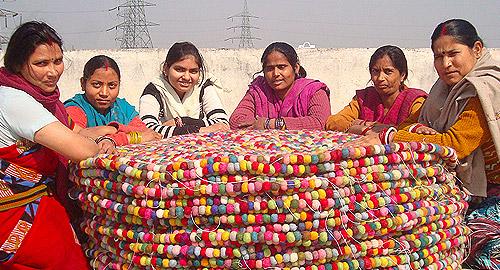
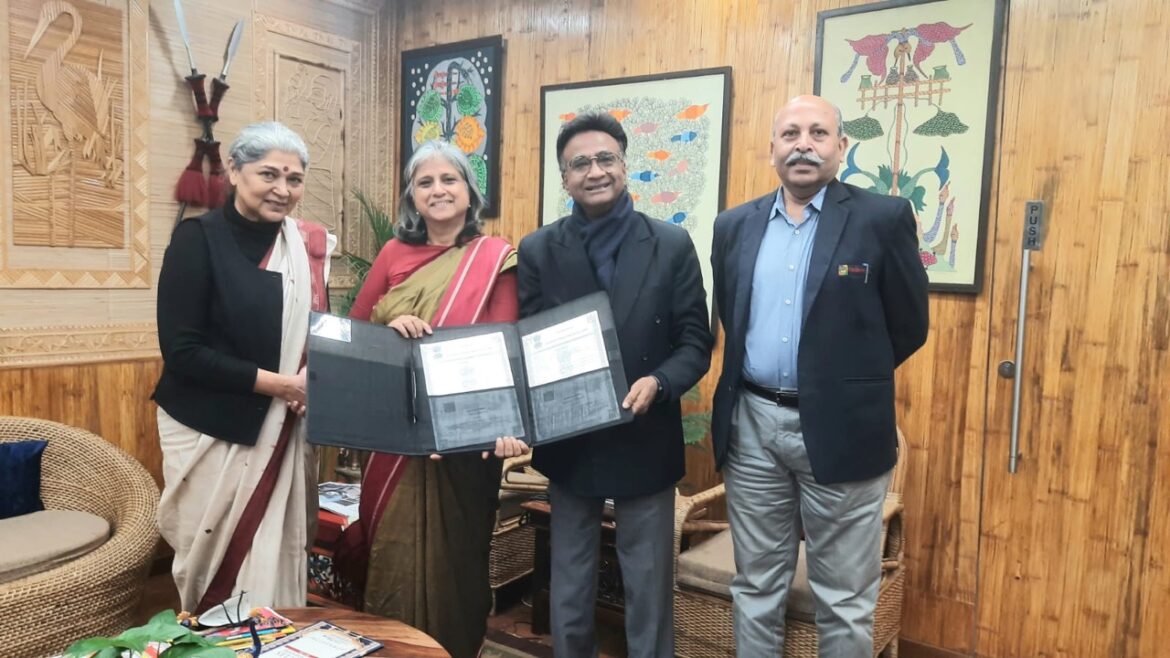
Tribal Cooperative Marketing Development Federation of India Ltd (TRIFED) and Industree Foundation have signed an MoU for initiatives related to marketing and promoting tribal products.  The MoU signed by Shri Pravir Krishna, Managing Director, TRIFED and  Shrimati Neelam Chhiber, Co-founder, Industree Foundation, is aimed at improving the livelihood of tribal artisans and producers through strategic inputs. Areas of the association outlined are Retail Marketing of tribal handicrafts and handloom products, TRIFOOD Project, and Van Dhan Yojana. 

As a part of the association, Industree Foundation will assist TRIFED in strengthening its presence through a variety of modes, including branding, packaging, etc. Industree will also assist TRIFED in finding appropriate partners and professional managers for the TRIFOOD value addition facilities, besides training managers and paraprofessionals from communities to manage the Van Dhan collectives. As part of the agreement, Industree will work on accessing various funding opportunities available via CSR, domestic and international donor agencies to support the Van Dhan Yojana and other projects. TRIFED is instrumental in the procurement and marketing of handicraft, handloom, and natural products produced by tribal artisans and tribal entrepreneurs through its Retail Chain Network of 144 showrooms “Tribes India”, located across the country. Industree Foundation promotes and fosters producer-owned collectives, and creates access to national and international markets for the products as ‘final mile’ access. 

 Speaking on the occasion Neelam Chhiber, Co-founder of Industree Foundation said, “We are delighted to be partnering with TRIFED. The synergies are great, as is the common commitment – TRIFED has done remarkable work in safe-guarding livelihoods for the marginalized tribal community and for the promotion of tribal craft and products. Industree will support TRIFED with its on-ground experience and reach.”

About the Organisations Involved : 

Industree Foundation

Established in 2000, Industree Foundation holistically tackles the root causes of poverty by creating an ownership based, organised creative manufacturing ecosystem for women.

The Foundation works with a vision to co-create an ecosystem with farmers, artisans, and stakeholders, creating a new way of building sustainable enterprises and work culture. Its mission is to work towards economically and socially empowering women from marginalized communities in off-farm, natural resource based and value-added farm occupations. This is done by enabling them to equitably engage with global and local markets through producer-owned enterprises, thus becoming wealth creators for them, creating resilience to life crises, and helping society meet its sustainable development goals. Their approach has tripled the incomes of artisans in non-farm occupations by leveraging their artisanal skills and integrating them into the creative industries sector.

The Foundation works with a vision to co-create an ecosystem with farmers, artisans, and stakeholders, creating a new way of building sustainable enterprises and work culture. Its mission is to work towards economically and socially empowering women from marginalized communities in off-farm, natural resource based and value-added farm occupations. This is done by enabling them to equitably engage with global and local markets through producer-owned enterprises, thus becoming wealth creators for them, creating resilience to life crises, and helping society meet its sustainable development goals. Their approach has tripled the incomes of artisans in non-farm occupations by leveraging their artisanal skills and integrating them into the creative industries sector.

TRIFED

Tribal Cooperative Marketing Development Federation of India Ltd. (hereafter referred to as TRIFED) is mandated with the marketing and development of tribal products with the ultimate objective of socio-economic development of tribal communities in India. TRIFED aims to improve the livelihoods of tribal communities by creating a sustainable market and new business opportunities for them based on their culture, knowledge, and traditional skills whilst ensuring fair and equitable remuneration.
December 25, 2021 0 comment
0 FacebookTwitterPinterestEmail
EconomyIndustry

Tabreed Officially Partners with IFC to Facilitate Expansion in India

by Team Conscious Carma December 23, 2021
written by Team Conscious Carma

The partnership aims to build on Tabreed’s ongoing activities in India,  to provide more energy-efficient, end-to-end cooling solutions through an outsourced utility model for real estate developments, new urban masterplans, and ongoing redevelopments

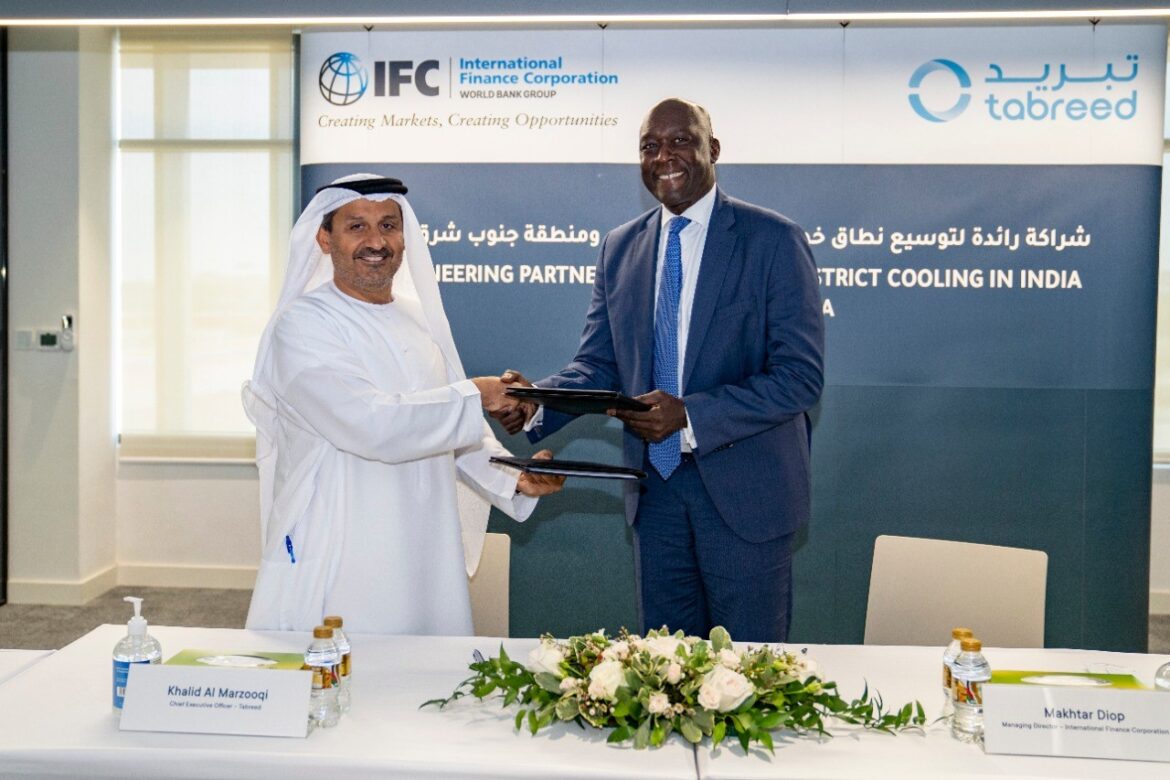
National Central Cooling Company PJSC (DFM: Tabreed) has officially confirmed its significant strategic partnership with the International Finance Corporation (IFC), a member of the World Bank Group and the largest global development institution focused on the private sector in emerging markets. Since its establishment in 1956, IFC has invested more than $321 billion in emerging markets.

This development will see ownership of Tabreed India, currently, a wholly-owned subsidiary of Tabreed, transferred to Tabreed Asia Central Cooling Company Pte Limited, a new holding company established in Singapore, as announced on 3 March 2021. Tabreed Asia will be 75% owned by Tabreed and 25% owned by IFC with a mandate to develop projects of up to $400 million over the next five years, targeting a portfolio of approximately 100,000 refrigeration tonnes (RT), servicing industrial, commercial, and retail developments across India.

“We’re excited about our partnership with IFC and look forward to working together to develop district cooling and cooling-as-a-service in India. We are committed to providing efficient cooling to cities and have been actively supporting the initiatives undertaken by the Government. In parallel, we have engaged with several top tier real estate developers to evaluate project opportunities focusing on specific micro-markets in 6 key cities in the country. With this partnership, we aim to build on Tabreed’s ongoing activities in India, to provide more energy-efficient, end-to-end cooling solutions through an outsourced utility model for real estate developments, new urban masterplans, and ongoing redevelopments,” said Sudheer Perla, Country Manager – India, Tabreed.

Both IFC and Tabreed have agreed on an investment eligibility criteria which, beyond typical financial requirements, also includes a robust environmental, social and governance (ESG) framework that will be adopted while developing district energy projects in these geographies. With such capital-intensive infrastructure requirements, the intention will be to raise debt through project finance for individual projects.

In terms of status, both parties have agreed on the mechanics to transfer Tabreed’s existing India operations under this joint venture and are looking to ramp up teams on the ground to continue developing value accretive opportunities in India.

“As temperatures are rising, access to cooling is a major development challenge, especially in emerging economies located in the tropical climate zone. This district cooling project is at the heart of what IFC is all about,” said Makhtar Diop, IFC’s Managing Director. “By working with Tabreed, we will bring sustainable, innovative and much needed cooling solutions to India.”

District cooling has been identified as an important intervention area around which several government bodies and smart cities are now increasingly evaluating its incorporation into urban master planning. With a currently low per capita cooling consumption and a rapidly growing cooling market across all sectors, district cooling adoption is imperative for India to meet its ambitious climate goals. There have been a number of promising developments on the policy and regulatory front, including India being the first country in the world to announce a Cooling Action Plan to more holistically address how increasing demand for cooling and energy efficiency can be met more sustainably.

Khalid Abdullah al Marzooqi, CEO of Tabreed, said this is a positive and timely development for Tabreed in India. “IFC has been established in this region for many decades,” he remarked, “unlocking investment opportunities, strengthening clients’ performance and impact, as well as improving environmental, social and governance (ESG) standards. It makes perfect sense for us to join forces as we are able to lean on each other’s unrivalled expertise.

“India is strategically very important for us, with demand for energy growing faster there than anywhere else in the world right now. District cooling uses, on average, half the power consumed by conventional cooling methods, meaning it’s an essential part of many countries’ climate goals due to the enormous savings in CO2 emissions achieved through energy efficiency. For countries such as India, reliable cooling means industrial, agricultural and societal progress, and we eagerly look forward to making a meaningful contribution to its prosperity while ensuring the sustainability we know is vital to all our futures.”

For more updates from Tabreed, visit www.tabreed.ae

Tabreed india Partnership

About National Central Cooling Company PJSC (Tabreed)

Tabreed is a leading driver of progress for people, communities and environments around the world towards a more sustainable future. Founded in 1998 and publicly listed on the Dubai Financial Market, it is one of the UAE’s strongest growth companies and a founding member of the S&P/Hawkamah ESG UAE Index. The world’s largest district cooling company, Tabreed’s R&D programmes and investment in AI technology solidify its position as the industry’s global leader.

Developing and operating modern district cooling networks, Tabreed provides essential cooling to iconic developments such as the Burj Khalifa, Sheikh Zayed Grand Mosque, Louvre Abu Dhabi, Dubai Opera, Dubai Metro and Bahrain Financial Harbor. The company owns and operates 84 plants in its portfolio across the GCC, including 75 in the United Arab Emirates, three in the Kingdom of Saudi Arabia, five in Oman, one in the Kingdom of Bahrain. Energy efficiency services extend Tabreed’s impact to help businesses and organisations improve their overall energy consumption, in turn reducing CO2 emissions and assisting the achievement of carbon neutrality objectives.

About IFC

IFC—a member of the World Bank Group—is the largest global development institution focused on the private sector in emerging markets. We work in more than 100 countries, using our capital, expertise, and influence to create markets and opportunities in developing countries. In fiscal year 2021, IFC committed a record $31.5 billion to private companies and financial institutions in developing countries, leveraging the power of the private sector to end extreme poverty and boost shared prosperity as economies grapple with the impacts of the COVID-19 pandemic. For more information, visit www.ifc.org.

December 23, 2021 0 comment
0 FacebookTwitterPinterestEmail
EconomyIndustry

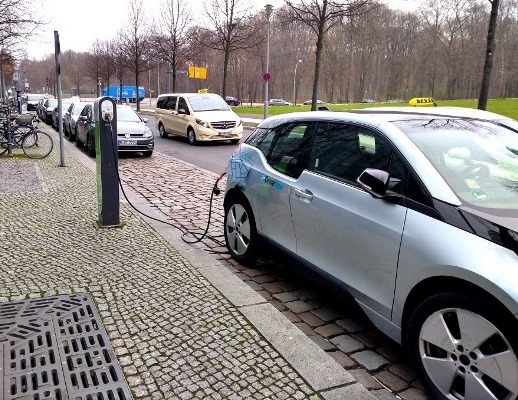
GIZ India, Tata Power, and NITI Aayog released a report on ‘Smart Charging Strategies Technologies for Electric Vehicles in India’

by Team Conscious Carma December 7, 2021
written by Team Conscious Carma

~The report is a first in the series of the ongoing study on ‘Simulation-based study to evaluate the effects of E-mobility smart charging strategies’~

GIZ India, in cooperation with NITI Aayog, Government of India, and Tata Power has released the first report titled, ‘A Critical Review: Smart Charging Strategies and Technologies for Electric Vehicles’. The report focuses on concepts of smart charging, a critical review of various smart charging strategies and approaches for electric vehicles, smart charging technologies, and related commercially available smart charging products along with the impact of EVs on the power system and power grid.

The report was launched by Mr. Sudhendhu Jyoti Sinha, Advisor, Infrastructure Connectivity & Electric Mobility vertical, NITI Aayog, Government of India, in a virtual event.  Dr. Steffen Koch, Minister – Head of the Department for Economic & Global Affairs Embassy of the Federal Republic of Germany graced the audience with insights from Germany in his special address. Dr. Winfried Damm, Head of the Indo-German Energy Programme, GIZ India, mentioned about the importance of e-mobility to achieve India’s climate protection commitments in his inaugural session. 

The technical session of the event witnessed discussions by key experts from the Technical University of Denmark (DTU) and the Universidad Pontificia Comillas (IIT Comillas) on the impact of EV penetration into the power system & power grid, associated challenges, and concept of smart charging to solve such challenges and bring benefits to the power system.

The report also focuses on the gaps in Indian regulation policies from the smart charging perspective and is a part of an ongoing regional project titled, ‘The Nationally Determined Contribution-Transport Initiative for Asia’ (NDC-TIA), funded under the International Climate Initiative (IKI) by the German Federal Ministry of the Environment, Nature Conservation and Nuclear Safety (BMU), and comprising of seven organisations and including the partner countries India, China, and Vietnam. The implementation partner of this NDC-TIA India project is NITI Aayog, Government of India.

Dr. Indradip Mitra, Team Leader, E-mobility, Indo-German Energy Programme, Country Coordinator for NDC-TIA India Component, GIZ India, and Dr. Norbert Henze, Fraunhofer Institute for Energy Economics and Energy System Technology IEE R&D Division Power System Stability and Converter Technology, Kassel, Germany, presented important details about the report and included discussions on the overall simulation-based study to evaluate the effects of E-mobility smart charging strategies and highlighted the importance of technical cooperation between India and Germany for achieving India’s national goals and NDC commitments.

During the launch ceremony, Dr. Praveer Sinha, CEO and Managing Director, Tata Power shared his valuable insights on importance of smart charging  which can pave  the future direction for the EV charging ecosystem across the  country . Dr. G. Ganesh Das, Chief – Strategy, Collaborations, Innovation and R&D , Tata Power- DDL delivered the vote of thanks and shared with impact of the report while elaborating  on the integration of key economic drivers like transportation and E-mobility while expressing the need for grid optimization . 

Key takeaways from the report were discussed by Prof. Zakir Hussain Rather, Indian Institute of Technology, Bombay (IITB), and Mr. Andre Hartung, Fraunhofer IEE. The report will significantly contribute to the existing framework for robust charging infrastructure. The EV ecosystem expansion is happening at a rapid pace in India. As one of the country’s largest EV charging solutions provider, Tata Power has played a key role in establishing a strong base through this study which will pave the future direction for the EV charging ecosystem in India. It is also working on solutions to power EV charging points across the country using renewable sources for offering a seamless charging experience.

The study “Simulation-based study to evaluate the effects of E-mobility smart charging strategies” has been carried out by a consortium led by Fraunhofer Institute for Energy Economics and Energy System Technology IEE, Kassel, Germany, and supported by the Indian Institute of Technology Bombay in India (IITB), Universidad Pontificia Comillas (IIT Comillas) in Madrid, Spain, and Technical University Denmark (DTU) in Copenhagen, Denmark. The main objective of this study is to understand relevant smart coordinated charging strategies that require to be adopted in different scenarios and conditions in India. Different charging strategies have been selected under the study to perform load flow analysis and simulations on real feeder level data obtained from Tata Power. Towards the end of the event, a way forward and an outlook was also presented by Prof Martin Braun, Fraunhofer Institute for Energy Economics and Energy System Technology IEE, Kassel, where he highlighted advanced technologies in e-mobility space such as Vehicle to Grid (V2X), Virtual Power Plant (VPP), etc. 

 Tata Power facilitated this study for GIZ India with real data for several feeders in its distribution network across the three Indian cities of Delhi, Mumbai, and Bhubaneswar. The company has a significant presence in all the segments of the power sector, viz Fuel & Logistics, Generation (thermal, hydro, solar, and wind), Transmission, Distribution, and Trading.

Report Link – https://greenmobility-library.org/public/index.php/single-resource/QlBDRnJiUnRSb0lmaGxGaFJNM0xuUT09

December 7, 2021 0 comment
0 FacebookTwitterPinterestEmail
renewable
GlobalIndustry

India ranks 3rd in the ‘Renewable Energy Country Attractiveness Index’ released by EY

by Team Conscious Carma October 16, 2021
written by Team Conscious Carma
  • US retains the top position with China and India bringing up the top 3 in the rankings
  • RECAI 57 finds that environment, sustainability and governance (ESG) goals are increasingly being prioritized on the investor agenda while institutional investors’ interest in renewables continues to grow.

India has moved up a position to the third spot in the 57th EY Renewable Energy Country Attractiveness Index (RECAI) released by EY. Also, India’s solar sector is expected to grow significantly post the COVID-19 pandemic, with generation from solar PV forecast to exceed coal before 2040. This dramatic change has been driven by the Indian government’s policy ambitions, which has led solar PV to be the most cost competitive source of power in the region and improving further with the passage of time.

In 2020, global renewable energy capacity investments grew 2% to US$303.5b, the second-highest annual figure recorded to date despite the impact of the global COVID-19 pandemic. However, the EY RECAI 57 estimates that future development to achieve net zero will require a further investment of US$5.2t and highlights the role institutional investors will need to play in financing the energy transition.

RECAI 57 finds that environment, sustainability and governance (ESG) goals are increasingly being prioritized on the investor agenda while institutional investors’ interest in renewables continues to grow.

Somesh Kumar, Partner and National Leader, Power & Utilities, EY India, says, “India has moved one position above (3rd) from the previous index (4th), this is primarily because of the exceptional performance on the solar PV front. Installed solar PV capacity in India has skyrocketed to 39 GW marginally overtaking the wind capacity for the first time. The economic attractiveness of solar PV and intense competition from the private sector has led to record low tariff bids. India also committed to set up 450 GW for renewable energy power capacity (installed) by 2030 in the recent climate summit hosted by US. This will likely increase the share of renewable energy in the overall power generation installed capacity to 54%, vis-à-vis share in overall gross generation to 36%.”

The forthcoming 2021 United Nations Climate Change Conference of the Parties (COP26) presents an opportunity to close the gap between what governments have promised to do and the level of action they have undertaken to date. RECAI 57 finds that current policy and pledge trajectories from leading nations indicate an increased commitment to greater accountability and transparency, with representatives expected to outline clear roadmaps and detail on policy measures to spur investment in renewables.

Ben Warren, EY Global Power & Utilities Corporate Finance Leader and RECAI Chief Editor, says, “The impact of the COVID-19 pandemic on economies across the globe seems to have refocused investors’ minds on the environmental, social and corporate governance agenda and there is a growing trend toward considering the climate crisis and the energy transition when deploying capital. As a result, interest in renewable energy development has risen among institutional investors who have pledged to incorporate climate-risk concerns into their decision-making processes, resulting in new models of investment to locate opportunities that satisfy their risk and return expectations.”

renewable

US retains the top position with China and India bringing up the top 3 in the rankings

The US retains the top position on the Index and is expected to hold its position under President Biden. The reacceptance of the Paris Accord, coupled with the recent announcement to cut GHG levels by 50-52% as early as 2030 and achieve 100% carbon-free power by 2035, will likely see increased investor interest in the US. Similarly, China has remained a buoyant market and maintains the second position, adding 72.4GW of new wind power in 2020, as developers rushed to beat an onshore wind subsidy cut. In April, China and the US also announced that they would work together and with other markets to tackle climate change.

India rose one place in the rankings to 3rd position as the country’s solar sector is expected to grow significantly post the COVID-19 pandemic, with generation from Solar PV forecast to exceed coal before 2040.

East Asian markets Japan and South Korea (ranking in 8th and 17th positions respectively) also made commitments toward net zero in the past year. The report highlights that East Asia has a robust pipeline of clean-energy projects, with more than 800 shovel-ready schemes and with a total investment potential of US$316b.

Other markets have climbed the Index, as numerous governments take tentative steps toward launching new offshore wind projects. Poland, now in 22nd position, has adopted a new act to promote 5.9GW of offshore wind by 2030 through competitive auctions. And Brazil’s federal environmental authority has released licensing guidelines for offshore wind projects, seeing Brazil climb to 11th position.

Germany drops by one place in the ranking to 7th position, as last-minute changes to the design of future onshore wind tenders came under criticism. These changes would allow regulators to reduce the size of auctions if undersubscribed and developers believe that this uncertainty will lead to decreasing bid volumes.

Italy climbs two places in the ranking to 15th position after receiving a grant of €209bn from the EU Recovery Fund. The Italian government has also told developers that it is willing to extend its 4.7GW program of support auctions for onshore wind and solar PV into next year after the initial round was undersubscribed.

Arnaud de Giovanni, EY Global Renewables Leader, says, “There is a clear shift away from fossil fuel investment and toward environmentally sustainable projects by institutional investors who are typically more risk averse in their investing principles. Risk-mitigation tools, structured finance mechanisms tailored specifically to the renewables sector and regulatory commitment would therefore help increase investment flows. Committed action from COP26 delegates is a must to ensure that the legacy of Paris Agreement is brought to fruition. The leading developed nations must honor existing promises to deliver US$100b per year in climate financing for developing countries, and all countries must urgently set actionable near-term targets, rather than kicking the can down the road. There is not much road left.”

About EY

EY exists to build a better working world, helping create long-term value for clients, people and society and build trust in the capital markets.

Enabled by data and technology, diverse EY teams in over 150 countries provide trust through assurance and help clients grow, transform and operate.

Working across assurance, consulting, law, strategy, tax and transactions, EY teams ask better questions to find new answers for the complex issues facing our world today.

EY refers to the global organization, and may refer to one or more, of the member firms of Ernst & Young Global Limited, each of which is a separate legal entity. Ernst & Young Global Limited, a UK company limited by guarantee, does not provide services to clients. Information about how EY collects and uses personal data and a description of the rights individuals have under data protection legislation are available via ey.com/privacy. EY member firms do not practice law where prohibited by local laws. For more information about our organization, please visit ey.com.

This news release has been issued by EYGM Limited, a member of the global EY organization that also does not provide any services to clients.

About the EY Renewable Energy Country Attractiveness Index

The EY Renewable Energy Country Attractiveness Index (RECAI) ranks the top 40 markets in the world on the attractiveness of their renewable energy investment and deployment opportunities. The rankings reflect EY assessments of market attractiveness and global market trends. This edition reflects on the glimpse of what the energy industry might look like in the future based on COVID-19 lockdown measures, when large reductions in energy demand resulted in the share of renewables soaring across most regions.

Source: EY.com

October 16, 2021 0 comment
0 FacebookTwitterPinterestEmail
carbon
IndustrySustainability

Indian Scientists develop non-toxic activated carbon using tea & banana waste

by Team Conscious Carma October 15, 2021
written by Team Conscious Carma

A team of scientists have used tea and banana waste to prepare non-toxic activated carbon which is useful for several purposes like industrial pollution control, water purification, food and beverage processing and odour removal. The newly developed process avoids usage of any toxic agent for synthesizing activated carbon thus making the product cost effective as well as non-toxic.

Dr. N. C. Talukdar, Former Director, Institute of Advanced Study in Science and Technology (IASST), Guwahati an autonomous institute of the Department of Science & Technology, Govt. of India and Dr. Devasish Chowdhury, Associate Professor, used banana plant extract as an alternative activating agent for the preparation of activated carbon from tea wastes. Oxygenated potassium compounds contained in the banana plant extract help in activating the carbon prepared from tea waste. An Indian patent has recently been granted for this.

carbon

The banana plant extract used in the process was prepared by traditional way and is known as Khar which is an alkaline extract from the ashes of burnt dried banana peels. The most preferred banana for this is called ‘Bheem Kol’ in Assamese. Bheem Kol is an indigenous variety of banana found only in Assam and parts of North East India. To make khar , first the peel of the banana is dried and then burnt to make ash out of it. The ash is then crushed and made into a fine powder. Then using a clean cotton cloth, water is filtered through the ash powder and the final solution that we get is called khar. The natural khar which is extracted from banana is called ‘Kol Khar’ or ‘Kola Khar’. This extract was used as the activating agent.

IASST team explains, “The reason for the use of tea as a precursor for the synthesis of active carbon is that in tea structure, the carbon atoms are conjugated and having polyphenols bond. This makes the quality of activated carbon better compared to other carbon precursors.”

The main advantage in this process is that starting material as well as activating agents are both waste materials. In the developed process use of any toxic activating agent (e.g., toxic acids and bases) for synthesizing active carbon are avoided. Thus, this process is green for the first time plant materials have been used as an activating agent for the first time. This novel process of synthesizing of active carbon makes the product cost effective as well as non-toxic.

About Institute of Advanced Study in Science and Technology (IASST)

Institute of Advanced Study in Science and Technology (IASST) is a premier scientific research organization in the north-east region, IASST was conceived and nurtured by the Assam Science Society in its initial years and was inaugurated by Noble Laureate Dorothy C. Hodgkin on 3rd November 1979. Subsequently, it was supported by the state govt. as its only autonomous R&D institute till March 2009. The institute was taken over in March 2009 by the Ministry of Science and Technology, Govt of India as one of its autonomous R&D Institutes.

The Institute is engaged in multidisciplinary research activities, both in fundamental and applied, across frontier areas of science and technology such as Plasma Physics, Polymer Sciences, Biochemistry, Drug Design & Development, Nano-science, Medicinal Plants, Seri Biotechnology, Microbial Biotechnology, Environmental Sciences, Microbial Fuel Cell, etc.

October 15, 2021 0 comment
0 FacebookTwitterPinterestEmail
Panasonic DiwaliWaliSawai campaign
IndustryInitiatives

Panasonic marks International E-waste Day, announces the second edition of #DiwaliWaliSafai Campaign

by Team Conscious Carma October 14, 2021
written by Team Conscious Carma

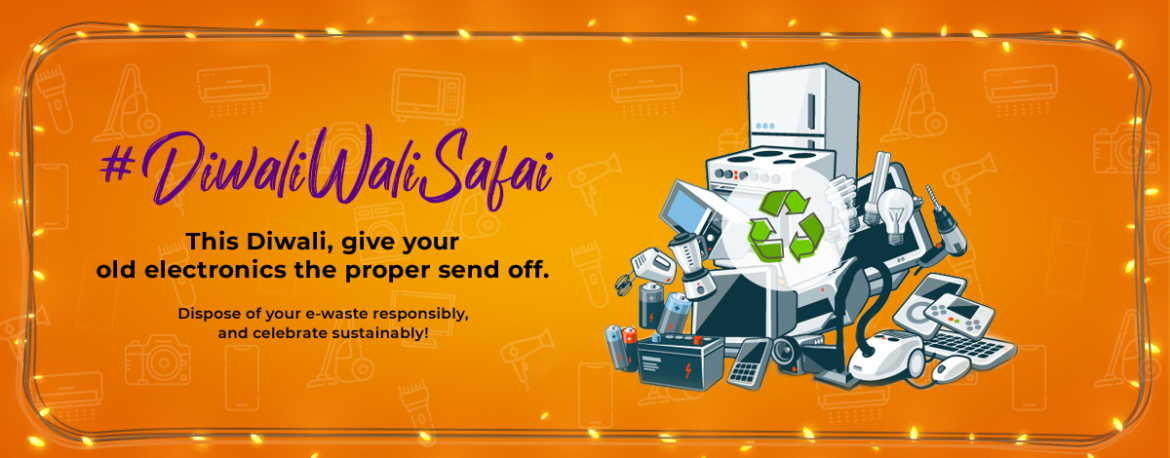
Catch the #DiwaliWaliSafai campaign here

To mark International e-waste Day, Panasonic India, a leading diversified technology company, today announced the second edition of its awareness campaign #DiwaliWaliSafai on responsible disposal of e-waste. According to the Central Pollution Control Board report 2019-2020, India generated 1,014,960 tonnes of e-waste, which is the third-largest after China and the US. #DiwaliWaliSafai campaign is an endeavour by Panasonic to sensitize consumers around the rise of e-waste and the need for its responsible collection, disposal, and recycling.

The campaign is centred around the ritual of festive cleaning, an important and common practice in every household, during Diwali. While consumers get busy with celebrations, buying new items, they usually don’t pay attention to the disposal of their old electronics safely. With #DiwaliWaliSafai, Panasonic is urging everyone to proactively become active agents of change and make this Diwali greener by responsibly disposing of their e-waste. Panasonic is also offering free of cost home pick-ups for large appliances as well as assistance in identifying the closest collection centres.

Commenting on the campaign, Ms Ritu Ghosh, Head, Corporate Affairs & CSR, Panasonic India said, “At Panasonic, through Harit Umang – Joy of Green programme, our constant endeavour is to nurture the ecosystem by harnessing sustainable practices, imparting knowledge and inculcating responsible environmental behaviour through active engagements with consumers and communities. #DiwaliWaliSafai is a manifestation of this belief, to spread awareness on the importance of responsible e-waste disposal as it is the first step towards responsible e-waste recycling.”

Panasonic DiwaliWaliSawai campaign

As part of the #DiwaliWaliSafai campaign, Panasonic is running an engaging contest on its social media handles, encouraging consumers to share selfies with the e-waste they are disposing of responsibly this Diwali; wherein lucky participants stand a chance to win the company’s home appliances including LED TV, Washing Machine, Air Conditioner, Refrigerator, Microwave, Vacuum Cleaners and grooming kits. The contest is live till 24th October 2021.

Mr Shirish Agarwal, Head – Brand and Marketing Communications, Panasonic India said, “We launched the #DiwaliWaliSafai campaign last year and received really positive response which encouraged us to bring it back this year. The aim is to make #DiwaliWaliSafai into our flagship campaign to drive awareness on responsible disposal of e-waste during the festive season. Last year we reached out to 20 million consumers through our digital platforms and are hoping to keep the momentum going this year as well.”

To participate in the #DiwaliWaliSafaai campaign people can use any of the following social media handles of Panasonic India:

@PanasonicInNew Twitter

@PanasonicIndia Facebook  

@Panasonic_India Instagram 

@Panasonic India LinkedIn

About Panasonic India: Panasonic India is a wholly-owned subsidiary of Panasonic Corporation that is a worldwide leader in the development of diverse electronics technologies and solutions for customers in the consumer electronics, housing, automotive, and B2B businesses. The company, which celebrated its 100th anniversary in 2018, has expanded globally and now operates 528 subsidiaries and 72 associated companies worldwide, recording consolidated net sales of 6,698.8 billion yen for the year ended March 31, 2021. Panasonic commenced its operations in India in the year 1972 and the regional headquarter is located at Gurgaon, Haryana. Committed to pursuing new value through innovation across divisional lines, the company uses its technologies to create a better life and a better world for its customers. To learn more about Panasonic: https://www.panasonic.com/global.

October 14, 2021 0 comment
0 FacebookTwitterPinterestEmail
Industry

TVS Motor to launch complete range of 2- and 3-wheelers in next two years; eyes dominance in EV space

by Team Conscious Carma September 30, 2021
written by Team Conscious Carma

The company has earmarked an investment of ₹1,000 crore on its electric vehicles (EV) business, while it will also continue to invest on conventional engine vehicles.

Chennai-based TVS Motor Company will launch a complete range of electric two and three-wheelers with power output ranging from 5 to 25 kilowatts in the next two years as it seeks to play a leading role in the country’s emerging electric vehicle space, according to a top company official.

“We are excited about EVs. We’re investing in building capability and products to play a leading role in this in the EV space going forward, which we believe will grow fast,” TVS Motor Company Joint Managing Director Sudarshan Venu told PTI.

He said the company is investing over Rs 1,000 crore on the EV venture with a team of over 500 engineers engaged in development of new electric vehicles.

When asked about the new EV product road map, Venu said, “We will have a complete range, which we will launch in stages over the next two years from 5 to 25 kilowatts — two-wheelers and three-wheelers in both passenger and cargo (segments) as well.”

Besides, he said, “We will also in the next couple of months announce an upgrade on the TVS iQube (the company’s existing electric scooter).”

The iQube, which has a peak power of 4.4 kW and a range of 75 km on a single charge, is currently sold in four cities.

“Our plan is to take this nationwide before the end of the fiscal year,” he said adding in September alone, TVS Motor Company plans to expand the availability of the iQube to another 20 cities.

Asked if TVS planned to export its EVs, Venu said, “We certainly believe that TVS has a good international business and we will look to export EVs as well.”

While bullish on the EVs, Venu said, “At the same time I think the exact pace of electric vehicle adoption will depend on various factors, including the maturity of technology, the improvements in technology and the advances, subsidies and customer acceptance, creation of charging infrastructure.”

From TVS’ point of view, he said, “We will invest ahead and be ready for this…We’re also announcing charging partnerships to scale up the fast charging and convenience to customers.”

Commenting on the company’s strategy for the conventional internal combustion engine vehicles (ICE), Venu said TVS will continue to invest where it sees growth opportunities and potential.

“We will continue to invest what is needed in this space…We have a regular product cadence…These launches will be adequately funded and where we see an opportunity in this space, we will certainly continue to invest,” he added.

The company sees the ICE business certainly having good traction particularly in certain segments and also in the export markets, Venu said while adding “but EV is very important for us and we’re investing behind it”.

Source : PTI

Note: The content has been edited for style and length

September 30, 2021 0 comment
0 FacebookTwitterPinterestEmail
sharda
IndustryProducts

Make in India : Indians making India proud

by Team Conscious Carma September 24, 2021
written by Team Conscious Carma

In the year 1983, entrepreneurs JK Gupta & Meenakshi Gupta started a small carpet making operation in Meerut, a small town 60 km north of Delhi.  Little did they knew that the unit, which they had set up in their garage with 6 weavers, will one day turn into an industry leader, directly or indirectly supportind around 5000 families and supplying rugs to more than 80 countries.  Today, Sharda Exports is well-known globally as a premier manufacturer & exporter of home fashion.

Conscious Carma magazine gets into a candid chat with Aditya Gupta

MD, Sharda Exports & The Rug Republic

Q1. Can you please share your journey in Sharda Exports and The Rug Republic.  When did you join your parents in business and what has been your contribution to the business thereafter.

The company was started in the mid 1980s by our parents. It started out as a couple weavers and some equipment in our home compound. My mother supervised the weavers while my father looked at the other aspects. My brother and I started to join the business towards the end of our college time. In 1992 we exhibited abroad (Germany, Domotex) and that began a wonderful journey that now extends over 90 countries. In 2013, The Rug Republic was created with the aim of enabling smaller retailers by removing MOQs per article and providing faster delivery times.

Q2. Both Sharda Exports & The Rug Republic are responsible and sustainable brands. Can you please comment on it

Sustainability & responsibility have been foundational blocks of our brands. We believe in not growing as a brand, but as an eco system which aims to uplift all around us. Sustainability is equally important to us, caring for the environment goes hand in hand in caring for the people who reside within it. And with the great design possibilities brought about by recycled materials, it’s almost a crime not to use them!

Q3. Sharda Exports won an award “Trend towards Veracity” at AIT-Trendscouting Heimtextile 2012 for innovative re-use of materials like flip-flops, jeans labels, carpet remains, old zip fasteners, etc.  How did this idea came. And are you working on any more innovations?

We’ve always been fascinated with alternate materials. Of course in soft furnishings, it is not all that easy to introduce new materials. The jean label thing was just an idea we were playing around with, we did not expect that rug to win so many accolades, but I’m thankful it did. Infact we were the first in the world to develop and manufacture carpets using waste leather. These days we are focusing a lot on PET yarn made from recycled plastic bottles. (trying to find pictures of that rug. will share asap)

Q4.What is the rank of Sharda Exports in the World’s leading Carpet Exporters. 

It is tough to give a definitive rank but I would like to think we are towards the top.

Q5. What are the USPs of Sharda Exports & The Rug Republic. How does it stand out among the competition

The design philosophy of both Sharda and TRR has been different from the very start. We use traditional techniques combined with design inspirations from all over the world (from the Taj Mahal to Ecuadorian villages) to create a truly global and avant garde collection that stands out among the crowd.

  • sharda
  • sharda

Q6. Future plans of Sharda Exports and The Rug republic

We are focusing on e-commerce a lot, both domestically and across the borders. We plan to keep stock in multiple locations across the globe to provide lightning fast delivery times for both our B2B and B2C clients.

Q7. How did the company take care of its employees during the pandemic

The pandemic was a tough time for all of us. We bought covid insurance for all our employees, implemented all sanitization and prevention protocols and have even reimbursed all pay cuts that took place due to office closure.

https://drive.google.com/drive/folders/1LEwuPYY4E2MDBSh5r_5ptDTuuJeZi4nL?usp=sharing

ECOLOGICAL MANUFACTURING


Sharda Exports is proud of its’ serious and ever growing focus on sustainable growth. Some of the green initiatives taken by them are listed below:

  • • Environmental Management System that starts with optimum usage of resources, particularly raw materials, water and energy; and includes effective management & control of wastes generated during the production process.
  • • Continuous development of innovative products using re-cycled materials like waste leather, fabric, rubber, ties, denims, jeans labels and even used sweaters.
  • • Development of products using different shades of natural yarn, avoiding dyeing altogether.
  • • Use of Sunlight for drying of carpets, thus saving on fossil fuels/ electricity.
  • • Installed two energy efficient Air Handling/ heating units with insulated chamber for carpet drying in foggy/ humid weather.
  • • Installed APFC’s (Automatic Power Factor Correction Panels) to maintain the power factor above 0.95 thus reducing power consumption.
  • • Daily monitoring and control of section-wise power consumption through sub-meters.
  • • Automatic Level Control System for prevention of overflow from overhead water tanks at all locations
  • • Installed a Carpet Wash Water Recycle System.
  • • Septic Tanks for treatment of domestic sewage water before disposal.
  • • Segregation of different types of waste at source for better recycle ability.
  • • Proper handling, storage, preservation and timely disposal of the waste materials/ empty containers to parties that re-use them in an environment friendly manner.
September 24, 2021 0 comment
0 FacebookTwitterPinterestEmail
Tata Power
EconomyIndustry

Tata Power Tops CRISIL’s ESG Scores for Power Companies in India

by Team Conscious Carma August 7, 2021
written by Team Conscious Carma
  • Builds a robust roadmap to emerge as a global leader on ESG practices
  • CRISIL recently announced ESG scores of 225 companies across 18 sectors in India

Tata Power, India’s largest integrated power company, secured the highest score among its peers in the Indian Power sector in CRISIL’s, recently launched environmental, social and governance (ESG) scores. CRISIL, an S&P Global Company, is India’s foremost provider of ratings, data, research, analytics, and solutions. 

The company is committed to its vision to empower a billion lives through sustainable, affordable and innovative energy and has fared well on all ESG parameters viz. Environmental, Social and Governance and scored an impressive 67 out of 100. The company has scored 61 on environmental parameters and 60 and 77 on social and governance parameters, respectively. This assessment was made voluntarily by CRISIL and is based on publicly available information. 

ESG adherence being Tata Power’s core philosophy and drives its business strategy. It leads its way in the development of the company’s clean energy portfolio, decides its social innovations, and governance protocols. ESG is the company’s bridge to action and provides it with a lens through which it can translate organisational needs and ambitions into responsible business solutions while moving towards a sustainable and inclusive development path. 

Tata Power

As a part of its 2.0 business plan, Tata Power is focusing especially on the environmental pillar and has taken bold decisions towards no coal-based expansion on the generation side,  expansion of renewable footprints (80% by 2030 from 30 % currently) through utility business; development of robust EV charging infrastructure in the country et al. The company is confident of achieving carbon neutrality much before 2050 and aspires to become a global leader in Utility Sustainability practices. It has also developed a clear roadmap to achieve 100 % water neutrality and Zero waste to landfills by 2026. 

CRISIL, in its recent report, announced the ESG scores of 225 companies across 18 sectors in India factoring in their track record and disclosure standards. This includes a relative pan-sectoral assessment of all material ESG parameters relevant in the Indian context and is based on information available in the public domain and third-party providers.

The scores are based on CRISIL’s proprietary framework and are assigned on a scale of 1-100, with 100 denoting best-in-class ESG performance. The current evaluation analyses three annual reporting cycles through fiscal 2020. 

“It is a proud moment for us to achieve such high scores and to emerge as the leading ESG focused company in the Indian power sector. We would like to thank CRISIL for honouring our efforts. These scores are a testament of our realigned business model with new ESG trends, which are niche as well as scalable, to harness sustainable growth.” said Dr Praveer Sinha, CEO & Managing Director, Tata Power.

Tata Power has also identified key focus areas viz renewable footprints, carbon emission, resource availability, waste management, biodiversity, et al. The Company has also set its emission reduction targets in alignment with the Science-Based Targets initiative (SBTi).

Report link and disclaimer: https://www.crisil.com/en/home/what-we-do/financial-products/crisil-esg-compendium.html

About Tata Power: 

Tata Power is India’s largest integrated power company and, together with its subsidiaries and jointly controlled entities, has an installed/ managed capacity of 12,808 MW. A pioneer in the field, it has a presence across the entire power value chain – generation of renewable as well as conventional power including hydro and thermal energy, transmission & distribution, coal & freight, logistics and trading. The company had developed the country’s first 4000 MW Ultra Mega Power Project at Mundra (Gujarat) based on super-critical technology. With nearly 3.9 GW of clean energy generation from solar, wind, hydro and waste heat recovery accounting for 31% of the overall portfolio the company is a leader in clean energy generation. Tata Power is steering the transformation of all its Discoms into integrated solutions providers by looking at new business growth in distributed generation through rooftop solar and microgrids, storage solutions, EV charging infrastructure, ESCO, home automation & smart meters et al. 
With its 107 years track record of technology leadership, project execution excellence, world-class safety processes, customer care and green initiatives, Tata Power is well poised for multi-fold growth and committed to lighting up lives for generations to come. For more information visit www.tatapower.com

August 7, 2021 0 comment
0 FacebookTwitterPinterestEmail
tata power
EconomyIndustry

Tata Power set to reduce emissions in alignment with Science-Based Targets initiative (SBTi)

by Team Conscious Carma July 26, 2021
written by Team Conscious Carma
  • Company’s commitment accepted by SBTi, published under the companies taking action category
  • SBTi is a partnership between CDP, UN Global Compact, World Resources Institute, WWF and We Mean Business Coalition to drive climate action in the private sector

Tata Power, India’s largest integrated power company, has committed to set emission reduction targets in alignment with the Science-Based Targets initiative (SBTi). SBTi is an initiative that drives ambitious climate action in the private sector by enabling companies to set science-based emissions reduction targets. It is a partnership between CDP (Carbon Disclosure Project), the United Nations Global Compact, World Resources Institute (WRI), the World Wide Fund for Nature (WWF) and We Mean Business Coalition. The company’s commitment to the SBTi has been accepted and published under the companies taking action category on the website.

“Mitigating the impact of global warming requires swift and strong action. Tata Power has committed to SBTi and is working on an ambitious plan to drive the transition to decarbonized energy models, aiding the global climate action agenda. To achieve the emission reduction targets, we are moving rapidly to a green energy portfolio and continuously exploring and adopting technology-based solutions. We are confident of being #FutureReady and will continue lighting up lives!” said Dr Praveer Sinha CEO & MD, Tata Power.

The latest climate science sends a clear warning to curb temperature rise to avoid the catastrophic impacts of climate change. The power sector will play a key role in decarbonizing the global economy and meeting the goals of the Paris Agreement. 

To lead the reformation of the process for sustainable power, Tata Power has pledged to set scientific targets as proposed by Science-Based Target initiatives. It is the first Indian power company to commit to carbon neutrality before 2050 and is accelerating the transition to a sustainable future. 

Tata Power has already announced the planned phase-out of coal-based capacity and is rapidly expanding its clean and green portfolio with an intent of achieving 80% by FY30. Through its business offerings, Tata Power is spearheading the development of integrated solutions, focusing on mobility and lifestyle and empowering customers through emerging smart and green technologies.

List of Companies working with SBTi link- Companies taking action – Science-Based Targets

About Tata Power: 

Tata Power is India’s largest integrated power company and, together with its subsidiaries and jointly controlled entities, has an installed/ managed capacity of 12,808 MW. A pioneer in the field, it has a presence across the entire power value chain – generation of renewable as well as conventional power including hydro and thermal energy, transmission & distribution, coal & freight, logistics and trading. The company had developed the country’s first 4000 MW Ultra Mega Power Project at Mundra (Gujarat) based on super-critical technology. With nearly 3.9 GW of clean energy generation from solar, wind, hydro and waste heat recovery accounting for 31% of the overall portfolio the company is a leader in clean energy generation. It has successful public-private partnerships in generation, transmission & distribution in India viz : Powerlinks Transmission Ltd. with Power Grid Corporation of India Ltd. for evacuation of Power from Tala hydro plant in Bhutan to Delhi, Maithon Power Ltd. with Damodar Valley Corporation for a 1050 MW Mega Power Project at Jharkhand. Tata Power is currently serving around 12 million consumers via its Discoms, under public-private partnership model, in India viz Tata Power Delhi Distribution Ltd. with Government of Delhi for distribution in North Delhi; Tata Power Ajmer Distribution Ltd. with Ajmer Vidyut Vitran Nigam Ltd. for distribution in Ajmer, Rajasthan; TP Northern Odisha Distribution Limited,  TP Central Odisha Distribution Limited, TP Western Odisha Distribution Limited and TP Southern Odisha Distribution Limited with Government of Odisha.With a focus on sustainable and clean energy development, Tata Power is steering the transformation of all its Discoms into integrated solutions providers by looking at new business growth in distributed generation through rooftop solar and micro grids, storage solutions, EV charging infrastructure, ESCO, home automation & smart meters et al. 
With its 107 years track record of technology leadership, project execution excellence, world-class safety processes, customer care and green initiatives, Tata Power is well poised for multi-fold growth and committed to lighting up lives for generations to come. For more information visit us at: www.tatapower.com

July 26, 2021 0 comment
0 FacebookTwitterPinterestEmail
Newer Posts
Older Posts

Recent Posts

  • India–UK Free Trade Agreement Opens Global Growth Opportunities for 3R ZeroWaste’s Circular Economy Solutions
  • Plastic Free July: Why True Sustainability Goes Beyond Swapping Plastic
  • From the Editor’s Desk: When Greed Takes Over Conscience
  • Beyond the Pose: Why Your Yoga Mat Needs a Sustainable Upgrade
  • Best Sustainable Father’s Day Gifts: Conscious Carma’s Exclusive Picks

Recent Comments

  • Team Conscious Carma on Label Shivika Agarwal – where craft meets sustainability
  • Cocomeister.jp on Label Shivika Agarwal – where craft meets sustainability
  • Team Conscious Carma on Equitable City Designs To Fight Climate Change
  • UN report calls for repurposing of USD 470 billion of agricultural support that distorts prices and steer us away from environment and social goals | Consciouscarma on UNEP & ICMR collaborate to boost understanding of environmental dimensions of antimicrobial resistance in India
  • Wild Earth : Natural body products | Consciouscarma on Sat.Suma : the true essence of flowers in your everyday skincare needs

Keep in touch

Facebook Twitter Instagram Youtube

Recent Posts

  • India–UK Free Trade Agreement Opens Global Growth Opportunities for 3R ZeroWaste’s Circular Economy Solutions

  • Plastic Free July: Why True Sustainability Goes Beyond Swapping Plastic

  • From the Editor’s Desk: When Greed Takes Over Conscience

  • Beyond the Pose: Why Your Yoga Mat Needs a Sustainable Upgrade

  • Best Sustainable Father’s Day Gifts: Conscious Carma’s Exclusive Picks

  • How Sacred Sound is Reshaping the Future of Holistic Health?

Categories

  • Community (38)
    • Campaigns (3)
  • CSR (4)
  • Economy (82)
    • Global (24)
    • Industry (42)
    • Innovations (4)
    • National (2)
  • Environment (48)
  • Expert Corner (48)
    • Authored Articles (47)
  • Featured (5)
    • Partners (1)
  • Global News (2)
  • Initiatives (31)
    • CSR (3)
    • Events (6)
  • Inspiration (22)
  • Lifestyle (9)
  • Media Coverage (6)
  • Press Releases (4,358)
  • Products (126)
    • Accessories (27)
    • Apparel (32)
    • Beauty (26)
    • Food (4)
    • Gifting (3)
    • Home Décor (15)
    • Skin-Care (14)
  • Reports (3)
  • Spirituality (10)
  • Sustainability (49)
  • Sustainable Startup Stories (28)
  • Travel (19)
  • Uncategorized (2)
  • Wellness (33)
    • Home Cleaners (3)

Archives

  • August 2026 (1)
  • July 2026 (1)
  • June 2026 (6)
  • October 2024 (1)
  • September 2024 (1)
  • July 2024 (2)
  • June 2024 (2)
  • May 2024 (1)
  • November 2023 (330)
  • October 2023 (554)
  • September 2023 (631)
  • August 2023 (718)
  • July 2023 (723)
  • June 2023 (710)
  • May 2023 (608)
  • April 2023 (114)
  • March 2023 (7)
  • February 2023 (3)
  • January 2023 (11)
  • December 2022 (18)
  • November 2022 (1)
  • August 2022 (6)
  • July 2022 (8)
  • June 2022 (24)
  • May 2022 (11)
  • April 2022 (19)
  • March 2022 (11)
  • February 2022 (11)
  • January 2022 (14)
  • December 2021 (10)
  • November 2021 (4)
  • October 2021 (14)
  • September 2021 (22)
  • August 2021 (12)
  • July 2021 (17)
  • June 2021 (17)
  • May 2021 (16)
  • April 2021 (22)
  • March 2021 (33)
  • February 2021 (16)
  • January 2021 (22)
  • December 2020 (10)
  • Facebook
  • Twitter
  • Instagram
  • Pinterest
  • Linkedin
  • Youtube

@2020 - All Right Reserved. Designed and Developed by Bizopser Technologies

Consciouscarma
  • Home
  • About Us
  • Products
  • Community
    • Campaigns
    • Inspiration
    • Initiatives
    • CSR
  • Features
    • Sustainable Startup Stories
    • Travel
    • Lifestyle
    • Partners
  • Economy
    • Industry
    • Innovations
    • National
    • Global
  • Environment
  • Expert Corner
    • Authored Articles
    • Reports
  • Magazine
  • Contact