Consciouscarma
  • Home
  • About Us
  • Products
  • Community
    • Campaigns
    • Inspiration
    • Initiatives
    • CSR
  • Features
    • Sustainable Startup Stories
    • Travel
    • Lifestyle
    • Partners
  • Economy
    • Industry
    • Innovations
    • National
    • Global
  • Environment
  • Expert Corner
    • Authored Articles
    • Reports
  • Magazine
  • Contact
Category:

Community

CommunityInitiatives

TATA Power at the forefront of saving MAHSEER from extinction

by Team Conscious Carma June 5, 2021
written by Team Conscious Carma

50 YEARS OF EMPOWERING THE MAHSEER And Blue-Finned is out of the Red

The Tiger of the freshwaters

The tiger of the jungle prowls in our imagination. Filling our senses with striped glory and rumbustious roars. Numerous tales have been penned and filmed on this wondrous creature.  

But how many of us are familiar with an equally majestic tiger that bejewels the waters? A large, wondrous fish that gleams gold as it glides through dappled streams and rivers? How many of us are familiar with the Mahseer? The Mahseer is a fish that has a royal presence and impressive qualities. It belongs to a freshwater species that for many years has faced the threat of extinction in the wild. 

At one time, this regal specimen used to thrive in the rapids of the Himalayan and Sahyadri ranges, besides other rivers and lakes across the country. Amidst raging white currents this playful fish would swim just below the surface, walloping the waters in glee, and glimmering in the soft sunlight. But soon this Mighty Mahseer, was being hunted because of its commanding size and rich looks. It became the target of fishermen and fishing companies. Out of 15 species of Mahseer in India, five faced the dire threat of extinction. 

That was when Tata Power decided to step in, exactly fifty years ago. Just in the nick of time. For a fish that was literally feeling out of the water!

How Tata Power came into the picture 

There is quite a quaint story as to how Tata Power wholeheartedly got immersed in Mahseer conservation. Apparently, the locals living in the villages in rural Maharashtra would worship the Mahseer as a god-fish because it sports a barble above its mouth that resembles a ‘nathini’ worn by a woman. These locals began noticing the dwindling of the Mahseer and then to their dismay, its absolute disappearance. Not knowing whom to turn to, they approached the Fisheries Department for help. The Department in turn enlisted Tata Power for support, since it had its plant in the area and was seen as a corporate that could make a difference.

And thus started Tata Power’s saga with the Mahseer. Exactly half a century ago. 

The company began by conducting in-depth studies and researches. It was discovered that rampant discharge of industrial wastes, indiscriminate fishing of even brood and juvenile fish, deteriorating ecological conditions in spawning and rearing grounds, and use of explosives for mass killing of fish were some of the reasons for the Mahseer reaching dangerous extinction levels. 

After carefully analysing and understanding the situation, a Mahseer Breeding Centre was set up in conjunction with the Central Institute of Fisheries Education near Tata Power’s Walwan Dam project at Lonavala, Maharashtra. Concentrating especially on the Blue-Finned and the top-of-the-pops Golden Mahseer. For the last 50 years, the Centre has offered unstinted support, ideas and innovation to increase the numbers of this precious species. 

mahaseeer fish at tata power facility

And today, on World Environment Day we are happy to announce that the Blue-Finned Mahseer has been taken off the IUCN red list

The Golden still remains on the list, but hopefully the day is not far off when this species of Mahseer too will no longer see red!

Why is the Mahseer so important for ecological balance?

This unique fish is very sensitive to dissolved oxygen levels, water temperature and sudden climatic changes. It just cannot bear pollution. So when we spew wastes into our rivers, we are not only sounding a death knell for the Mahseer, we are also losing an important indicator of freshwater ecosystems. So it cuts both ways. 

Also, the current pandemic has taught us that by hunting animals and indiscriminate fishing we are destroying entire habitats and eco-systems. Thus making it easier for diseases to spread from one animal or bird or fish to another, and then spill over onto humans. 

It follows then, that conserving the Mahseer, increasing its numbers, and getting it off the IUCN red list is even more important today than ever before. To stabilise our disturbed environment, to preserve our bio-diversity, and to ultimately save our very lives. The initiative that Tata Power began fifty years ago, now has an urgency to succeed like never before. If nothing else, we owe it to our children to make this world more ecologically balanced and disease free. And this can only happen by preserving crucial species like the Mahseer.

How Tata Power has empowered the Mahseer

Tata Power has developed an ingenious method to breed 4-5 lakh Mahseer hatchlings at a time at its Walvan Hatchery in Lonavala. The century old company has created a huge lake by damming the Indrayani River. It is here that the Blue-Finned and Golden species of Mahseer congregate, attracted by the sound of the highly oxygenated water in the lake. 

A very careful and well-coordinated effort between Tata Power and the Fisheries Departments has resulted in some 11.6 million hatchlings making their homes in waters all over India and growing into awe-inspiring specimens that can measure up to 9 feet long weigh up to 33 kilograms! 

mahaseer tata power

50 years, but the work is far from over

The Mahseer numbers have been growing by leaps and bounds with every passing year. Unlike typical corporate practice, success in this venture is measured by literally going into the red, so that the Mahseer goes off the IUCN endangered list! Now what do we mean by that? 

Our success in this long 50 year saga is best measured by the number of hatchlings we breed, (to be distributed all over the country). These have progressively started falling year on year instead of increasing. This means that the Mahseer population is growing organically. Rivers and lakes that were once bereft of the Mahseer are now teeming with them after hatchlings introduced from the Walvan hatchery have started breeding and increasing. Mahseer are also now being increasingly sighted at various points by avid Anglers. However the Golden Mahseer is still not off the red list and Tata Power will only believe its mission is accomplished when this is achieved.

About Tata Power: 

Tata Power is India’s largest integrated power company and, together with its subsidiaries & jointly controlled entities, has an installed/ managed capacity of 12,808 MW. A pioneer in the field, it has a presence across the entire power value chain – generation of renewable as well as conventional power including hydro and thermal energy, transmission & distribution, coal & freight, logistics and trading. With nearly 3.9 GW of clean energy generation from solar, wind, hydro and waste heat recovery accounting for 31% of the company’s portfolio, Tata Power is a leader in clean energy generation. In line with the company’s view on sustainable and clean energy development, Tata Power is steering the transformation of utilities to integrated solutions by looking at new business growth in distributed generation through rooftop solar and micro grids, storage solutions, EV charging infrastructure, ESCO, home automation & smart meters. It has successful public-private partnerships in generation, transmission & distribution in India. Tata Power is serving around 12 million distribution consumers in India and has developed the country’s first 4000 MW Ultra Mega Power Project at Mundra (Gujarat) based on super-critical technology.
With its 106 years track record of technology leadership, project execution excellence, world-class safety processes, customer care and driving green initiatives, Tata Power is poised for multi-fold growth and committed to ‘lighting up lives’ for generations to come. Visit us at: www.tatapower.com.

June 5, 2021 0 comment
0 FacebookTwitterPinterestEmail
Hyundai motor india foundation
CommunityInitiatives

Hyundai Motor India upholds commitment of Social Values to serve humanity for a healthy Life

by Team Conscious Carma May 30, 2021
written by Team Conscious Carma
  • Releases film on ‘Sparsh Sanjeevani’ that chronicles the journey of Hyundai’s Mobile Medical Van moving through India’s hinterlands – healing people
  • Augments Accessibility of Healthcare Services for Communities in Rural India
  • URL of the film: https://youtu.be/LcTXNn_VwIY

Hyundai Motor India Foundation, the philanthropic arm of Hyundai Motor India Ltd. today released a film on its social outreach initiative ‘Sparsh Sanjeevani’. The film captures moments of Hyundai’s Mobile Medical Van as it travels through rural India to augment accessibility of healthcare services for people in these regions.   

Commenting on the film, Mr. S S Kim, MD & CEO, Hyundai Motor India Ltd., said, “At Hyundai, we believe in driving meaningful change for society through every initiative. Our efforts draw inspiration from our vision of ‘Progress for Humanity’, as we continue in our pursuit of bringing smiles, wellbeing and prosperity to people across India. The film on ‘Sparsh Sanjeevani’ has suitably chronicled the journey of driving a greater accessibility to quality medical support and healthcare services. We have received a very moving response to ‘Sparsh Sanjeevani’, Mobile Chikitsa and hope to continue these efforts as we try to bring greater health and wellbeing to people of rural India.” 

About the film 

Despite an extremely challenging environment, the entire film is shot in the Laxmangarh block of Alwar District, Rajasthan. All characters are local residents of the village and were happy to be part of this film. The organic tonality of the film has created a closer connect with audiences. In the film, a lifesaving Indian Medicinal Plant popularly known as ‘Sanjeevani’ plays the role of a protagonist and story-teller. Talking about its legacy of saving lives, the film goes on to chronicle its journey as a Mobile Medical Unit (Sparsh Sanjeevani) that reaches out to the hinterlands and relentlessly serves people and communities at large.

About – Sparsh Sanjeevani

Under project – ‘Sparsh Sanjeevani’, Mobile Chikitsa has been firming the accessibility of healthcare services in the most vulnerable communities of rural India and advancing the country’s pursuit of health and wellness for all. The medical unit of ‘Mobile Chikitsa’ is managed by HMIF and its partner NGO ‘Wockhardt’ to cater 2 villages per day, targeting 25,000 people, with an initial goal of reaching 16 villages.  

HMIF flagged-off its first Mobile Medical Unit- ‘Mobile Chikitsa’ to Laxmangarh block of Alwar District, Rajasthan in January 2021 to support the people in the district and ensure a healthy life. Mobile Chikitsa’ is aimed at catering to a community of up to 25,000 people and if need be can service up to 3 additional communities. A qualified MBBS doctor on board is providing free consultation and medicines through the attached pharmacy. The Mobile Chikitsa unit is equipped with testing facilities for spot diagnostic tests covering blood sugar, BP, Malaria, Dengue etc. In addition, awareness programs about different diseases and their prevention are also conducted. 

The Mobile Chikitsa unit is currently covering 2 villages per day through a fixed roster and service around 100 patients. Patients will be provided with a health card to record their case history and individuals diagnosed with serious ailments will be referred to the nearest government or private hospital. ‘Mobile Chikitsa’ – has been designed on similar lines and will service areas where there are no healthcare facilities. The van will cover the villages of Lili, Raipur Jat, Jawli, Toda, Hasanpur, Mundjori, Tilakpur, Ucchar, Narnol, Gor Pahari, Deewli, Manjpta, Semla, Berla Bass, Kajota and Kanwara.

May 30, 2021 0 comment
0 FacebookTwitterPinterestEmail
Bry Air
CommunityInspiration

Over 56,000 lives impacted in the past decade by Bry-Air ’s CSR initiatives

by Team Conscious Carma May 28, 2021
written by Team Conscious Carma

Gurgaon/New Delhi: Bry-Air (Asia), a flagship company of Pahwa Group, has completed a decade of enriching lives through its initiatives for the society at large.

Through numerous CSR programmes, the company’s initiative is focused on empowering communities through education, skill development, providing healthcare (vision/eye care), clean drinking water, sanitation and focusing on the environment.

The core objective of the company is to reach out to the direct beneficiaries through their CSR initiatives and mainly focusing on Vision (Eye Care), Education, Environment and Sustainability of the community. Bry-Air in association with their NGO partners has touched over 56,000 lives, directly impacting the beneficiaries by enhancing  their quality of life:

With cataract surgeries for the older people in the rural areas, skill development for livelihood of women and youth, clean and cool drinking water and sanitation facilities for the rural households, schools for underprivileged, afforestation and restoration of green belts for a greener environment.

On completing a decade, the company has released a video showcasing how they have reached the far flung areas through different initiatives, with the aim to develop the society and extend their help whenever needed. 

Other than this, the company also recognizes its business activities to have a direct as well as indirect impact on the community it operates.
Speaking on the development, Anandita Pahwa, Head – CSR Initiatives, Pahwa Group said, “At Pahwa group, ‘Environment and Education’ are deeply integrated into our philosophy. Our focus has been on environment to protect our forest, and conserve the flora and fauna. Apart from this, we are focused on extending our help to under privileged students through free education. I would like to thank all  our NGO partners  who have helped us   to do a bit for the society. Right now our focus is providing support through oxygen concentrators, oxygen cylinders, dry rations and medicines as well to  keep our projects going. ”

May 28, 2021 0 comment
0 FacebookTwitterPinterestEmail
ellementry products
CommunityInspiration

Make in India: Indians making India proud

by Team Conscious Carma May 18, 2021
written by Team Conscious Carma

Venkatesh Rao K
Refurbishing e-waste to protect the environment

Electronic Waste is emerging as serious public health and environmental issue in India. India is the “fifth-largest electronic waste producer in the world”; approximately 5.2 million tons of e-waste are generated annually and an undisclosed amount of e-waste is imported from other countries around the world.

E-waste produced in India comprises 70% of computer devices, 12% in the Telecom sector, 8% in Medical Equipment, and 7% in Electrical equipment. And as per the market survey, the reuse of Electronic Equipment waste in India is estimated at 10-15% while the rest of the E-Waste is going for Raw Material Extraction Recycling. While e-waste recycling is a source of income for many people in India, it also poses numerous health and environmental risks. More than 95% of India’s e-waste is illegally recycled by informal waste pickers called kabadiwalas or raddiwalas.

In India and other parts of the world, gold is recovered from circuit boards by bathing boards in hydrochloric and nitric acid. This poisons waterways many of which supply homes with water. Residual waste, including chemicals, is often dumped improperly in the ground leading to ecological harm. And those who extract valuable minerals from e-waste are exposed to noxious fumes that are extremely hazardous to health.


  • India is the fifth-largest electronic waste producer in the world
  • Raw material extraction by scrap dealers poses greater health and environmental hazard
  • Globally, the e-waste refurbish industry is estimated at US$12 – 15 Billion by 2021.
  • According to a market survey, the volume of the reused equipment business in India is 10-20% as compared to the new equipment sales
  • “Reuse the World” – xfurbish, an IT & enterprise product refurbish startup launched in 2020, has nearly sold 8 Crores worth of Refurbished products in India

With an objective to avoid unnecessary recycling of e-waste which poses a bigger health hazard and is not the solution when the same can be refurbished and re-used, Bangalore based Venkatesh Rao K launched Xfurbish in Indian and UAE in Jan 2020, an organised and technology-driven platform where e-waste can be sold by dealers and refurbished IT and enterprise products could be bought by the consumers. In a year’s time, Xfurbish opened its offices in Bangladesh and Nigeria and sold nearly Rs.8 Crores worth Refurbished IT & enterprise products in a year. “This is just the tip of an iceberg, there’s huge potential in this and it makes all the sense to get into this business, which is environment friendly”, says the visionary founder. Globally, the e-waste refurbish industry is estimated to reach US$12-15 Billion by 2021.

Refurbishing means reusing a computer while recycling means destroying the computer and then environmentally recycling its constituent materials. Refurbishing is preferable to recycling. because even effective recycling processes produce some waste. Refurbishing e-waste is the only responsible way to dispose of such waste.

“According to a market survey, the volume of the reused equipment business in India is 10-20% as compared to the new equipment sales. Xfurbish aims to increase this by at least 30-40% by this year-end. This will also significantly help decrease the pollution generated by recycling of the e-waste”, adds Rao.

Also, from April onwards, they have started setting up the chain of Xfurbish exclusive stores in metro cities so that customers can walk in and buy certified xfurbish products like laptops, desktops, servers, etc. and sell their old IT products at the store.

Xfurbish is not only providing the much-needed e-commerce platform but also avidly educating the individuals to reuse the electronic waste, giving them the Xfurbish protection and encouraging sellers through authorized partner program.

“Reuse the World” – Reuse instead of recycle and save the environment from e-waste.

Venkatesh Rao K

Ayush Baid
Reviving the dying arts of India at Ellementry

Employing local artisans and bringing their talent and skill in the limelight came easily to Ayush Baid, the founder of Ellementry. He has grown up seeing his father, Dileep Baid, an award-winning Indian handicraft products exporter, successfully running his business for three decades. He wanted to bring this handcrafted goodness made available to the Indian consumers too, which is how the brand was born.

Ellementry, a three-year-old Indian lifestyle brand, specializes in sustainable tableware, furniture and accessories which are handcrafted traditionally, but are contemporary in their avatar and are borne out of responsible actions.

With their in-house terracotta, papier-mâché, and ceramic units, the brand is not just providing a means of survival to local Indian artists but also ensuring that the artisans pass on the art form to younger generations, thereby reviving the dying arts of India.

Within a short span of three years, the brand has opened five stores across India and is looking at making Ellementry a household name in the World of exquisite lifestyle products.

“Ellementry has created a space that allows local artisans to flourish. I feel elated in sharing that today we are providing full-time employment to more than 4,000 artisans, who were earlier unable to make a healthy living with the income that the art generated. With Ellementry, we are trying to re-contextualise Indian craft for contemporary living and put the craftsman at the forefront. We are working with the same artisans and their new generation working for our parent company”

Ayush Baid

Zulfi Azad
Creating markets globally for Indian and Overseas brands

For the past ten years, Zulfi Azad, Director, Plan Media, is successfully creating markets worldwide for his clients in India, Africa, UAE, the USA and UK. His continuous and long-lasting efforts have been recognized very well by the media and is being awarded the ‘Zee Young Achiever’s Award’, ‘PRAGYA Success Story Award’ and many other such awards.

“African countries, especially Nigeria, is the first choice in terms of entrepreneurship but when it comes to sales conversion they have to struggle a lot for their existence. Similar is the case with the UAE market. It has the second-largest economy (among Arab Countries after Saudi Arabia) but it lacks in fulfilling customer’s expectations and creating brand strategy at the local and global level”, says Zulfi. He has been working with various industry segments, from lifestyle to engineering, wellness to insurance, etc and has transformed them into well-known entities locally as well as globally.

Sheer hard work coupled with innovative and out of the box ideas has made Zulfi the face of branding and positioning in the international market. He has played an important role in generating revenues and goodwill for all the companies he has worked within, India and abroad.

“African countries, especially Nigeria, is the first choice in terms of entrepreneurship but when it comes to sales conversion they have to struggle a lot for their existence. Similar is the case with the UAE market. It has the second-largest economy (among Arab Countries after Saudi Arabia) but it lacks in fulfilling customer’s expectations and creating brand strategy at the local and global level”

Zulfi Azad
May 18, 2021 0 comment
0 FacebookTwitterPinterestEmail
jadav payeng
CommunityInspiration

Saluting the Awakened Soul: Jadav Payeng, Forest Man of India

by Team Conscious Carma May 6, 2021
written by Team Conscious Carma

Created 550 hectares of forest single-handedly on barren land in Assam

A 16-year-old young tribal boy, Jadav Payeng was deeply hurt to see hundreds of dead snakes lying on the sandbar in the heat after being washed away by the Brahmaputra river floods during monsoon at Majuli, the world’s largest river island in Kokilamukh of Jorhat District, Assam.

He wondered what it would look like if the same happened to humans and asked the tribal people in a nearby village what he could do? They told him to plant trees, particularly bamboo since they could withstand harsh conditions and gave him 25 saplings and some seeds.

What Jadav did on that hot day, driven by something that tugged at his heart and scared him in equal measure, turned out into 550 hectares of forest, home to 120 species of birds, elephants, rhinos and tigers, etc and won him national and international recognition.

The power of a single human being

His compassion for each living being on the earth, coupled with years of dedication and hard work, shows how even ONE SINGLE INDIVIDUAL can turn around the situation. He left his studies, married late and worked tirelessly and single-handedly for 30 years to turn the barren land into a lush green forest, officially named Molai forest, after his nickname Mola.

Jadav was conferred the title “The Forest Man” by the Government of India on World Health Day 2010. In 2015, he was honoured with Padma Shri, the fourth highest civilian award in India. He also received the 128th Commonwealth Points of Light Award from the Queen of England in March 2020 for his unending efforts to promote aforestation.

Jadav, however, refuses to take the credit. “The birds, cows, deer, wind, water and elephants have helped me. People want to know my story. I tell them I just plant trees, and I would like all of you to do so. Trees are the lifeline of the forest, they don’t just give us shade and oxygen, they feed birds and animals and balance our ecosystem. If there is no life left, what is the use of all the advancements we have made?”

jadav planting trees

The words of wisdom

After numerous visits to speak at schools and colleges, Jadav is dismayed that World Earth Day has been celebrated in the same manner for the past 30 years. Explaining how it takes five years of tender love and care for a sapling to turn into a tree, he says, “It will be a beautiful thing if a child is taught to plant a sapling or a seed when he is initiated in school and as he grows up, he or she is taught to take care of it and be responsible for it. If this had been done 30 years back by all of us, would global warming and climate change have dared to touch us?”.

The human greed

He lives in a small hut in the forest with his wife and 3 children and for his livelihood, he sells cattle and buffalo milk, which is his only source of income. In an interview in the year 2012, he revealed that he has lost around 100 of his cows and buffaloes to the tigers in the forest, but blames the people who carry out large scale encroachment and destruction of forests as the root cause of the plight of wild animals.

One threat which he deals with every day, – not nature but MAN. Poachers have an eye on his forest and its inhabitants, however, the local Forest Department authorities are providing him with enough protection and support for the same. There is this one man who has single-handedly given life to several hundreds of living beings and then there are men who, for their personal greed, are poaching them.

The humility

There are several documentaries being made on him, also a film with famous film star Rana Daggubati as Jadav and children’s book and also he finds a place in US school curriculum. He has been invited by a Mexican non-profit organization to guide them to raise more trees in Mexico.

Despite all this, Jadav does not see himself as a celebrity, nor does he care about the laurels he has earned. ‘Reading about me is not enough. Do what I do. I want school teachers to follow up on my chapter with tree-planting sessions, and to teach children to nurture and grow them with love and care,” says the humble and true environmentalist Jadav.

Checkout the article in our magazine from here

May 6, 2021 0 comment
0 FacebookTwitterPinterestEmail
CommunitySpirituality

The purpose of Yog

by Team Conscious Carma April 3, 2021
written by Team Conscious Carma

Om tat sat iti nirdesho brahmanastrividhah smritah | Braahmanaasten vedaashcha yagyaashcha vihitaah pura || Bhagwad Gita, Chapter 17, Verse 23 ||

Om Tat Sat is declared as the three callings of Supreme. All the Brahmanas, Vedas and Yagyas emerged from that, says Lord Krishna.

‘Om’ is an extremely potent dhwani (sound), also called pranav. All the yagyas, charities and penances by the wise begin with the uchharan of ‘om’. When om is chanted in the correct manner, the body vibrates from top to bottom. 

‘Tat’ translates as “that”. As one does charity, yagyas and penance in the name of “Tat”, he/she absolves the self of the fruits of such acts, ie, nishkam karma, paving way for liberation.

‘Sat’ refers to the Ultimate Truth, the finality, that which is unchanging and one. If you look around, everything that you have or seek to have, comes with an expiry date. It is bound to leave and when it leaves, it leaves you with pain. ‘Sat’ is the quest for that which lies beyond, which is eternal, and which controls all that is around.

Every sound is a frequency, it corresponds to a specific energy. Just like, when someone calls your name, you respond. Similarly, when you call the name of Divine, He responds. It is not in the mind, the effect is immediate, tangible and in front of your eyes. But for this to happen, you should be able to generate that frequency or calling within you.

Tantra sadhna is the science of mantras, dhwanis and vibrations. When you do this, all this happens in front of your eyes, its apparent, tangible, physical. But if the body is not prepared for it, it may  have a reaction on you.  So if you want to interact with divine energies, increase the capacity of the body through yog under a Guru. Then you will come from avidya to vidya, from nashwar or unreal (that which doesn’t exist) to reality. Asato ma sadmaya, tamso ma sad gamaya, mrityur ma amritam gamaya, then only.

You can come for a session to Dhyan ashram sometime to experience the vibrations created by these dhwanis.

Yogi Ashwini, Dhyan Ashram

April 3, 2021 0 comment
0 FacebookTwitterPinterestEmail
CommunityInitiatives

India Reckons a Housewife ‘s Worth

by Team Conscious Carma March 22, 2021
written by Team Conscious Carma

A historic statement by the Supreme Court of India in Jan 2021 is worth applauding – Value of homemakers work same as hubby’s at office.

The Supreme Court said that the conception that housewives do not work or do not add economic value to the household is “problematic” and needs to be overcome. The Court was dealing with a grant of compensation in a motor accident case, where the Delhi High Court had reduced the earning of the deceased wife as she was a homemaker.

A three-judge bench headed by Justice NV Ramana felt that fixing an economic value to the hard work and labour by homemakers is difficult but nevertheless significant. The bench, also comprising Justices S Abdul Nazeer and Surya Kant unanimously agreed to raise the compensation awarded to the motor accident victims to Rs 33.2 lakh instead of Rs 22 lakh awarded by the High Court.

The Court said that a homemaker’s notional income must be determined by Courts keeping in mind the number of women engaged in this activity, and the value of their labour, service and sacrifices. Their activities contribute in a real way to the economic condition of the family and the economy of the nation and ought to be recognized in a reflection of our changing attitudes and mindsets as well as towards achieving the constitutional vision of social equality and dignity of all individuals.

March 22, 2021 0 comment
0 FacebookTwitterPinterestEmail
CommunityInspiration

Applauding Women of Strength and Substance

by Team Conscious Carma March 21, 2021
written by Team Conscious Carma

Women have always played an important role in India, be it our goddesses, our warrior queens, our uneducated yet highly talented women folk in villages and our urban educated women working in almost every sphere of life. And not to forget our humble yet very strong women who are taking charge of their house and family while husbands are away earning the bread. The recent SC ruling makes it crystal clear, isn’t it.

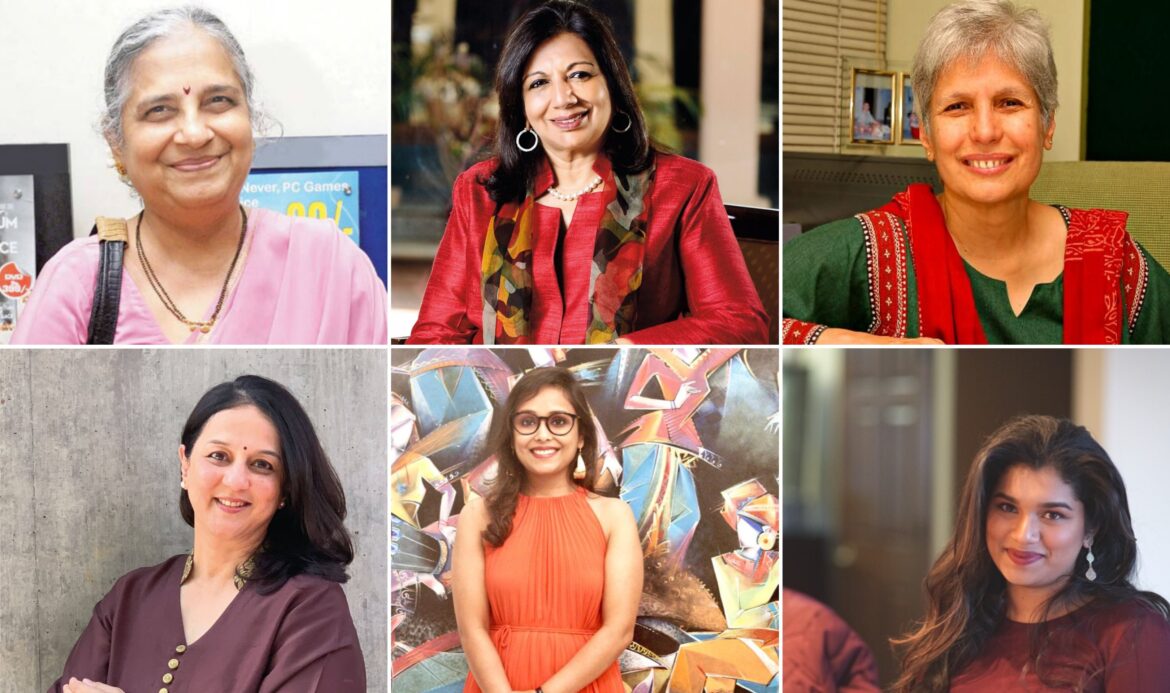
As women’s Day is around the corner, Conscious Carma brings to you some of the most impressive women in India who have shown strength in adversities and have dedicated their efforts to bring smiles to thousands.

Sudha Murthy

The Chairperson of Infosys Foundation believes that philanthropy is not mere financing, it needs a compassionate heart. In her own words, “Philanthropy has nothing to do with money. It’s a warm hug, a kind word . . . that can change lives. It’s about helping fellow human beings.” True to her belief, Murthy has been one of the most generous hearts in Indian philanthropy. She has devoted herself to education, poverty alleviation, healthcare, sanitation and public hygiene, arts and culture, and more.

To combat the Coronavirus pandemic, the Infosys Foundation has built hospitals, supplied PPE kits, and mobilized around 150 crores. And offered Rs 10 crore from their personal funds toward Akshaya Patra Foundation for serving food and distributing essential groceries to the migrant labourers and daily wage earners.

A recipient of many awards for her charitable activities and writing, the highest honour she has received is the Padma Shri, India’s fourth-highest civilian award.

“Serving people has bought me a tremendous amount of calmness. Nothing else matters to me now,”

she says, defining the makings of a true philanthropist.

Kiran Mazumdar-Shaw

Executive Chairperson, Biocon – India’s richest self-made woman, has been named EY World Entrepreneur Of The Year 2020 for her contribution in improving universal access to affordable life-saving medicine and transforming the world. She was selected among 46 entrepreneurs from 41 countries and territories. She became the third Indian to win the Award after Uday Kotak of Kotak Mahindra Bank in 2014 and Narayana Murthy of Infosys in 2005. She also becomes the second woman to hold the title, following Olivia Lum of Singapore’s Hyflux Limited in 2011.

Millions of people living with diabetes now have access to affordable insulin, while millions more who are battling cancer, rheumatoid arthritis and other debilitating diseases now have access to affordable biosimilars, thanks to Biocon, making a lasting impact on global health care.

“My business focus is global health care and the provision of universal access to life-saving medicine; however, my responsibility as an entrepreneur is greater than simply delivering value to shareholders. Wealth creation can be a catalyst for change, and all entrepreneurs have a responsibility to the world around them and the communities in which they operate. Women also play a hugely important role in economic development, and for too long their contribution has been ignored,”

says Kiran Mazumdar-Shaw.

Anu Aga

The former Chairperson of Thermax is on a mission to provide education to underprivileged children in India. Two words that define this charismatic woman are – Courageous and Ethical. A trained social worker, Anu was heading HR at Thermax when her husband, CEO of Thermax, had a fatal heart attack and lost his life in the year 1996. Anu took reins of the company at a time when its share price plunged from Rs.400 to Rs.36 due to the downturn in the Indian economy. With sheer courage and determination, and never compromising on the ethics, Anu orchestrated one of the greatest revival stories corporate India had witnessed. In 2007 she was part of 40 Richest Indians by net worth according to Forbes magazine.

After stepping down as Chairperson in 2004, Anu is devoted to her true calling, helping and educating the underprivileged, through Akanksha Foundation and Teach For India. Under her wings, four students were selected for full scholarships at world colleges, and five got selected to the Azim Premji University. In 2010 she was awarded the Padma Shri for Social Work by the Government of India. She was nominated to Rajya Sabha, the Upper House of Indian Parliament in 2012, by the President of India.

“Don’t make me larger than life. I was and am, very ordinary,”

says the humble Anu Aga.

Rohini Nilekani

An Indian writer, author and a stay-at-home mother raising her two children, took to philanthropy two decades ago. At present, she is the founder-chairperson of Arghyam Foundation, a non-profit that focuses on water and sanitation issues, also the Founder-Chairperson of Pratham Books, a non-profit children’s publisher. She also chaired the Akshara Foundation, which focuses on elementary education, and serves as the co-founder and director of the non-profit education platform, EkStep.

Rohini Nilekani calls herself an “accidental philanthropist” because of her accidental wealth. In 1981, when just 20 years old, Nilekani invested Rs.10,000, all the money she had – into a company co-founded by her husband, Nandan Nilekani, along with six close friends. That company grew into Infosys Ltd., India’s second-largest technology company, and this rich noblewoman got into philanthropy full time.

A committed philanthropist, Rohini together with her husband Nandan Nilekani (Co-founder Infosys), signed the GIVING PLEDGE in 2017, which commits half their wealth to philanthropic causes. She is seeking to address the extreme inequality between the ‘have-everythings’ and the ‘have nothings’ through her philanthropies.

She is on the Board of Trustees of ATREE, an environmental think tank, and serves on the Eminent Persons Advisory Group of the Competition Commission of India.

“I believe that wealth comes with huge responsibility and is best deployed in the larger public interest”

Rohini Nilekani

The Millennials inspired by their seniors

Swati Pasari

After finishing her business studies in Australia, Swati was all determined to join her family business in Kolkata. However, she took to art and social service as she found her true calling in spreading happiness and positivity.

She began her journey as the youngest trustee at a hospital in Varanasi quite early in her life. . During one of her visit to Kashi Vishwanath temple in Varanasi along with her grandfather, she was introduced to this side of the world. It was the suffering that she saw around in the hospital that encouraged her to continue her philanthropic work. Since then Swati has taken upon her shoulders the responsibility of running it and most part of her earnings from Art is being diverted there. Even when she is not in Varanasi, she actively participates in Charitable Art Exhibitions and fundraisers, to ensure happiness and positivity around her. Also, being a highly spiritual person, Swati is practising Pranic Healing to relieve others of pain.

“As a spiritual person, I believe in giving back to society as a token of thankfulness to the almighty, for everything I have been blessed with in my life”

Swati Pasari

Meghna Anita

Meghna Anita, a student of bachelor’s degree in neuroscience, University of Minnesota, Minneapolis also works part-time as a COVID case manager for the Department of Health, Government of Minnesota. She has been interested in politics and social justice from a young age. As a debater in high school, she learned about and debated the nuances of US laws and which spurred her interest in activism. She has attended numerous protests including the Women’s March and has spent the last four years of her college career working with survivors of sexual assault and domestic violence.

Inspired by women like Sudha Murthy in India, she has been wanting to take part in initiatives that actually empower women to be self-sufficient rather than receiving handouts. When the coronavirus pandemic began, Meghna chose to contribute seed money of about INR 75000 to a women’s micro-enterprise that would focus on creating face masks in Kochi, Kerala. The approach taken was a build, operate, transfer model, where the micro-enterprise was built and put into operation and then left to the tailors and local management to run the business and take decisions on their own.

Meghna wants to continue to help women by starting future cooperatives/micro-enterprises within the US and India. She has continued to work with victims of sexual violence and hopes to continue this work in some capacity during her professional career.

“The most difficult thing is the decision to act, the rest is merely tenacity.” by Amelia Earhart

is a quote she swears by

March 21, 2021 0 comment
0 FacebookTwitterPinterestEmail
CommunityInitiatives

Canon India announced a slew of initiatives for women in their adopted communities on the occasion of International Women’s Day

by Team Conscious Carma March 9, 2021
written by Team Conscious Carma

Acknowledging women and further accelerating women equality, Canon India has announced a slew of initiatives for women in their adopted communities on the occasion of International Women’s Day. Leading the charge towards women empowerment, Canon has organized month-long initiatives panned out in March that include Employee Engagement activities & interactive sessions with the community women from its adopted villages in Annadodi near Bengaluru and Maheshwari in Haryana. 

The initiatives include an interactive session on women’s menstrual health and sanitation that will address the importance to break the taboo around menstruation. The virtual session will involve Canon’s women employees educating the women from its adopted villages on the discriminatory practices that need to be ended to ensure that the menstrual health of women and girls is protected. Additionally, Canon employees will also conduct a session across Annadodi and Maheshwari villages to impart the importance of gender diversity in these evolving times and how the world is becoming gender agnostic with greater equality. These sessions will be organised with the youth community, with an objective to teach them at an early age, to bring about a societal difference in current and upcoming generations.

Further, in line with its focus on ‘Empowerment’ under its 4Es CSR policy, Canon through its NGO partner will be imparting basic stitching skills to women in Annadodi village. The sessions will train them to create face masks, with a good thrust on women entrepreneurship. 

About Canon’s corporate philosophy ‘Kyosei’

Canon India’s CSR endeavours are driven by their corporate philosophy of ‘Kyosei’, which mean the ‘spirit of living and working together for the common good’, which is considered foremost in the organization’s way of working and day-to-day operations. However, their definition of the word is much broader and encompasses “all people regardless of their race, religion or culture, harmoniously living and working together for the common good.” Moving forward with this philosophy, they believe in standing in unison when it comes to their commitment to the community and strives to make a positive impact in society and the environment. The organization is involved in various community welfare programs aligned with their 4Es CSR policy implying Education, Eye Care, Environment and Empowerment, in an effort to build progressive self-reliant communities. Along with the ‘Adopt a Village’ project, the organization is also associated with SOS Children’s Village across the country to encourage and support the overall development of children in these villages.

The flagship ‘Adopt a Village’ initiative was launched in 2012, through which Canon India undertakes the task of overall development of the villages across North, East, West and South India for a certain period of time for the holistic development of the society. At present, Canon India has four adopted villages which include Maheshwari in Haryana, Parivali in Maharasthra, Anadodi in Karnataka and Sol Gohalia in Kolkata. 

About Canon India and Canon Group

Canon India Pvt. Ltd., a 100% subsidiary of Canon Singapore Pvt. Ltd., is a world leader in imaging technologies. Ever since its foundation in 1937, Canon is guided by the “Kyosei” philosophy of living and working together for the common good. Canon strives to create and deliver world-class products, becoming a top global corporation by diversifying into new business fields throughout the world. Focusing on optical technologies, Canon produces office equipment, consumer and professional imaging devices, network cameras, healthcare and industrial equipment.

March 9, 2021 0 comment
0 FacebookTwitterPinterestEmail
women working
CommunityInitiatives

Budget 2021-22: What Does it Hold for Women ‘s Safety, Employment and Life?

by Team Conscious Carma March 3, 2021
written by Team Conscious Carma

While there have been some small announcements for women in the budget, women’s core concerns over food and nutrition, employment and livelihoods, and prevention of violence and safety after a year of unprecedented hardship need a further boost.

The Finance Minister’s speech in the Union Budget 2021-22 acknowledged the role of frontline workers in battling the pandemic throughout last year and expressed gratitude for their efforts. It is important to note that almost all of these frontline workers are women and budget announcements have an important impact on the lives of women.

Gender-responsive budgeting in India was adopted in 2005 and since then there have been steady budgetary allocations to different programmes specific to women and in women–related programmes, which are usually part of the gender budget statement of the Annual budget documents. This year has also not been an exception. However, it will be important to note that the pandemic year witnessed hardships for women in terms of securing food and nutrition security, a crisis of employment and livelihood opportunities, increased burden of unpaid work for women and also increased incidence of violence. It is in this backdrop we look at the provisions made for women in this budget.

Two significant announcements that directly impact women’s labour force participation were made by the Finance Minister in her speech.

The first was to universalise water supply facilities through the Jal Jeevan Mission in both rural and urban areas and allocating a massive Rs. 50,000 crores to the programme.

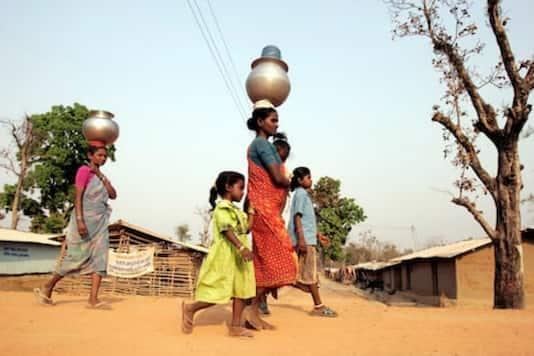
This allocation needs to translate into the reality of providing clean drinking water facilities across households in the remotest parts of the country. This is a welcome step that has the potential to reduce women’s time spent on collecting water. The recent time use survey 2019 shows that women spend on an average up to 55 minutes daily to fetch water for the household. Having provided a steady source of the water supply has immense potential to reduce this time and cater to the urgent need to improve household infrastructure for women.

The second announcement pertained to extending the coverage of social security benefits for gig and platform workers. It is important in the current context as these are emerging avenues of women’s employment in urban India. The IWWAGE report shows how attractive these opportunities are for women and extending the social security coverage makes the sector even better.

The budget allocations under the social security schemes for workers show an increased allocation of Rs. 3100 crores under Atmanirbhar Bharat Rojgar Yojana – a programme launched as a new scheme to encourage new employment in post lockdown period by providing a fixed share of wages into the EPF funds. While this may be important, the budget does not provide extra allocations for the social security of gig and platform workers separately.

In the wake of the pandemic and its unequal impact on women, an analysis of the GB however reveals certain underwhelming trends. The gender budget (GB) stands at Rs. 153,326 crore for 2021-22 BE. Last year’s allocation was Rs. 143,461 crore (BE). As a proportion of total expenditure, the current allocation has fallen to 4.4%, from 4.7% last year.

In the same vein, the allocations to women-specific programmes reported in part A of the GB statement Rs. 28,568 crores last year to Rs. 25,261 crores – a decline of almost 12%. Similarly, allocations to the Ministry of Women and Child Development also show a decline of 18.5% since last year.

While the quantum of allocations to the most important programmes for women reported in the budget 2021-22 shows a status quo or a decline, few accounting changes and a couple of interesting allocations towards women could be located. The announcement of Saksham Anganwadi and Poshan 2.0 clubs the erstwhile umbrella ICDS, Poshan Abhiyan, Scheme for Adolescent Girls, and National Crèche Scheme and allocates only Rs. 20,105 crores, the Mission Shakti –SAMARTHYA clubs smaller programmes including Pradhan Mantri Matru Vandana Yojana, and Beti Bachao Beti Padhao. The detailed breakups and comparisons are provided in Figure 1 and 2. below:

Figure 1. (all scheme heads taken from pg. 351 of the Statement of Budget Estimates)

Figure 2. (all scheme heads taken from pg. 351 of the Statement of Budget Estimates)

The numbers show that allocations to crucial programmes catering to nutrition, creches, and women’s safety and protection have at best stayed the same if not reduced. The allocation to the umbrella ICDS schemes that are under the new ‘SAKSHAM’ head clearly shows a 23% decline of Rs. 5952 crores. We also do not see separate allocations for One-Stop Centres, women helpline, Swadhar Greh, Ujjawala and so on which were overwhelmingly used during the pandemic, with heightened reports of violence against women. Instead, those have been clubbed under Mission Shakti— SAMBAL (See Figure 3 below).

Figure 3. (all scheme heads taken from pg. 351 of the Statement of Budget Estimates)

Both MGNREGA and NRLM show increments in budgets since last year. However, the increase in the MGNREGA budget by Rs. 11,500 crores will also need to cater to the increased demand for jobs under the programme. In fact, the GB reports an allocation of only 33% of the total NREGA allocations for women while the Economic Survey itself highlights that almost 50% of all NREGA employment are held by women. These figures themselves reveal the need for greater allocation even without expanding the number of days of employment generated under the programme.

The NRLM budget also shows an increase of almost Rs. 4000 crores from the previous year on account of the programme component. However, the allocations do not make it clear whether the increment is on account of increased expenditure on DDU-GKY, or on account of interest subventions to SHGs or the loan moratoriums.

Despite these dampers, an interesting allocation in the GB geared towards closing the gendered digital divide is also spotted. According to the NSS-MoSPI data from 2017-18, only 38% of women own mobile phones and 12.8% use computers compared to the respective male figures of 71% and 20%. Given the need to be digitally included, the GB includes Rs. 120 crores (or almost 40%) of the allocations to Pradhan Mantri Gramin Digital Saksharta Abhiyan – digital literacy programme for rural areas. Albeit small yet in the last few years, this is the first time that GB has included part of the PMGDISHA in its statement. This may have the potential for improving women’s access to opportunities created through digital platforms.

So while there have been some small announcements for women in the budget, women’s core concerns over food and nutrition, employment and livelihoods and prevention of violence and safety after a year of unprecedented hardship need a further boost. These concerns assumed importance in all pre-budget discussions and also made space into the Economic Survey.

While announcements in the budget indicate acknowledgement of these issues, which is a significant first step, budgetary allocations to support them would be truly transformative for half of India’s population.

Sona Mitra is the Principal Economist at Initiative for What Works to Advance Women and Girls in the Economy (IWWAGE) an initiative of LEAD at Krea University. Sonakshi Chaudhry is a Senior Analyst at The Quantum Hub (TQH), a policy research and communications firm.
Source: https://www.news18.com/news/buzz/budget-2021-22-what-does-it-hold-for-womens-safety-employment-and-life-3419879.html

To Checkout more stories on Women’s Day, Click here

  • India–UK Free Trade Agreement Opens Global Growth Opportunities for 3R ZeroWaste’s Circular Economy Solutions
  • Plastic Free July: Why True Sustainability Goes Beyond Swapping Plastic
  • From the Editor’s Desk: When Greed Takes Over Conscience
  • Beyond the Pose: Why Your Yoga Mat Needs a Sustainable Upgrade
  • Best Sustainable Father’s Day Gifts: Conscious Carma’s Exclusive Picks
March 3, 2021 0 comment
0 FacebookTwitterPinterestEmail
Newer Posts
Older Posts

Recent Posts

  • India–UK Free Trade Agreement Opens Global Growth Opportunities for 3R ZeroWaste’s Circular Economy Solutions
  • Plastic Free July: Why True Sustainability Goes Beyond Swapping Plastic
  • From the Editor’s Desk: When Greed Takes Over Conscience
  • Beyond the Pose: Why Your Yoga Mat Needs a Sustainable Upgrade
  • Best Sustainable Father’s Day Gifts: Conscious Carma’s Exclusive Picks

Recent Comments

  • Team Conscious Carma on Label Shivika Agarwal – where craft meets sustainability
  • Cocomeister.jp on Label Shivika Agarwal – where craft meets sustainability
  • Team Conscious Carma on Equitable City Designs To Fight Climate Change
  • UN report calls for repurposing of USD 470 billion of agricultural support that distorts prices and steer us away from environment and social goals | Consciouscarma on UNEP & ICMR collaborate to boost understanding of environmental dimensions of antimicrobial resistance in India
  • Wild Earth : Natural body products | Consciouscarma on Sat.Suma : the true essence of flowers in your everyday skincare needs

Keep in touch

Facebook Twitter Instagram Youtube

Recent Posts

  • India–UK Free Trade Agreement Opens Global Growth Opportunities for 3R ZeroWaste’s Circular Economy Solutions

  • Plastic Free July: Why True Sustainability Goes Beyond Swapping Plastic

  • From the Editor’s Desk: When Greed Takes Over Conscience

  • Beyond the Pose: Why Your Yoga Mat Needs a Sustainable Upgrade

  • Best Sustainable Father’s Day Gifts: Conscious Carma’s Exclusive Picks

  • How Sacred Sound is Reshaping the Future of Holistic Health?

Categories

  • Community (38)
    • Campaigns (3)
  • CSR (4)
  • Economy (82)
    • Global (24)
    • Industry (42)
    • Innovations (4)
    • National (2)
  • Environment (48)
  • Expert Corner (48)
    • Authored Articles (47)
  • Featured (5)
    • Partners (1)
  • Global News (2)
  • Initiatives (31)
    • CSR (3)
    • Events (6)
  • Inspiration (22)
  • Lifestyle (9)
  • Media Coverage (6)
  • Press Releases (4,358)
  • Products (126)
    • Accessories (27)
    • Apparel (32)
    • Beauty (26)
    • Food (4)
    • Gifting (3)
    • Home Décor (15)
    • Skin-Care (14)
  • Reports (3)
  • Spirituality (10)
  • Sustainability (49)
  • Sustainable Startup Stories (28)
  • Travel (19)
  • Uncategorized (2)
  • Wellness (33)
    • Home Cleaners (3)

Archives

  • August 2026 (1)
  • July 2026 (1)
  • June 2026 (6)
  • October 2024 (1)
  • September 2024 (1)
  • July 2024 (2)
  • June 2024 (2)
  • May 2024 (1)
  • November 2023 (330)
  • October 2023 (554)
  • September 2023 (631)
  • August 2023 (718)
  • July 2023 (723)
  • June 2023 (710)
  • May 2023 (608)
  • April 2023 (114)
  • March 2023 (7)
  • February 2023 (3)
  • January 2023 (11)
  • December 2022 (18)
  • November 2022 (1)
  • August 2022 (6)
  • July 2022 (8)
  • June 2022 (24)
  • May 2022 (11)
  • April 2022 (19)
  • March 2022 (11)
  • February 2022 (11)
  • January 2022 (14)
  • December 2021 (10)
  • November 2021 (4)
  • October 2021 (14)
  • September 2021 (22)
  • August 2021 (12)
  • July 2021 (17)
  • June 2021 (17)
  • May 2021 (16)
  • April 2021 (22)
  • March 2021 (33)
  • February 2021 (16)
  • January 2021 (22)
  • December 2020 (10)
  • Facebook
  • Twitter
  • Instagram
  • Pinterest
  • Linkedin
  • Youtube

@2020 - All Right Reserved. Designed and Developed by Bizopser Technologies

Consciouscarma
  • Home
  • About Us
  • Products
  • Community
    • Campaigns
    • Inspiration
    • Initiatives
    • CSR
  • Features
    • Sustainable Startup Stories
    • Travel
    • Lifestyle
    • Partners
  • Economy
    • Industry
    • Innovations
    • National
    • Global
  • Environment
  • Expert Corner
    • Authored Articles
    • Reports
  • Magazine
  • Contact