Consciouscarma
  • Home
  • About Us
  • Products
  • Community
    • Campaigns
    • Inspiration
    • Initiatives
    • CSR
  • Features
    • Sustainable Startup Stories
    • Travel
    • Lifestyle
    • Partners
  • Economy
    • Industry
    • Innovations
    • National
    • Global
  • Environment
  • Expert Corner
    • Authored Articles
    • Reports
  • Magazine
  • Contact
Monthly Archives

January 2022

EconomyGlobal

Norway has more electric vehicles per capita than any other country

by Team Conscious Carma January 8, 2022
written by Team Conscious Carma

Norway, one of the World’s largest petroleum exporters, is switching its own gears to electric vehicles. Electric cars made up nearly two-thirds of Norway’s new sales in 2021. Norway’s Electric Vehicle sales are 65 per cent of total car sales. While Norway, with a population of 5.4 million, has the world’s highest proportion of electric vehicles, China with its 1.4 billion people is by far the biggest overall car market.

FAST FACTS

  • OFFICIAL NAME: Kingdom of Norway (Kongeriket Norge)
  • FORM OF GOVERNMENT: Constitutional monarchy
  • CAPITAL: Oslo
  • POPULATION: 5,372,191
  • OFFICIAL LANGUAGES: Bokmal Norwegian and Nynorsk
  • MONEY: Norwegian kroner
  • AREA: 148,726 square miles (385,199 square kilometers)

Oil-producing Norway has encouraged the switch to zero-emission cars by exempting battery electric vehicles (BEVs) from taxes imposed on internal combustion engines (ICE). This tax break is expected to help drive the proportion of overall electric sales as high as 80% in 2022, ahead of a deadline to end petrol and diesel-powered car sales by 2025.

Overall new sales in Norway rose by 25% in 2021 to a record 176,276 cars, of which 65% were fully electric, in addition, 22% were plug-in hybrids, only y 14% of new cars were sold without a plug. EV market share was 54% in 2020.

According to estimates from industry tracker EV-Volumes, plug-in electric vehicles accounted for 4.2% of global light vehicle sales last year, up from 2.5% in 2019.

As many as 13 countries managed to push electric vehicles past 10% of new light-vehicle sales in 2020.

According to WEF analytics, Norway’s highest share of plug-in EVs is because of policies like–tax exemptions, toll exemptions, and other incentives. In Norway, an electric car owner is exempted from paying road tax or sales tax. The Nordic country imposes hefty vehicle import duties and car registration taxes, making cars significantly more expensive than the US.

China, which is by far the largest market for electric cars in terms of unit sales, fell out of the top-10 with electric cars accounting for 6.2% of passenger car sales in the country.

How could Norway achieve this?

  1. Government policy and incentives for purchasers in form of tax exemptions, toll exemptions, free parking space, free charging and other incentives. Vehicle tax has always been high in Norway and exempting these taxes has made EV cheaper.
  2. Increased taxes on traditional cars for eg., pollution tax.
  3. Shorter driving distances, thus making EVs a viable option
  4. Ample supply of renewable electricity at one of the cheapest prices in the world. Hydropower provides around 98 per cent of all electricity in Norway
  5. Norway’s sovereign wealth fund is the world’s largest at approximately $1tn for a population of just over 5 million. This has provided a very clear advantage compared with the budget constraints found in other countries.

An introduction to Norway

The Kingdom of Norway is a sovereign nation on the Scandinavian peninsula in northern Europe.

Norway is a constitutional monarchy and divides state power between the Parliament, the Cabinet, and the Supreme Court. The current prime minister is Erna Solberg, who has held the post since 2013. She leads a centre-right coalition government.

Norway maintains a combination of a market economy and a Nordic welfare model with universal healthcare and a comprehensive social security system. According to both the World Bank and IMF, Norway has the fourth-highest per capita income in the world.

The oil and gas industry remains of critical importance to the nation’s economy. Outside of the Middle East, Norway is the world’s largest producer of oil and natural gas. The industry accounts for around 25% of Norway’s GDP.

However, Norway’s economy is in a state of transition. The oil and gas will not last forever, and the government is making a substantial investment in other technologies. Norway’s domestic power needs are met almost exclusively by renewable energy. Seafood, shipping and tourism are among the other important industries.

With inputs from Reuters, lifeinnorway.net
January 8, 2022 0 comment
0 FacebookTwitterPinterestEmail
EconomyIndustry

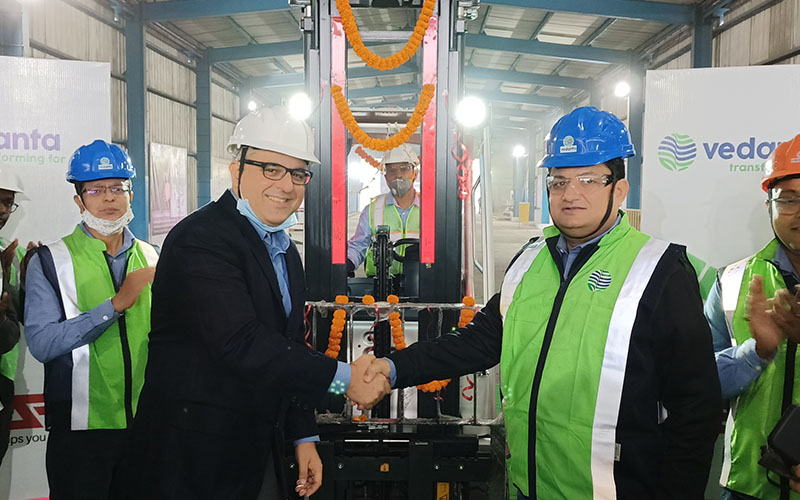
Vedanta Aluminium and GEAR India to deploy one of India’s largest Lithium-Ion Forklift Fleets

by Team Conscious Carma January 6, 2022
written by Team Conscious Carma
  • 23 lithium-ion battery-powered electric forklifts to be deployed at Vedanta’s Aluminium Smelter at Jharsuguda (Odisha)
  • IOT- based Smart Fleet Management system for enhanced safety at site
  • Potential for greenhouse gas (GHG) emission reduction of ~690 tonnes of CO2 equivalent annually

Mumbai: Vedanta Aluminium Business, India’s largest producer of aluminium and value-added products, has signed an agreement with GEAR (Gemini Equipment and Rentals Private Limited) India, to deploy one of the largest fleets of lithium-ion battery-powered electric forklifts, becoming the first in Indian aluminium industry to undertake such an initiative. The company shall commission 23 such forklifts in a phased manner over the next few months at its aluminium smelter in Jharsuguda, Odisha, which is one of the world’s largest single-location aluminium smelters. Substituting diesel-fuelled forklifts with this green fleet will reduce diesel consumption by more than 2.5 lakh litres annually, thereby ensuring GHG (greenhouse gas) emission savings of nearly 690 tonnes of CO2 equivalent.

Vedanta Aluminium currently operates a large fleet of forklifts for finished goods handling, material movement, etc. The new lithium-ion forklifts will help maximise productivity of operations by enabling longer working cycles via rapid charging. What’s unique about the lithium-ion batteries is that they avoid the hassles of frequent battery change and have a substantially longer life than conventional lead-acid batteries, while being virtually maintenance-free, as they are completely sealed.

These forklifts make use of the cutting-edge ‘Smart Fleet Management’ system to help ensure the highest levels of safety at site. The Smart Fleet Management system uses IOT (Internet of Things) technology to integrate the data collected by intelligent terminals and provide Vedanta Aluminium insights on a real-time basis with respect to forklift speed, access to operate, collision avoidance, optimization analysis for operational efficiency and equipment maintenance, among others. Further, these electric forklifts are equipped with forward and reverse cameras, ensuring complete visibility to the operators, red-zone light and blue spotlights that create a safe operating zone around the forklift, as well as automatic deceleration mechanism while turning, for enhanced safety. 

Speaking about the partnership, Mr Rahul Sharma, CEO – Aluminium Business, Vedanta Limited, said, “Vedanta Aluminium is committed to achieving Net Zero Carbon emissions by 2050. Our partnership with GEAR to deploy one of India’s largest and most advanced electric forklift fleets, is in line with our endeavour towards leveraging the power of innovation and technology to make our operations future-ready. In addition to reducing carbon footprint, this initiative uses cloud computing to provide real-time analytics to enhance productivity and further bolster our people’s safety.”

Mr. Varun Chopra, Executive Chairman of GEAR India, added, “Vedanta Aluminium’s endeavour to replace fossil-fuelled heavy vehicles with technologically-advanced lithium-ion forklifts at such a mammoth scale is a praiseworthy move. It is our privilege to be Vedanta’s partner in this pioneering venture, which will go a long way towards decarbonizing their industrial vehicle fleet. This will serve as an inspiration for the Indian manufacturing industry to explore emerging technology solutions for achieving their Net Zero vision.”

Founded in 2007, GEAR is one of India’s leading Warehousing/Intralogistics Material Handling Equipment (MHE) rental service providers. GEAR prides itself on providing efficient and cost effective MHE Rental and Sale solutions for tasks such as stacking, lifting and moving, facilitating its customers to focus singularly on their core business for better productivity.

Vedanta Aluminium Business, a division of Vedanta Limited, is India’s largest manufacturer of aluminium, producing half of India’s aluminium i.e., 1.97 million tonnes in FY21. It is a leader in value-added aluminium products that find critical applications in core industries. With its world-class Aluminium Smelters, Alumina Refinery and Power Plants in India, the company fulfils its mission of spurring emerging applications of aluminium as the ‘Metal of the Future’ for a greener tomorrow.


About Vedanta Limited:

Vedanta Limited, a subsidiary of Vedanta Resources Limited, is one of the world’s leading Oil & Gas and Metals company with significant operations in Oil & Gas, Zinc, Lead, Silver, Copper, Iron Ore, Steel, and Aluminium & Power across India, South Africa and Namibia. For two decades, Vedanta has been contributing significantly to nation building. Governance and sustainable development are at the core of Vedanta’s strategy, with a strong focus on health, safety, and environment. Vedanta has put in place a comprehensive framework to be the ESG leader in the natural resources sector. Vedanta is committed to reducing carbon emissions to zero by 2050 or sooner and has pledged $5 billion over the next 10 years to accelerate the transition to net zero operations. Giving back is in the DNA of Vedanta, which is focused on enhancing the lives of local communities. The company’s flagship social impact program, Nand Ghars, have been set up as model anganwadis focused on eradicating child malnutrition, providing education, healthcare, and empowering women with skill development. Under the aegis of the Anil Agarwal Foundation, the umbrella entity for Vedanta’s social initiatives, the Vedanta group has pledged Rs 5000 crore over the next five years on social impact programmes with a thrust on nutrition, women & child development, healthcare, animal welfare, and grass-root level sports. Vedanta and the group companies company have been featured in Dow Jones Sustainability Index 2020, and was conferred Frost & Sullivan Sustainability Awards 2020, CII Environmental Best Practices Award 2020, CSR Health Impact Award 2020, CII National Award 2020 for Excellence in Water Management, CII Digital Transformation Award 2020, ICSI National Award 2020 for excellence in Corporate Governance, People First HR Excellence Award 2020, ‘Company with Great Managers 2020’ by People Business and certified as a Great Place to Work 2021. Vedanta’s flagship Nand Ghar Project was identified as best CSR project by Government of Rajasthan. Vedanta Limited is listed on the Bombay Stock Exchange and the National Stock Exchange. For more information, please visit www.vedantalimited.com

About Vedanta Aluminium Business:

Vedanta Aluminium Business, a part of Vedanta Limited, is India’s largest producer of Aluminium, producing almost half of India’s aluminium or 1.97 million tonnes per annum (MTPA) in FY21. Vedanta is a leader in value-added aluminium products that find critical applications in core industries. With its world-class Aluminium Smelters, Alumina Refinery and Power Plants in India, the company fulfils its mission of spurring emerging applications of aluminium as the ‘Metal of the Future’ for a greener tomorrow. For more information, please log on to www.vedantaaluminium.com

About GEAR (Gemini Equipment And Rentals Pvt. Ltd.) India:

Founded in the year 2007, GEAR is one of India’s leading Warehousing/Intralogistics Material Handling Equipment (MHE) rental service providers. GEAR, in its pursuit of providing world class MHE to its customers in India, is offering products powered with ‘green lithium-ion technology’, which apart from being environmentally friendly, offer significant other benefits that maximise productivity and safety of its customers. These products have the potential to usher in a New ‘Green Revolution’ in India with its applications cutting across industries. GEAR also runs NIFOT (National Institute For Operator Training) with the vision of providing MHE operator training with respect to Operating MHEs, driving Efficiency and the highest level of Safety and Quality. For more information, please visit https://www.gear-india.com/ & https://nifot.com/

January 6, 2022 0 comment
0 FacebookTwitterPinterestEmail
Sustainability

Sustainability will be the driving force in 2022

by Team Conscious Carma January 3, 2022
written by Team Conscious Carma

Sushobhan Mahanty

The idea that the health of the planet is as important as human health is gathering steam and sustainability will be its driving force. Be it the net-zero goals set at the 2021 Climate Change Conference in Glasgow (COP26) or the launch of the Green Grids Initiative-One Sun One World One Grid (GGI-OSOWOG)—sustainability will be the keyword. The ongoing threat from the COVID-19 pandemic will continue to act as a catalyst for embedding sustainability in all walks of life. Both COP26 and COVID-19 will prove to be inflection points for the future reset.

This year, we should expect to see stricter laws to expose ‘green washers’ and rising demand for clear disclosure and reporting standards. The prolonged coronavirus pandemic continued to force seismic shifts in public policy and company behaviour. It brought about important fixes in the financial system and altered how businesses reacted to the impacts of climate change. Before the COP26 climate conference in Glasgow, more than 1,000 companies had committed to adopt science-based targets to reduce emissions in line with the Paris Agreement goals. At the landmark summit, governments and businesses put forth more grand pledges and ambitious plans to decarbonize. These governments and corporates, however, have given scant detail on how they plan to meet their climate pledges. In the year 2022, there would be a need to push for more transparency, to ensure that the promises are matched with genuine action. The key outcomes from COP26 are expected to influence climate action.

Sustainability, as the new normal for the conduct of life and business, will give a push to the ongoing trends as well as throw up new trends. Here are some sustainability trends to watch out for in 2022:

All about data:  With the spotlight on sustainability, data will be the ticket to not only the low-carbon bandwagon but also to showcase results to the regulators, investors, and other stakeholders. All this while the data analytics lifecycle keeps getting more nuanced to better measure, manage, record, and showcase results. Companies will have to keep track of emerging products like leading asset manager Arabesque’s recently launched ESG Book, a data platform for companies and investors to disclose ESG data in real-time.

Rise in ESG investment: Investing is being guided more and more by ESG (Environmental, Social, and Governance) considerations. Triggered by COVID-19, ESG investment, which factors in a lasting impact on the environment and the society, has got a boost. The surge in ESG investments is expected to continue and now has a helping hand from the Omicron coronavirus variant, which may not even be the last variant.

Push for renewable power: The phasing down of the use of unabated coal and subsidies for fossil fuels were mentioned in the Glasgow Climate Pact adopted by 197 countries. That can be achieved, to a large extent, on the back of retiring coal power plants that are warming up the planet and by increasing the share of renewables in the energy mix. More investments will flow for the setting up of solar, wind, and other renewable energy facilities as compared to fossil fuel facilities.

Push for carbon offsetting: Carbon offsetting is about the replacement or reduction of carbon emissions. Usually, high-emission companies fund projects that either prevent the emission of greenhouse gases (GHGs) or remove GHGs. These projects can range from planting trees to deploying technology to capture carbon emissions. With the framing of carbon market rules, low-carbon emitters will increasingly tap the carbon offset market.

From net-zero to climate-positive: Nations and companies committed to net zero or climate neutrality will sooner or later set the climate-positive or carbon-negative goals. While cutting down on emissions and removing carbon dioxide is expected to check global warming, climate positivity is needed to enrich the environment to reverse degradation.

More stringent regulations: While emission reduction regulation will keep getting tighter, reporting and compliance will be enforced strictly as we go forward and as the process deadlines of net-zero near. Leaders indulging in a lofty talk on sustainability will have to walk the talk under the scrutiny of not only regulators but also investors.

Increase in stakeholders’ influence: Mass awareness about sustainability is on an upswing. Not just investors, even customers, employees, and job seekers are subjecting companies to the lens of sustainability. From being only shareholder-centric, companies will have to become stakeholder-sensitive. 

More shelf space for green products: The younger population is more concerned about the environmental challenges that threaten to become bigger with each day. Add to that the future generation and the two will together make up a major share of the eco-conscious population. From food to fashion to lifestyle, green products will occupy not only a larger mind space but also a bigger shelf space.

Work from homestays for good: It is convenient for a lot of employees and is also beneficial for the environment as it reduces commute and vehicles on the road and also energy use in office buildings, thereby reducing emissions. It is a win-win situation for the employees and employers as well as the planet. Work from home will continue and become permanently institutionalized as part of a more acceptable hybrid working model.

Electric car concept running on the road

Electric vehicles to rev up: At present, it is one of the lesser-known annual days but World EV Day, first celebrated on September 9, 2020, is set to become popular. While India seeks to achieve its vision of 100% electric vehicles by 2030, there will be pressure on the industry to source its raw material responsibly. The bigger issue will be to overcome the challenge of sourcing electricity from renewable sources to charge vehicles.

Innovation will be the key as always. We need to groom innovative minds so that we can eliminate the cons we discuss all around. Let’s hope for a cleaner future.

About the Author : Sushobhan Mahanty is pursuing Electrical Engineering. Having a keen interest in sustainability, he is currently exploring various sustainable fields like renewables and electric vehicles, etc and is running a newsletter on Linkedin, “Sustainability Vibes”.

January 3, 2022 0 comment
1 FacebookTwitterPinterestEmail
ApparelProductsSustainable Startup Stories

Label Shivika Agarwal – where craft meets sustainability

by Team Conscious Carma January 1, 2022
written by Team Conscious Carma

Shivika Agarwal, a budding designer born and brought up in Agra, is all set to add the oomph factor in sustainable fashion.

“Being the youngest in the family, I always stayed close to everybody. I remember growing up around all sorts of crafts, painting, knitting, either done by my mother, maternal grandmother or aunts which kind of embraced me into who I am today. I always had an extraordinary love and inclination towards crafts which I didn’t realise until the last year of my graduation which gave birth to my brand which is devoted in uplifting lost crafts in India”, says the young designer.

In the final year of my college when I had to choose a graduation project, I was determined to choose something that will not only be enjoyable but would also make a difference in today’s era. I have always been an environmentalist and thought of doing something for the indigenous craft. I have seen ample of designers bringing out the innate beauty from the interiors of India, but the catch was that they worked only with ethnics, and I had to give my flavor to it, thus I conceived the idea of resort wear in indigenous fabrics. Thus, in the March of 2021 as a follow up of my graduation project, which made me realize who I really am and what I truly believe in i.e., crafts and craftsmanship I started this label. It is a small initiative of mine towards the upliftment of lost crafts in India through an innovative, pioneering and visionary brand ‘Shivika Agarwal’.

The brand works in collaboration with different NGO’s and artisans to create timeless meticulously crafted pieces for each collection.  Mixing heritage sophistication with the modern twist, we highly value our artisans who pass on their skills and experience from generations. 

Their first collection is named Teikirshy inspired by the lives of a tribal group living in the Nilgiri hills. These craftswomen carry on an age-old tradition of embroidering designs inspired by mother nature. The collection is dedicated towards the upliftment and recognition of the craft to the rest of the world. Language being a barrier in communication it was a real struggle to get in touch with the actual craftswomen and we are totally dedicated towards mitigating the effects of mediators who cut the profits of the local artisans, hence our team personally visited the village with a translator, stayed with them for a week, appreciated and bolstered their skills and this made them trust us and make the profits reach straight to their pockets, hence when our valued customer buys from us, we make sure that their money is not filling up the pockets of a mediator, instead supporting a true artisan.

The materials used are 100% cotton whether they are laces or fabrics and recycled Lycra for swimwear.  A slow fashion label, where comfort is the utmost priority and a commitment to empower women by designing transcend trends and seasons. Our pieces are made to love, collect and last.

The brand uses two packaging bags- inner and outer. These bags are 100% plastic free and are made entirely from vegetable starch and other natural extracts.  These bags are harmless to the plants, animals and all the environment which can even dissolve in water and are biodegradable.

Availability :  www.shivikaagarwal.com, Pernia’s Pop-up Shop and 6 degree store.

Created with perfection, Damba Halter Neck Maillot is a statement choice for your next getaway. Crafted from regenerated lycra, it features embroidery on neck & cross back straps with a cut out detail forming at back hand crafted by tribal women artisans of Toda based in the Nilgiri hills. Pair it with a midi skirt and strap sandals for a brunch.

These flare pants are tailored from lightweight fabric and embroidered : inspired by tribal lifestyle in india. corded with a wrap round top with raglan sleeves. The Duo is perfect for any day or night party.

January 1, 2022 2 comments
0 FacebookTwitterPinterestEmail
Newer Posts
Older Posts

Recent Posts

  • India–UK Free Trade Agreement Opens Global Growth Opportunities for 3R ZeroWaste’s Circular Economy Solutions
  • Plastic Free July: Why True Sustainability Goes Beyond Swapping Plastic
  • From the Editor’s Desk: When Greed Takes Over Conscience
  • Beyond the Pose: Why Your Yoga Mat Needs a Sustainable Upgrade
  • Best Sustainable Father’s Day Gifts: Conscious Carma’s Exclusive Picks

Recent Comments

  • Team Conscious Carma on Label Shivika Agarwal – where craft meets sustainability
  • Cocomeister.jp on Label Shivika Agarwal – where craft meets sustainability
  • Team Conscious Carma on Equitable City Designs To Fight Climate Change
  • UN report calls for repurposing of USD 470 billion of agricultural support that distorts prices and steer us away from environment and social goals | Consciouscarma on UNEP & ICMR collaborate to boost understanding of environmental dimensions of antimicrobial resistance in India
  • Wild Earth : Natural body products | Consciouscarma on Sat.Suma : the true essence of flowers in your everyday skincare needs

Keep in touch

Facebook Twitter Instagram Youtube

Recent Posts

  • India–UK Free Trade Agreement Opens Global Growth Opportunities for 3R ZeroWaste’s Circular Economy Solutions

  • Plastic Free July: Why True Sustainability Goes Beyond Swapping Plastic

  • From the Editor’s Desk: When Greed Takes Over Conscience

  • Beyond the Pose: Why Your Yoga Mat Needs a Sustainable Upgrade

  • Best Sustainable Father’s Day Gifts: Conscious Carma’s Exclusive Picks

  • How Sacred Sound is Reshaping the Future of Holistic Health?

Categories

  • Community (38)
    • Campaigns (3)
  • CSR (4)
  • Economy (82)
    • Global (24)
    • Industry (42)
    • Innovations (4)
    • National (2)
  • Environment (48)
  • Expert Corner (48)
    • Authored Articles (47)
  • Featured (5)
    • Partners (1)
  • Global News (2)
  • Initiatives (31)
    • CSR (3)
    • Events (6)
  • Inspiration (22)
  • Lifestyle (9)
  • Media Coverage (6)
  • Press Releases (4,358)
  • Products (126)
    • Accessories (27)
    • Apparel (32)
    • Beauty (26)
    • Food (4)
    • Gifting (3)
    • Home Décor (15)
    • Skin-Care (14)
  • Reports (3)
  • Spirituality (10)
  • Sustainability (49)
  • Sustainable Startup Stories (28)
  • Travel (19)
  • Uncategorized (2)
  • Wellness (33)
    • Home Cleaners (3)

Archives

  • August 2026 (1)
  • July 2026 (1)
  • June 2026 (6)
  • October 2024 (1)
  • September 2024 (1)
  • July 2024 (2)
  • June 2024 (2)
  • May 2024 (1)
  • November 2023 (330)
  • October 2023 (554)
  • September 2023 (631)
  • August 2023 (718)
  • July 2023 (723)
  • June 2023 (710)
  • May 2023 (608)
  • April 2023 (114)
  • March 2023 (7)
  • February 2023 (3)
  • January 2023 (11)
  • December 2022 (18)
  • November 2022 (1)
  • August 2022 (6)
  • July 2022 (8)
  • June 2022 (24)
  • May 2022 (11)
  • April 2022 (19)
  • March 2022 (11)
  • February 2022 (11)
  • January 2022 (14)
  • December 2021 (10)
  • November 2021 (4)
  • October 2021 (14)
  • September 2021 (22)
  • August 2021 (12)
  • July 2021 (17)
  • June 2021 (17)
  • May 2021 (16)
  • April 2021 (22)
  • March 2021 (33)
  • February 2021 (16)
  • January 2021 (22)
  • December 2020 (10)
  • Facebook
  • Twitter
  • Instagram
  • Pinterest
  • Linkedin
  • Youtube

@2020 - All Right Reserved. Designed and Developed by Bizopser Technologies

Consciouscarma
  • Home
  • About Us
  • Products
  • Community
    • Campaigns
    • Inspiration
    • Initiatives
    • CSR
  • Features
    • Sustainable Startup Stories
    • Travel
    • Lifestyle
    • Partners
  • Economy
    • Industry
    • Innovations
    • National
    • Global
  • Environment
  • Expert Corner
    • Authored Articles
    • Reports
  • Magazine
  • Contact