Consciouscarma
  • Home
  • About Us
  • Products
  • Community
    • Campaigns
    • Inspiration
    • Initiatives
    • CSR
  • Features
    • Sustainable Startup Stories
    • Travel
    • Lifestyle
    • Partners
  • Economy
    • Industry
    • Innovations
    • National
    • Global
  • Environment
  • Expert Corner
    • Authored Articles
    • Reports
  • Magazine
  • Contact
Monthly Archives

April 2021

Media Coverage

APNnews.com, April 19, 2021

by Team Conscious Carma April 19, 2021
written by Team Conscious Carma

Consume Consciously to save Mother Earth

Published on April 19, 2021

Earth Day – Apr 22, 2021, Theme –  Restore Our Earth

Do you know the World could run out of rain forests in 2100, food in 2050, fish in 2048 and water in 2040? The way the World is consuming, we would soon need two planets to satisfy our needs.

Over consumerism is creating havoc for the environment and natural resources. The growing population and their rising demands have resulted in depletion of natural resources, increased carbon dioxide emissions, pollution, climate change,  and extinction of other living beings, etc. The entire ecosystem is in a state of imbalance which is resulting in increased number of natural calamities like wildfires, droughts and floods.  Earth is the only source of survival of all living beings of which human beings constitute only 0.01 percent. Yet, since the dawn of civilization, humanity has caused the loss of 83 percent of all wild animals. half of all plants and have already used up more than a third of natural resources.

Poonam K Malhotra, Founder Editor, Conscious Carma Magazine

“We, as consumers have all the power and the right to demand what we want and how we want.  All we need to do is raise our voice, not one, or two or three, but all of us need to realize the severity of the problem which has been caused primarily due to our consuming behaviour. Today, the oceans are filled with plastics which are the source of our drinking water and home to all the sea creatures, the land where we live alongwith other living beings, is filled with waste, the air which we breathe to live is poisonous.  All this at what cost and why? The speed in which consumerism is growing globally, we will soon require resources of almost two planets to fill the demand”, says  Poonam K Malhotra, Editor-in-Chief, Conscious Carma, a global magazine focusing on environment and sustainability.

“Plastic is so pervasive because it is durable, cheap and versatile – making it responsible for many critical advancements. But as a single-use material, years of indiscriminate use have created islands of toxic waste around us. A majority of this comes from packaging of our daily-use products, so reducing that can help in a big way” says Gauri Gupta, Founder, Arani Ecosteps, a startup creating plastic-free essentials.

Gauri Gupta, Founder, Arani Ecosteps,

“We all know the dangers that plastics pose. But very few of us are aware of the dangers of throwing our kitchen waste into landfills. While we might think kitchen waste is biodegradable and hence should not be a problem, did you know organic waste dumped in a landfill continues to produce CO2 and methane (aka global warming) for approximately 5-7 years? The debris will continue to pollute the air for at least 50 more years! Composting our own kitchen waste is the simplest step we can all take to begin to manage the tremendous waste management problem our country faces”, says  Sujatha Krishnamurthy, Co-Founder, Ekobarn, a startup in providing innovative and fuss-free waste management solutions.

“April 22, 2021, will mark the 51st anniversary of Earth Day and the theme this year is ‘Restore Our Earth.’  We at EARTHDAY.ORG aims to inspire efforts to regrow green cover, rejuvenate aquifers, restore soil, refresh air, reduce and manage waste, encourage a switch to clean and green energies, and build environmental stewardship among all those who inhabit our planet.   We believe in growing stewardship for the environment based on knowledge or climate literacy that will contribute to helping return nature to its pristine form”, says Debapriya Dutt, Senior Manager Outreach – India, EARTHDAY.ORG.

Check the coverage from here: https://www.apnnews.com/consume-consciously-to-save-mother-earth/

April 19, 2021 0 comment
0 FacebookTwitterPinterestEmail
EconomyGlobal

France to ban short domestic flights to cut carbon emissions

by Team Conscious Carma April 18, 2021
written by Team Conscious Carma

French lawmakers have approved a bill that will ban short domestic flights in an effort to lower the country’s carbon emissions. Under the proposals, air routes will be abolished where the same journey could be made by train in under two-and-a-half hours.

The climate bill is aimed to remove domestic flights between the capital, Paris, and other cities, such as Nantes, Lyon, or Bordeaux. However, the law does provide exceptions for connecting flights. The planned measures will face a further vote in the Senate before becoming law.

Airlines around the world have been severely hit by the coronavirus pandemic, with the website Flightradar24 reporting that the number of flights last year was down almost 42% from 2019.

In May 2020, the French government forced Air France to give up domestic routes affected by the bill in return for financial support.

Some lawmakers have criticised the bill for its likely impact on the air travel industry, already under intense strain during the global COVID-19 pandemic.

Andrew Charlton, managing director of Aviation Advocacy Geneva, said that the law had been poorly explained to the industry. “There’s an enormous balance [between environmental concerns and business concerns] that has to be struck … it’s an extremely complicated matter,” Charlton said.

.But French consumer group UFC-Que Choisir called on lawmakers to retain the four-hour limit. “On average, the plane emits 77 times more CO2 per passenger than the train on these routes, even though the train is cheaper and the time lost is limited to 40 minutes,” it said. It also called for “safeguards that [French national railway] SNCF will not seize the opportunity to artificially inflate its prices or degrade the quality of rail service”.

This is not the first time similar measures have been introduced. Last year, Austrian Airlines replaced a flight route between the capital Vienna and the city of Salzburg with an increased train service, after receiving a government bailout with provisions to cut its carbon footprint.

Source: BBC News

Note: The content has been edited for style and length

April 18, 2021 0 comment
0 FacebookTwitterPinterestEmail
EconomyGlobal

New Zealand aims to ban smoking for people born after 2004

by Team Conscious Carma April 16, 2021
written by Team Conscious Carma

New Zealand has announced a suite of proposals which would gradually increase the legal age of smoking over time in an effort to make the nation smoke-free by 2025.

Also under consideration was a significant reduction in the level of nicotine allowed in tobacco products, prohibiting filters, setting a minimum price for tobacco, and restricting the locations where tobacco and cigarettes can be sold.

“We need a new approach if the nation wants to reach its goal,” Associate Health Minister Dr Ayesha Verrall said, announcing the changes. “About 4,500 New Zealanders die every year from tobacco, the “best way” to achieve a “smoke-free future” is to prevent people from ever starting to smoke. Business-as-usual without a tobacco control program won’t get us there.”

“Over 75 percent of smokers have tried to quit but smoking is primarily driven by addiction. This makes quitting extremely difficult even though most smokers want to do so. We must provide people with better support in their decisions to stop smoking and in their quit journeys” explained Dr. Verrall.

The proposals were welcomed by a number of public health organisations. “This proposal goes beyond assisting people to quit,” Cancer Society chief executive Lucy Elwood said in a statement. She noted that the number of tobacco retailers was four times higher in low-income communities, where smoking rates were highest.

“These glaring inequities are why we need to protect future generations from the harms of tobacco,” Elwood said. “Tobacco is the most harmful consumer product in history and needs to be phased out.”

But the plans also faced criticism for potential unintended consequences and the possibility of an expanded black market for tobacco.

The proposals have been criticised by right-wing political party ACT, who said one of the restrictions being looked at – lowering the amount of nicotine in cigarettes – could end up negatively affecting working-class smokers as they would need to buy more cigarettes in order to get the same hit.

New Zealand has a population of about five million people and it’s estimated that about 500,000, or one in 10 smoke daily. Smoking accounts for one in four cancer deaths in New Zealand with Māori people worst affected. Māori women have the country’s highest smoking rates, with about 30% smoking daily. Cancer is the leading cause of death for Māori women and the second leading cause for Māori men.

April 16, 2021 0 comment
0 FacebookTwitterPinterestEmail
Ekobin
Home DécorProducts

Ekobin – A hassle-free and odour free home composting bin

by Team Conscious Carma April 14, 2021
written by Team Conscious Carma

While solutions for plastic waste abound, most of us do not realise the harm organic waste does to the earth. Organic waste from our kitchens which are disposed of in landfills ends up being the major polluters of land and water resources. To this effect, composting our own kitchen waste is the simplest step we can all take to begin to manage the tremendous waste management problem our country faces. 

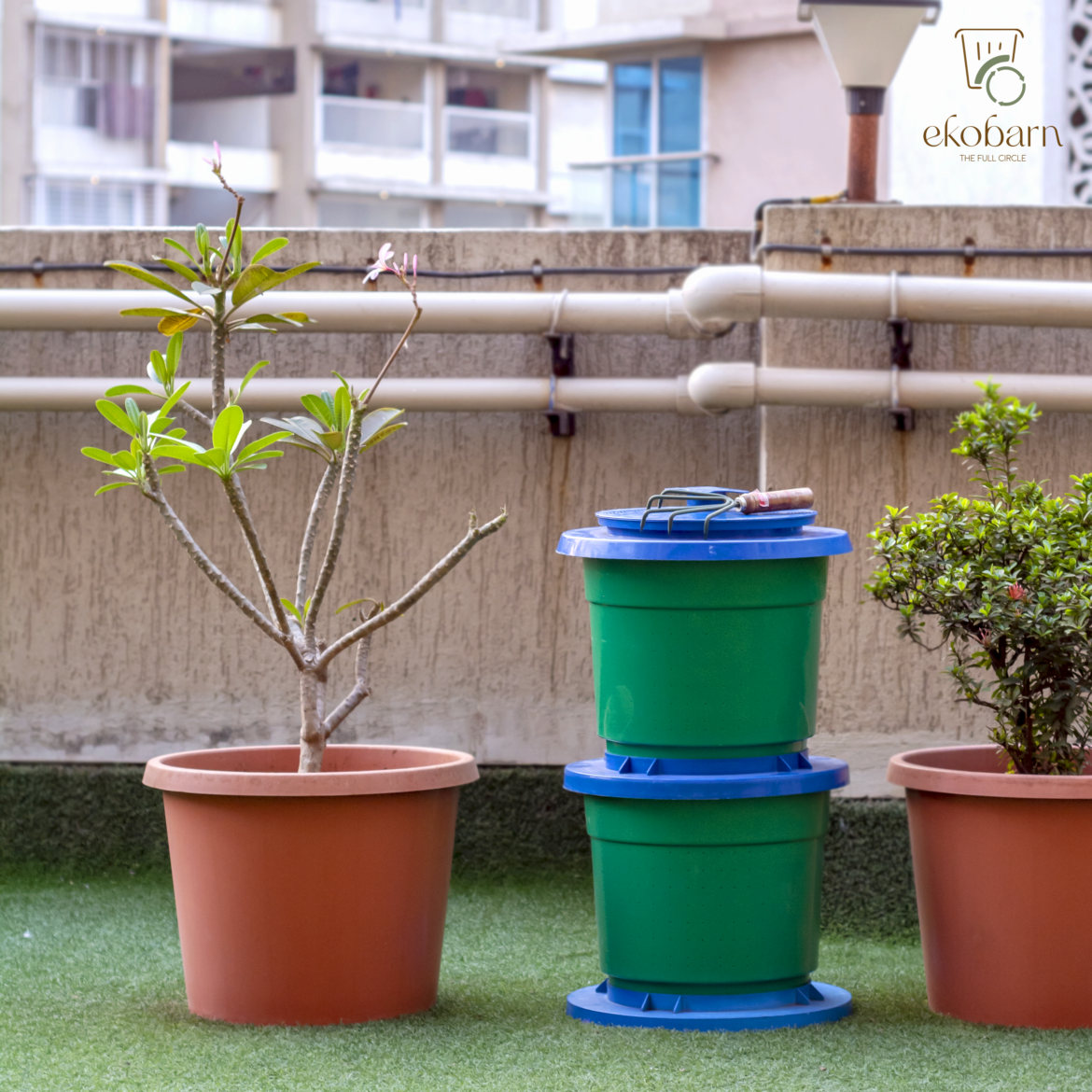
To tackle this, Ekobarn has launched their first range of home composting products – The Ekobin.  It is a well-engineered system aimed at being odour free by offering adequate aeration and low maintenance (no need to worry about catching and disposing of leachate). The other key USP of our EkoBin is our additive – compost starter mix. Hand curated with multiple strains of bacteria aimed at composting quickly and efficiently, one brick can last you ages! The Ekobins has thus been devised to make composting a breeze with minimal effort and space requirements.

The complete home composting kit consists of two stackable bins with a lid, an additive brick, a ready reckoner brochure explaining how to compost and what to compost and a hand rake to turn the compost around.

Ekobarn was founded with a vision to reduce our footprint on the environment and make the earth a cleaner and habitable space. Through a plethora of products and services, the company aims to be the one-stop solution for all sorts of waste and transform every Indian household into a zero-waste entity. 

Ekobarn is a team of co-founders coming from a diverse background – engineering, management and architecture, and is the outcome of their desire to develop an innovative and fuss-free solution for managing wet waste at the source.
A CC marketing initiative

Availability:  www.ekobarn.com

April 14, 2021 0 comment
0 FacebookTwitterPinterestEmail
EconomyGlobal

Australia is banning ‘biodegradable’ plastic

by Team Conscious Carma April 12, 2021
written by Team Conscious Carma

Australia’s federal government has launched its National Plastics Plan to fight plastic on various fronts, such as banning plastic on beaches, ending polystyrene packaging for the takeaway container, phasing microplastic filters in washing machines and banning the main form of biodegradable plastic. 

The plan mentioned that the government will work with industry to fast-track the phasing out of plastic packaging products that do not meet relevant compostable standards and expanded polystyrene (EPS) in consumer packaging by July 2022, while EPS in food & beverage containers and PVC packaging labels by December 2022.  Industry to transition towards 100% packaging being reusable, recyclable or compostable by 2025. 

Many biodegradable plastics are just regular fossil-based plastic with chemicals added to make it break down faster and pollute the environment with microplastics. Also, some biodegradable plastics are made from plant-based plastics that are not suitable for home composting as they require precise conditions to break down.

Plastic packaging represents approximately one million tonnes of Australia’s annual plastic consumption. In 2018-19 about 85% of plastics no longer used were disposed to landfill. This has resulted in at least 50 megatonnes of plastic accumulating in Australian landfills.

The simplest way to reduce plastic waste is to avoid unnecessary and problematic plastics. Improving product design is the most effective way to reduce the amount of plastic waste we create.

The government will also be holding a  Plastics Design Summit in 2021 for product designers and manufacturers to showcase their sustainable product design.

It is also regulating waste plastic exports by banning the export of unsorted mixed plastic from 1 July 2021 and unprocessed single polymer or resin plastics from 1 July 2022.

Facts about plastics

Australia uses around 70 billion pieces of soft “scrunchable” plastics including food wrappers each year.

  • Australians used 3.4 million tonnes of plastics in 2018-2019.
  • One million tonnes of Australia’s annual plastic consumption is single-use plastic 84% of plastic is sent to landfill and only 13% is recycled.
  • Every year in Australia approximately 130,000 tonnes of plastic leaks into the marine environment.
  • Our use of plastic is increasing and across the world will double by 2040.
  • By 2050, it is estimated that plastic in the oceans will outweigh fish.

Source: https://www.environment.gov.au

April 12, 2021 0 comment
0 FacebookTwitterPinterestEmail
EconomyIndustry

Vedanta’s ‘waste to wealth’ programmes foster local MSMEs in rural Odisha and Chhattisgarh

by Team Conscious Carma April 9, 2021
written by Team Conscious Carma

Vedanta Aluminium & Power Business, India’s largest producer of aluminium and its value-added products, is fostering hundreds of MSMEs in remote rural areas with its innovative ‘waste to wealth’ programmes. ‘Waste to wealth’ projects form a key pillar of Vedanta’s sustainability agenda that is centred around ‘Zero Harm, Zero Waste and Zero Discharge’. With a world-class alumina refinery at Lanjigarh (Odisha) and state-of-the-art aluminium smelters at Jharsuguda (Odisha) and Korba (Chhattisgarh), the company has been instrumental in triggering socio-economic development in some of the country’s aspirational districts.

One such innovative programme being run by Vedanta for fostering local micro-enterprises is fly-ash brick making. The company supports over a hundred brick manufacturing MSMEs situated around and beyond its areas of operations with fly ash free of cost to their doorsteps, amounting to nearly 5 lakh metric tonnes per annum. In addition, the company also provides know-how and training on manufacturing these bricks in partnership with technical institutes, thus creating employment avenues as well as promoting a circular economy. The beneficiaries of this project are underprivileged villagers who would otherwise depend on cattle rearing, subsistence agriculture or would migrate to other states to work as construction labourers for their livelihood. At Lanjigarh (Kalahandi district, Odisha), more than 90% of fly ash generated at the company’s alumina refinery is used by local entrepreneurs in their brick manufacturing units.

Mr Rahul Sharma, Dy CEO – Aluminium Business, Vedanta Ltd said, “At Vedanta, we integrate smart innovation, best-in-class technologies and global best practices to create value for the nation. A strong sustainable development agenda guides all our actions and business decisions, and we are committed to nurturing MSMEs in all our areas of operations. We understand that this responsibility becomes even more pertinent now that a lot of migrant labourers have receded back to their villages in the wake of the pandemic and need sustainable livelihoods in these remote areas.  All of our business units have robust waste management systems in place and scientifically manage the ‘reduce, reuse and recycle’ trifecta of value-creation by working with local entrepreneurs and community members.”

Kirti Chanda Bihidar, a resident of Kolabira village, who runs his own fly ash brick making unit at Jharsuguda, says, “I am thankful for Vedanta’s presence at Jharsuguda, as it has opened up immense opportunities for small entrepreneurs like us to run successful businesses. Today, I get my raw material free of cost delivered to my shop by Vedanta. On an annual basis, I make about 50 lakh bricks which are mostly used for construction purposes. This business is giving me a very healthy turnover, which is growing rapidly, and I feel proud to be able to provide employment opportunities to others. I hope more people make use of the avenues provided by Vedanta to set up their own businesses.”

All units of Vedanta’s aluminium business have laid down plans for 100% utilization of fly ash generated at their respective power plants. Besides brick manufacturers, they are also supplying ash to cement manufacturers and for highway construction, building green roads with it, backfilling mine voids for restoring mined-out areas, among other such avenues. In FY21, Vedanta achieved the highest ever fly ash utilization of 117% through these methods and is now looking to expand its ecosystem of MSME partners even further by including more local fly ash brick manufacturers into the fold.

Vedanta Aluminium & Power Business, a division of Vedanta Limited, is India’s largest producer of Aluminium, producing almost half of India’s aluminium or 1.9 million tonnes per annum (MTPA) in FY20 and is also one of the largest private power producers in the country. Bharat Aluminium Company (BALCO) is a part of Vedanta’s Aluminium and Power Business. Vedanta is a leader in value-added aluminium products that find critical applications in core industries. With its world-class smelters, power plants and alumina refinery spread across India, the company fulfils its mission of spurring emerging applications of aluminium as the ‘Metal of the Future’ for a greener tomorrow.

Disclaimer:

This press release contains “forward-looking statements” – that is, statements related to future, not past, events. In this context, forward-looking statements often address our expected future business and financial performance, and often contain words such as “expects,” “anticipates,” “intends,” “plans,” “believes,” “seeks,” “should” or “will.” Forward-looking statements by their nature address matters that are, to different degrees, uncertain. For us, uncertainties arise from the behaviour of financial and metals markets including the London Metal Exchange, fluctuations in interest and or exchange rates and metal prices; from future integration of acquired businesses; and from numerous other matters of national, regional and global scale, including those of a political, economic, business, competitive or regulatory nature. These uncertainties may cause our actual future results to be materially different than those expressed in our forward-looking statements. We do not undertake to update our forward-looking statements.

April 9, 2021 0 comment
0 FacebookTwitterPinterestEmail
Environment

Conscious Carma gets into a candid chat with the Environmentalist Pragya Kapoor

by Team Conscious Carma April 7, 2021
written by Team Conscious Carma

Phenomenal producer, sensational environmentalist and a loving mother of two, Pragya Kapoor, born and brought up in a small, quaint town of Sweden, relocated to India in 2009 to try her hand at acting. Post her Bollywood debut in the 2014 film ‘Hawaa Hawaai’, the actress tied the knot with the celebrated film director Abhishek Kapoor in 2015. 

Whilst pursuing her work in Hindi cinema, Pragya is also an avid conservationist with colossal zeal for sustainability and eco-friendly practices. Her practice of ensuring zero waste at home later inspired her to establish Ek Saath- The Earth Foundation, a not for profit entity that works towards making the country more sustainable. Pragya also strives to inculcate the idea of sustainability in her role as a mother as she celebrated her younger son’s birthday by organizing a beach clean-up drive. Recently, even her production house went 100% green by switching to solar power!

Conscious Carma gets into a candid chat with the Environmentalist

Q1. How and when were you inspired towards sustainability?

Spending my formative years in a country like Sweden ensured that I’m raised in an environment that has values of sustainability ingrained in its very culture. So practising recycling or managing our waste responsibly were things that just came naturally to us. But it was a completely different story down here in Mumbai. It took me a fair amount of time while getting used to the drastically different ways of living here. That was until I became a mother and the thought of raising my kids in a world which doesn’t offer the same values that I inculcated growing up, seemed unacceptable to me. That triggered a drive in me to not be complacent with how things are and trace back my sustainable ways of living, one step a time.

Q2. Please tell us more about your life as an environmentalist, both in Sweden and India?

It’s just a gift that keeps giving. I feel blessed to have this opportunity where my actions can translate into making the world a better place for so many others in the long run. That being said, being an environmentalist you’re always aware that reaching the uphill milestones you chase is never going to be a one-person job.  Bringing about a change demands a united effort on so many different fronts. Teaming up with kindred spirits, garnering the government’s support, empowering the locals. I got to juggle between many different roles and hope that I am able to set an example for others to follow.

Q3. You’ve been in India for more than a decade. Have you seen any remarkable difference in people’s and organisational behaviour with respect to the conservation of environment?

Most certainly. It’s hard to turn a blind eye towards nature when its severe consequences are all around you. People are starting to care, it’s overwhelming to see how our youth today has begun to raise important questions, come out on the streets to save trees and support other causes. Organisations too are offering increasing support to important initiatives that would never see the light of the day without their aid. Social Media has played a crucial role in setting up the momentum for so many important movements that have overturned government’s decisions, led to landmark verdicts and what not. So yes, there’s been a remarkable shift in the attitude and that’s also the need of the hour. That being said, I think we still have a long way to go in order to bring about a considerable change. The kind of ecological hazard these consumer giants have become today, it’s hard to compensate that with a few CSR drives from the aware ones. Until we don’t strive to change the very model on which these companies function, there’s little we can do to salvage the situation.

Q4. Please tell us more about Ek Saath- The Earth Foundation and its various activities?

Ek Saath was a lifelong dream that I happened to realise last year. Over time, we’ve grown to sideline the tender relationship we all share with nature. We’ve forgotten what it’s like to climb trees, walk barefoot on grass. Instead, we pollute our seas, land, air only to face the consequences of it later. The more we nourish our surroundings, the more it shall nurture us in turn. Ek Saath stands to harmonise this very critical rapport that lies terribly compromised of late. In barely a year we’ve managed to conquer such great heights, we’ve conducted massive beach clean-up drives to rid it of tons of harmful plastic trash, carried out urban afforestation drives to make our cities greener. Throughout the lockdown period, we took up the daunting task of supporting thousands of needy migrant families by providing them with daily meals and rations to help them sustain the threatening phase. More than an NGO, I consider Ek Saath to be a force that is out there to make people accountable for their own surroundings. It’s a drive to empower people to take charge of the nature around them. A team effort that unites like-minded individuals headed in the same direction.

Q5. Going forward, how do you plan to take forward your mission of saving the environment?

Last year we broadened our horizons by setting up a waste management centre in Rakccham, a tiny picturesque hamlet in Himachal Pradesh, with the objective of eliminating primitive waste disposal methods and promoting eco-tourism. Going forward, we aim to move across different parts of the state to make it the first waste-free state of India. Apart from that, we shall also continue with our existing drives- afforestation programmes, beach clean-ups, awareness campaigns. Our two main goals for the year remain to promote sustainable development and waste management. We aim to make the corporations, government and the masses aware of the sustainable alternatives they can opt for without compromising on their convenience to reduce their carbon footprints. Waste is another major issue plaguing our ecosystems. Other than being a breeding ground for diseases, improper disposal methods have had devastating impacts on marine life. We hope to minimise the damage by making people and organisations more responsible with their waste.

April 7, 2021 0 comment
0 FacebookTwitterPinterestEmail
SORT
EconomyIndustry

S.O.R.T. (Segregation of Organic Waste for Recycling and Treatment)

by Team Conscious Carma April 6, 2021
written by Team Conscious Carma

Indian Pollution Control Association (IPCA), a Delhi based has launched a project “S.O.R.T.” (Segregation of Organic-Waste for Recycling and Treatment) supported by Swarn Lata Motherson Trust in Delhi NCR. In this project, waste is being minimized by source segregation and composting through a Sustainable Approach to Solid Waste Management.

The project is being conceptualized with the aim of maximizing the utilization of resources and reducing the waste, which would indirectly result in less air, water and soil pollution, reducing pressure on landfill sites and reducing cost on transportation. The principal objective of the project is to motivate community participation in qualitative segregation of waste to increase the recycling rate of waste material and enable the operation of Aerobin for composting of organic household waste. SORT has already been implemented in a few residential societies and colonies in Noida & Delhi and is aiming to implement a decentralised solid waste management system in more residential colonies, educational institutions and corporate office.  

“Under project SORT, IPCA is reaching to stakeholders including residents, maids, children and waste collectors and educating them on source segregation of waste. IPCA is also installing composters bin at the project locations, already installed more than 100 composter bins to date (each with 400 ltr capacity). The composter bins are very innovative with respect to their design and can convert organic waste into compost within 40 days without any chemical and electricity. These bins do not release any foul smell also. Residents are very excited with this project as they have now adopted source segregation practices and have received 100% solution to their waste and using end product of their waste I.e. compost in developing vegetable garden within their residential society”, says Ashish Jain, Founder IPCA. 

SORT has brought a remarkable impact on the environment, society and economy. More than 80% of residents of each project location are now segregating waste. Another major outcome of SORT is that organic waste got converted into compost at the project location itself and no wet waste going out from the project location for dumping, waste collectors are getting much clean and less contaminated recyclable waste, thereby reducing the health risk of waste workers and they are now able to sell recyclable waste at a better price. thus, 

At IPCA, we believe in providing sustainable solution and for us, sustainability means when a system runs on its own and does not require external force to run it. Therefore, IPCA has developed a system, in which people got aware and understood the importance of segregation. they also got composter bin in their society and their housekeeping team got training to operate the same. therefore, IPCA has handed over the system to society and they are indeed running it very well. Now IPCA will replicate SORT in another 30 societies of Delhi NCR in the coming financial year.

About IPCA:

Indian Pollution Control Association (IPCA) is an NGO established in the year 2001 with the support of the Indian Institute of Technology, Delhi.  The organization works in four domains viz., Environmental Education and Awareness, Solid Waste Management, Air Quality Management, Research & Development.

April 6, 2021 0 comment
0 FacebookTwitterPinterestEmail
volvo car
Economy

Volvo Cars give all employees 24 weeks of paid parental leave

by Team Conscious Carma April 4, 2021
written by Team Conscious Carma

Swedish car maker Volvo has announced a gender neutral, inclusive and adaptable to personal needs, paid parental leave policy as of April 1, 2021.

The ‘Family Bond’ policy will give all employees with at least one year’s service a total of 24 weeks of leave at 80 per cent of their base pay by default. The policy applies to either parent and the leave can be taken anytime within the three first years of parenthood.

“We want to create a culture that supports equal parenting for all genders,” said Håkan Samuelsson, chief executive. “When parents are supported to balance the demands of work and family, it helps to close the gender gap and allows everyone to excel in their careers. We have always been a family-oriented and human-centric company. Through the Family Bond programme, we are demonstrating and living our values, which in turn will strengthen our brand.”

The global policy is more inclusive and supportive than many existing policies around the world, and includes all legally registered parents, including adoptive, foster care and surrogate parents, as well as non-birth parents in same-sex couples. Some countries do not offer any paid leave to new parents, or exclude certain groups of parents – the latter is particularly true for fathers.

Volvo Cars’ global policy is inspired by national legislation in its home market of Sweden, famous around the globe for its generous parental leave arrangements, which have delivered tangible benefits for parents and children alike in recent decades. It follows a parental leave pilot scheme launched in the EMEA region in 2019, in which 46 per cent of all applicants were fathers.

“This is more than a new parental leave policy for our employees – it is the embodiment of our company culture and values,” said Hanna Fager, head of corporate functions. “We want to lead change in this industry and set a new global people standard. By opting all our employees into paid parental leave we narrow the gender gap and get a more diverse workforce, boosting performance and strengthening our business.”

About Volvo Car Group

Volvo Cars was founded in 1927. Today, it is one of the most well-known and respected car brands in the world with sales of 661,713 cars in 2020 in about 100 countries. Volvo Cars has been under the ownership of the Zhejiang Geely Holding since 2010.

As of December 2020, Volvo Cars employed approximately 40,000 (41,500) full-time employees. 

Under its new company purpose, Volvo Cars aims to provide customers with the Freedom to Move in a personal, sustainable and safe way. This purpose is reflected in a number of business ambitions: for example, by the middle of this decade it aims for half of its global sales to be fully electric cars, to sell half of its global volume online and to establish five million direct consumer relationships. Volvo Cars is also committed to an ongoing reduction of its carbon footprint, with the ambition to be a climate-neutral company by 2040

Source: Volvocars.com

Note: The content has been edited for style and length

April 4, 2021 0 comment
0 FacebookTwitterPinterestEmail
CommunitySpirituality

The purpose of Yog

by Team Conscious Carma April 3, 2021
written by Team Conscious Carma

Om tat sat iti nirdesho brahmanastrividhah smritah | Braahmanaasten vedaashcha yagyaashcha vihitaah pura || Bhagwad Gita, Chapter 17, Verse 23 ||

Om Tat Sat is declared as the three callings of Supreme. All the Brahmanas, Vedas and Yagyas emerged from that, says Lord Krishna.

‘Om’ is an extremely potent dhwani (sound), also called pranav. All the yagyas, charities and penances by the wise begin with the uchharan of ‘om’. When om is chanted in the correct manner, the body vibrates from top to bottom. 

‘Tat’ translates as “that”. As one does charity, yagyas and penance in the name of “Tat”, he/she absolves the self of the fruits of such acts, ie, nishkam karma, paving way for liberation.

‘Sat’ refers to the Ultimate Truth, the finality, that which is unchanging and one. If you look around, everything that you have or seek to have, comes with an expiry date. It is bound to leave and when it leaves, it leaves you with pain. ‘Sat’ is the quest for that which lies beyond, which is eternal, and which controls all that is around.

Every sound is a frequency, it corresponds to a specific energy. Just like, when someone calls your name, you respond. Similarly, when you call the name of Divine, He responds. It is not in the mind, the effect is immediate, tangible and in front of your eyes. But for this to happen, you should be able to generate that frequency or calling within you.

Tantra sadhna is the science of mantras, dhwanis and vibrations. When you do this, all this happens in front of your eyes, its apparent, tangible, physical. But if the body is not prepared for it, it may  have a reaction on you.  So if you want to interact with divine energies, increase the capacity of the body through yog under a Guru. Then you will come from avidya to vidya, from nashwar or unreal (that which doesn’t exist) to reality. Asato ma sadmaya, tamso ma sad gamaya, mrityur ma amritam gamaya, then only.

You can come for a session to Dhyan ashram sometime to experience the vibrations created by these dhwanis.

Yogi Ashwini, Dhyan Ashram

April 3, 2021 0 comment
0 FacebookTwitterPinterestEmail
Newer Posts
Older Posts

Recent Posts

  • India–UK Free Trade Agreement Opens Global Growth Opportunities for 3R ZeroWaste’s Circular Economy Solutions
  • Plastic Free July: Why True Sustainability Goes Beyond Swapping Plastic
  • From the Editor’s Desk: When Greed Takes Over Conscience
  • Beyond the Pose: Why Your Yoga Mat Needs a Sustainable Upgrade
  • Best Sustainable Father’s Day Gifts: Conscious Carma’s Exclusive Picks

Recent Comments

  • Team Conscious Carma on Label Shivika Agarwal – where craft meets sustainability
  • Cocomeister.jp on Label Shivika Agarwal – where craft meets sustainability
  • Team Conscious Carma on Equitable City Designs To Fight Climate Change
  • UN report calls for repurposing of USD 470 billion of agricultural support that distorts prices and steer us away from environment and social goals | Consciouscarma on UNEP & ICMR collaborate to boost understanding of environmental dimensions of antimicrobial resistance in India
  • Wild Earth : Natural body products | Consciouscarma on Sat.Suma : the true essence of flowers in your everyday skincare needs

Keep in touch

Facebook Twitter Instagram Youtube

Recent Posts

  • India–UK Free Trade Agreement Opens Global Growth Opportunities for 3R ZeroWaste’s Circular Economy Solutions

  • Plastic Free July: Why True Sustainability Goes Beyond Swapping Plastic

  • From the Editor’s Desk: When Greed Takes Over Conscience

  • Beyond the Pose: Why Your Yoga Mat Needs a Sustainable Upgrade

  • Best Sustainable Father’s Day Gifts: Conscious Carma’s Exclusive Picks

  • How Sacred Sound is Reshaping the Future of Holistic Health?

Categories

  • Community (38)
    • Campaigns (3)
  • CSR (4)
  • Economy (82)
    • Global (24)
    • Industry (42)
    • Innovations (4)
    • National (2)
  • Environment (48)
  • Expert Corner (48)
    • Authored Articles (47)
  • Featured (5)
    • Partners (1)
  • Global News (2)
  • Initiatives (31)
    • CSR (3)
    • Events (6)
  • Inspiration (22)
  • Lifestyle (9)
  • Media Coverage (6)
  • Press Releases (4,358)
  • Products (126)
    • Accessories (27)
    • Apparel (32)
    • Beauty (26)
    • Food (4)
    • Gifting (3)
    • Home Décor (15)
    • Skin-Care (14)
  • Reports (3)
  • Spirituality (10)
  • Sustainability (49)
  • Sustainable Startup Stories (28)
  • Travel (19)
  • Uncategorized (2)
  • Wellness (33)
    • Home Cleaners (3)

Archives

  • August 2026 (1)
  • July 2026 (1)
  • June 2026 (6)
  • October 2024 (1)
  • September 2024 (1)
  • July 2024 (2)
  • June 2024 (2)
  • May 2024 (1)
  • November 2023 (330)
  • October 2023 (554)
  • September 2023 (631)
  • August 2023 (718)
  • July 2023 (723)
  • June 2023 (710)
  • May 2023 (608)
  • April 2023 (114)
  • March 2023 (7)
  • February 2023 (3)
  • January 2023 (11)
  • December 2022 (18)
  • November 2022 (1)
  • August 2022 (6)
  • July 2022 (8)
  • June 2022 (24)
  • May 2022 (11)
  • April 2022 (19)
  • March 2022 (11)
  • February 2022 (11)
  • January 2022 (14)
  • December 2021 (10)
  • November 2021 (4)
  • October 2021 (14)
  • September 2021 (22)
  • August 2021 (12)
  • July 2021 (17)
  • June 2021 (17)
  • May 2021 (16)
  • April 2021 (22)
  • March 2021 (33)
  • February 2021 (16)
  • January 2021 (22)
  • December 2020 (10)
  • Facebook
  • Twitter
  • Instagram
  • Pinterest
  • Linkedin
  • Youtube

@2020 - All Right Reserved. Designed and Developed by Bizopser Technologies

Consciouscarma
  • Home
  • About Us
  • Products
  • Community
    • Campaigns
    • Inspiration
    • Initiatives
    • CSR
  • Features
    • Sustainable Startup Stories
    • Travel
    • Lifestyle
    • Partners
  • Economy
    • Industry
    • Innovations
    • National
    • Global
  • Environment
  • Expert Corner
    • Authored Articles
    • Reports
  • Magazine
  • Contact